
Waitea nuda
Waitea nuda
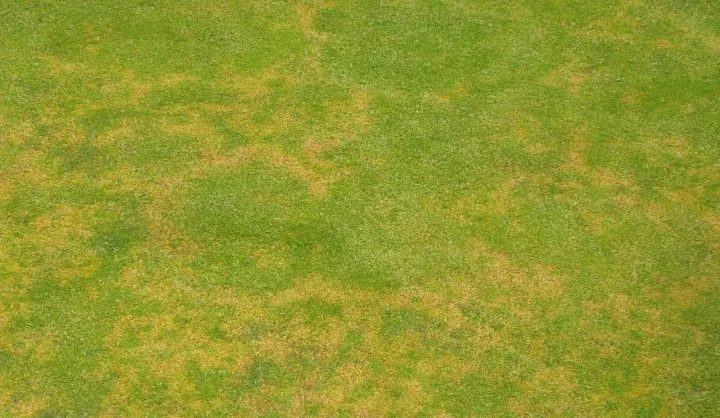
Description
Symptoms
The primary symptom is the yellowing, wilting, and eventual death of the above-ground plant parts. This often manifests in patches of varying sizes across the field or lawn.
Brown or dark necrotic lesions appear on the roots and the base of the stems. Under high humidity conditions, a loose, light-colored mycelium may be visible on the infected tissue.
In cereal crops, infection leads to stunted growth and reduced tillering, resulting in a thin stand. The root system becomes brittle, dark, and often collapses under severe pressure.
A key diagnostic feature is the necrosis in the crown zone, which impairs the transport of water and nutrients, leading to premature senescence of the plant.
The disease frequently appears early in the spring, as plants are emerging from dormancy and are more susceptible to soil-borne pathogens before they reach full vigor.
Pathogen
The disease is caused by the fungus Waitea nuda, which belongs to the Basidiomycetes group. It is a soil-borne pathogen capable of surviving for long periods in plant debris as mycelium or sclerotia.
Biologically, this species is closely related to the Rhizoctonia genus, leading to similar symptoms in the field. The fungus does not typically form conidia, spreading primarily through vegetative mycelial growth within the soil substrate.
The pathogen affects a wide range of hosts, including turfgrasses, cereal crops like wheat and barley, and various vegetable species. It is most commonly found in loamy or silt-rich soil environments.
Identification often requires microscopic examination of isolated cultures, as the pathogen lacks distinctive reproductive structures on common growth media, making it difficult to distinguish from other root-rot fungi.
The fungus exists primarily as a saprotroph but readily transitions to a parasitic lifestyle when environmental conditions become favorable, infecting root tissues and the crown area of plants.
Conditions for development
The development of Waitea nuda is favored by high soil moisture and moderate temperatures, typically between +15°C and +22°C, which are common in early spring.
Crowded planting or poor field drainage creates a microclimate with low aeration, which is ideal for the rapid spread of the mycelium between adjacent plants.
Soil pH plays a significant role in pathogen activity; the fungus is generally more aggressive in neutral to slightly acidic soils that are rich in organic matter.
Continuous cropping of cereals significantly increases the inoculum density in the soil, making subsequent seasons much more prone to severe outbreaks.
Prolonged waterlogging following snowmelt or heavy rainfall acts as a catalyst for rapid fungal colonization, especially when plant roots are already stressed.
Why it matters
The primary damage is caused by the destruction of the root system, which prevents effective nutrient and water uptake. This can lead to yield losses ranging from 20% to 40% in affected areas.
Infected plants exhibit reduced grain fill and lower quality, often resulting in shriveled seeds and reduced weight, impacting the overall market value of the harvest.
For turf and forage industries, the disease creates unsightly dead patches and "rings," which ruin the uniformity of the cover and necessitate expensive reseeding or soil treatment.
Plants weakened by this fungus are more susceptible to drought and secondary infections, often leading to total stand failure in highly infested fields.
Because the fungus survives as mycelium in the soil, it poses a long-term threat to subsequent crops, complicating the implementation of standard agricultural rotations.
Protection
Effective management begins with a robust crop rotation plan, alternating susceptible cereals with non-host crops to starve the pathogen of its food source.
Seed treatment with broad-spectrum fungicides is essential for protecting young seedlings from early infection during the critical stages of establishment.
Improving field drainage through proper land leveling and cultivation practices is vital to reducing the moisture levels that the fungus requires for rapid growth.
Balanced fertilization, particularly with potassium, can enhance plant cell wall integrity, making them more resistant to fungal penetration and colonization.
Sanitation practices, including the removal of crop residues and cleaning farm machinery between fields, are critical steps to prevent the movement of contaminated soil from infested areas to healthy ones.
Discussion
No discussions yet — be the first.