
Volutella blight
Volutella
The disease is caused by the imperfect fungus of the genus Volutella (most commonly the species Volutella buxi). This is a fungal infection that primarily affects woody plants and shrubs, leading to necrotic processes in the tissues.
What the section contains
Volutella blight
The fungus is a pathogen capable of surviving for long periods in plant debris and infected stems. Its spores are disseminated by rain splashes, wind, and non-sterilized garden tools during pruning.
The life cycle of the pathogen is closely tied to the weakening of the host plant's immune system. Mycelium penetrates the bark and wood, blocking the vascular system and causing the death of affected branch sections.
Volutella blight is often mistaken for physiological dieback or winter damage. However, the presence of specific spore cushions allows for accurate identification of the pathogen.
The biology of the fungus favors active development in high humidity conditions, making it particularly dangerous in dense plantings with poor canopy ventilation.
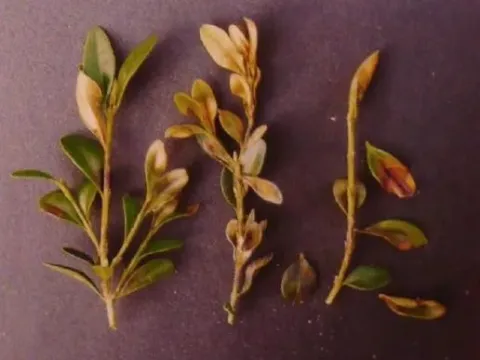
The first sign of infection is a change in leaf color: they turn yellow or brown, gradually drying out but remaining attached to the branches for a long time.
Characteristic pustules, appearing as pink or orange spore cushions, form on the undersides of infected leaves and on the bark of young shoots.
A classic symptom is the dieback of entire branches or branch sections. When cutting into infected wood, one can often observe the browning of the cambium and vascular ring.
Disease progression often starts from the tips of the shoots and gradually spreads deeper into the shrub, leading to a complete degradation of the plant's aesthetic value.
In advanced cases, the entire shrub appears stunted, the foliage becomes dull, and the bark becomes covered in cracks and ulcers from which fungal spores are released.
The primary factor contributing to the development of Volutella blight is excessive air and soil moisture combined with moderate temperatures.
Poor air circulation within the shrub canopy, caused by lack of thinning or overcrowding, creates an ideal microclimate for spore germination.
Weakening of the plant's immune system due to nutrient deficiency, pest damage, or environmental stress makes plants highly susceptible to pathogen invasion.
The spread of the infection accelerates during rainy periods when spores are washed onto healthy plant parts or neighboring specimens.
Mechanical damage to the bark, occurring during careless pruning or due to frost cracks, serves as a gateway for primary fungal infection.
Volutella blight poses a serious threat to decorative gardens, especially when growing boxwood, where the disease can lead to the total loss of the collection.
The disease causes premature leaf drop, which disrupts photosynthesis and significantly reduces the ornamental value of the plants.
Prolonged infection leads to the death of structural branches, causing shrubs to lose their shape and requiring drastic rejuvenation pruning.
Without timely intervention, the infection spreads rapidly across the garden, moving from diseased specimens to healthy decorative crops.
Economic damage includes the cost of replacing mature, expensive plants and the expenses incurred for high-quality fungicides required for treatment.
The foundation of protection is regular sanitary pruning: removing and immediately burning all infected plant parts back to healthy tissue.
Garden tools must be disinfected after every contact with an infected plant using alcohol-based solutions or chlorhexidine.
The application of systemic copper-based fungicides, as well as products based on mancozeb or azoxystrobin, helps to halt the spread of the fungus.
Prevention includes maintaining correct spacing during planting, ensuring regular canopy aeration, and providing balanced fertilization to maintain immunity.
- Regular inspection of plants during spring and autumn periods.
- Prompt removal of fallen leaves where spores might overwinter.
- Adherence to a watering regime that avoids soil waterlogging.
- Use of high-quality, disease-resistant plant material.