
Volutella blight of boxwood
Pseudonectria buxi
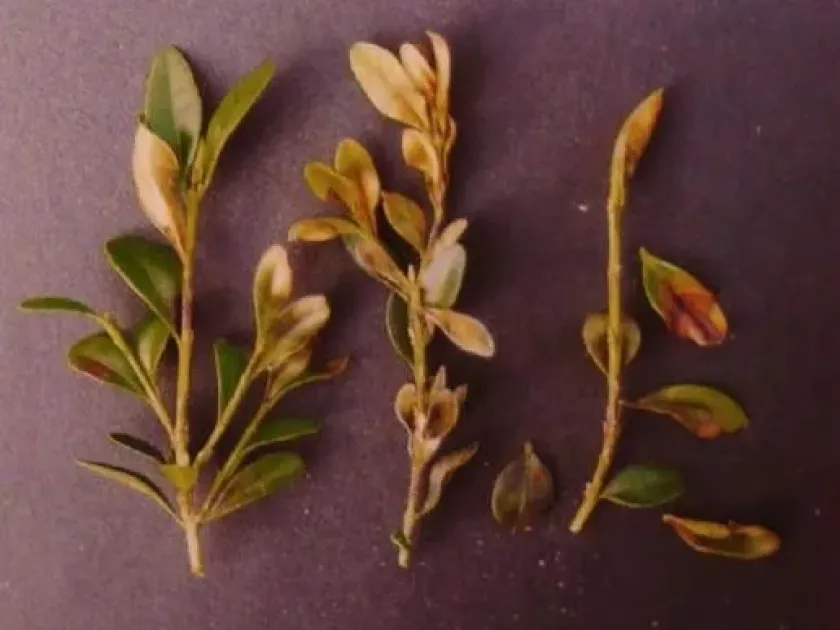
Description
Symptoms
The first symptoms of Volutella blight include a loss of the characteristic boxwood shine, followed by leaves turning yellow and eventually tan or brown.
A diagnostic feature is the appearance of salmon-pink or orange-colored spore masses (fruiting bodies) on the undersides of the affected leaves.
Branches gradually die back, leading to localized or systemic wilting of the entire shrub as the necrosis moves through the stems.
The bark on infected stems may become discolored, loose, or brittle, and in advanced stages, it tends to peel away from the underlying wood.
- Yellowing and browning of leaf tissue
- Salmon-pink spore pustules on leaf undersides
- Dieback of twigs and branches
- Bark cracking and peeling on stems
- Reduced vigor and stunted plant growth
Pathogen
The causative agent of this disease is the ascomycete fungus Pseudonectria buxi (formerly known as Volutella buxi). It is a specialized pathogen that exclusively affects species within the Buxus genus.
The fungus survives primarily in dead foliage and infected twigs that remain on or under the plant, serving as an overwintering reservoir for new infections.
Infection typically occurs through wounds caused by pruning, mechanical damage, or natural cracks in the bark, especially during periods of high moisture.
Once inside the plant, the mycelium colonizes the vascular tissues and shoots, leading to the disruption of water and nutrient transport.
The pathogen is highly dependent on humidity; spores are disseminated during wet weather, making consistent rainfall a major trigger for disease progression.
Conditions for development
Volutella blight thrives in high-humidity environments, particularly when stagnant water remains on the foliage for extended periods after irrigation or rain.
Poor air circulation, often caused by overcrowded planting or dense, unpruned foliage, significantly increases the susceptibility of boxwood to fungal attack.
Mild, wet winters and springs create optimal conditions for the fungus to spread, as these temperatures favor spore germination and colonization.
The use of unsterilized pruning tools is one of the most common ways the disease is introduced into healthy areas of the garden or new plants.
Plants that are already stressed by drought, winter injury, or poor nutrient management exhibit reduced natural defenses and are more prone to infection.
Why it matters
Volutella blight is a devastating disease for ornamental landscapes, as it can quickly disfigure high-value boxwood hedges and topiary specimens.
The aesthetic damage is often severe, requiring significant pruning that may ruin the intended shape or structure of the plant.
If left unmanaged, the blight can lead to complete plant collapse, necessitating the removal of mature specimens that provide key structural elements in a garden.
The pathogen is easily transmissible, posing a constant risk to surrounding boxwood plantings if the infected material is not promptly removed and destroyed.
Management costs are high due to the need for repeated fungicide applications and the intensive labor required for proper sanitation and pruning.
Protection
Sanitation is the most critical control measure; all infected or dead twigs and leaves must be pruned out and disposed of away from the garden.
Always sterilize pruning shears with a disinfectant solution between cuts or when moving from one plant to another to prevent cross-contamination.
Fungicide programs involving copper-based products or systemic fungicides like thiophanate-methyl can help manage outbreaks when applied preventively.
Pruning to open up the canopy improves airflow, which helps foliage dry faster and makes the environment less favorable for the fungus.
Maintain healthy plants through proper fertilization and watering practices to ensure the boxwood can effectively defend itself against minor infections.
Discussion
No discussions yet — be the first.