
Volvariella bombycina
Volvariella bombycina
Description
Symptoms
Volvariella bombycina manifests as large, striking mushrooms appearing directly from the trunks or branches of living trees, typically on hardwoods.
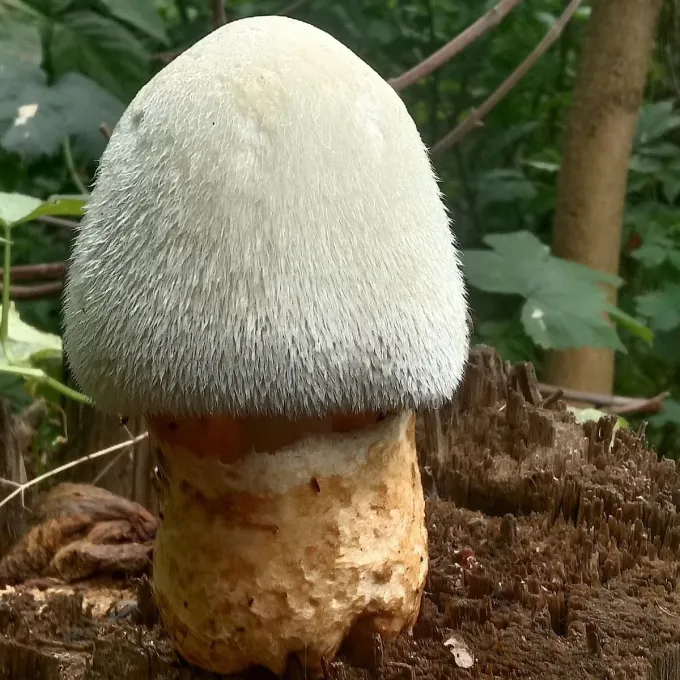
The fruiting body is characterized by a distinctive white or cream-colored cap with a silky, fibrillose texture, making it stand out against the bark.
Young specimens are often enveloped in a white membrane which eventually ruptures, while the base remains encased in a prominent, cup-like volva.
The gills underneath the cap change from white to a pinkish hue as the spores mature, which can sometimes be seen dusting the area below the mushroom.
The presence of these mushrooms is a clear visual signal that the internal wood tissues are being actively degraded by the fungus's mycelial network.
Pathogen
The pathogen responsible is the basidiomycete Volvariella bombycina, a wood-decay fungus belonging to the Pluteaceae family.
It acts as a white rot fungus, meaning it efficiently breaks down the lignin and cellulose that provide structural integrity to the tree's wood.
The fungus enters the tree through wounds, frost cracks, pruning cuts, or damage caused by insects, where it begins to colonize the internal xylem.
As a saprotrophic and occasionally parasitic organism, it feeds on the woody host, slowly consuming the internal heartwood over several seasons.
The fungal mycelium can remain hidden within the tree for years, silently weakening the structure before producing the seasonal fruiting bodies for reproduction.
Conditions for development
Volvariella bombycina thrives in environments with high humidity and moderate temperatures, often favoring sheltered or shaded locations.
Infection is highly dependent on the availability of entry points, such as exposed wood where the bark has been damaged or stripped away.
Poorly maintained landscapes or forests with dense canopies provide the damp conditions necessary for spores to successfully germinate on potential hosts.
Stressed trees, particularly those suffering from drought, previous physical trauma, or secondary pest infestations, are significantly more susceptible to colonization.
Spore dispersal is facilitated by wind and rainwater runoff, allowing the pathogen to move from decaying logs or infected trees to healthy specimens.
Why it matters
The primary damage caused by this fungus is the structural decay of the tree, specifically the development of white rot within the wood.
This decay compromises the mechanical strength of the trunk and branches, leading to a high risk of failure or limb drop, especially during severe weather.
The fungal infection disrupts the xylem's ability to transport water and nutrients to the crown, resulting in gradual decline, wilting, and branch dieback.
In forestry and urban landscape management, its presence significantly lowers the economic value of timber and poses a safety hazard in public areas.
Chronic infestations deplete the tree's overall energy reserves, making it progressively more vulnerable to other opportunistic pathogens and secondary pests.
Protection
Managing Volvariella bombycina focuses on preventative care and minimizing the risk of infection through careful tree management practices.
Immediate sanitization of any mechanical wounds or broken branches is crucial; all exposed areas should be treated and protected to block spore entry.
Removal of identified fruiting bodies can help reduce the local spore load, although this does not eliminate the internal mycelium already established.
If a tree shows significant internal decay, structural assessment by an arborist is recommended to determine if removal is necessary for safety reasons.
Promoting overall tree vigor through proper irrigation, fertilization, and protecting against bark-boring insects remains the most effective long-term defense.
Discussion
No discussions yet — be the first.