
Volutella necrosis
Volutella albidopila
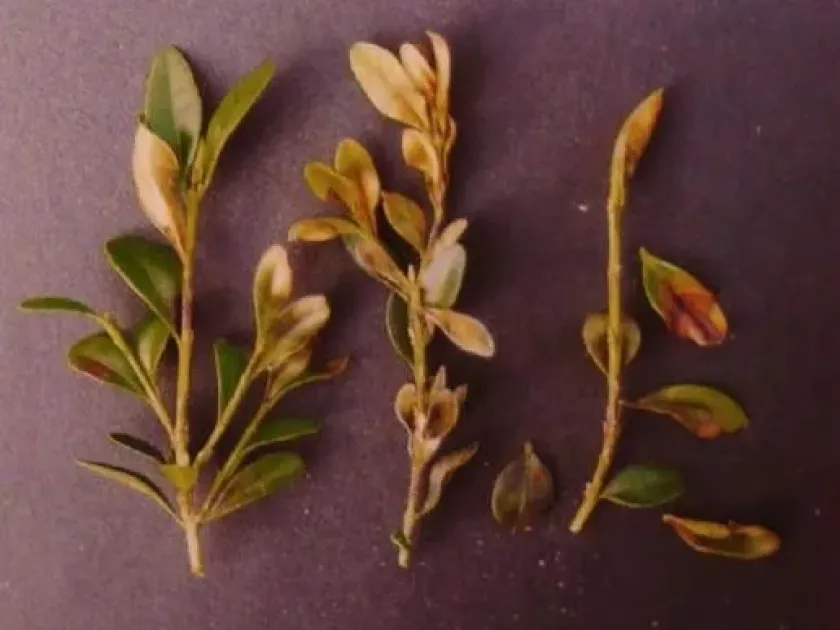
Description
Symptoms
The first symptoms of Volutella necrosis include the appearance of small brown spots on leaves and stems. These spots gradually enlarge, coalescing into larger necrotic areas that lead to localized tissue death.
A diagnostic sign of the infection is the development of pinkish-white spore-producing structures on the surface of dead bark or leaf tissues. These small pustules are often visible to the naked eye under humid conditions.
When the stems are affected, deep cankers often form, resulting in the girdling of branches. This obstruction of the xylem and phloem causes the distal parts of the branch to wither and die rapidly.
Leaves on infected branches often display chlorosis, curling, and early abscission. Over time, the affected plant canopy shows severe thinning and dieback, significantly impacting its overall health and ornamental value.
- Brown necrotic lesions on leaves and stems.
- Pinkish-white fungal pustules on dead tissue.
- Canker formation and bark splitting.
- Branch dieback and foliage shedding.
- General plant vigor decline.
Pathogen
The causative agent of this disease is the microscopic fungus Volutella albidopila. It belongs to the group of mitosporic fungi and is known for its ability to colonize weakened tissues, particularly in woody ornamental plants.
The pathogen primarily enters plants through wounds, natural cracks in the bark, or insect-damaged areas. Once inside, the fungal hyphae proliferate, disrupting the plant's vascular integrity and nutrient uptake processes.
Spores of the fungus are easily dispersed by wind, splashing rain, or contact with contaminated garden tools. This high mobility makes the pathogen a significant threat in dense plantings or commercial nurseries.
The fungus can survive for long periods in necrotic bark, fallen leaves, and soil debris. Its persistence in the environment makes total eradication difficult, necessitating consistent monitoring and sanitary practices.
Understanding the biology of Volutella albidopila is crucial, as the fungus is an opportunistic pathogen that thrives when plant immunity is compromised due to environmental or mechanical stress.
Conditions for development
High humidity and moisture levels are the most critical factors favoring the development of Volutella necrosis. Persistent rainfall or overhead irrigation creates the wet conditions required for fungal spores to germinate.
Poor air circulation within the plant canopy significantly increases the risk of infection. Densely planted areas retain humidity for longer periods, providing a perfect microclimate for the fungus to flourish.
Mechanical damage from pruning, storms, or pest infestation creates entry points for the pathogen. Failure to seal large pruning wounds with protective coatings makes plants highly susceptible to invasion by the fungus.
Temperature plays a role, with moderate temperatures between 15°C and 22°C being most favorable for fungal growth. During these periods, the pathogen can complete its infection cycle relatively quickly.
Plants suffering from nutrient deficiencies or inadequate light are more prone to infection. Strengthening the host plant through proper fertilization and horticultural maintenance is essential for disease prevention.
Why it matters
The primary impact of the disease is the destruction of the plant's vascular tissues, which leads to branch mortality. If left untreated, the necrosis can spread from branches to the main stem, potentially killing the entire plant.
In ornamental landscaping, the visual impact of Volutella necrosis is devastating. Plants that are dying back or have distorted foliage lose their aesthetic appeal, often necessitating removal and replacement.
Commercial nurseries face significant economic losses due to the disease, as infected stock must be destroyed to prevent further spread of the pathogen. This reduces the profitability and viability of plant production.
The cumulative effect of infection over multiple growing seasons causes severe stress to the plant, making it more vulnerable to other secondary pests and pathogens that thrive on declining hosts.
The cost of implementing management strategies, including chemical treatments and regular sanitation, adds significantly to the maintenance requirements of affected landscapes.
Protection
The most effective control strategy is the rigorous removal of all symptomatic branches. It is essential to prune back to healthy, living tissue to ensure all infected fungal mycelium is completely removed from the plant.
Sanitation of tools is mandatory; pruning shears should be disinfected with alcohol or a copper-based solution between every cut to prevent the mechanical transmission of spores to healthy areas.
Preventative chemical applications using copper fungicides are recommended to protect healthy tissues. These should be applied before the onset of the peak infection season or following major weather events.
Systemic fungicides, particularly those belonging to the triazole or strobilurin classes, can be used to manage the disease on established infections. Always follow the label guidelines for frequency and concentration.
Good cultural practices, such as proper spacing to ensure adequate airflow and avoiding overhead watering, are key to preventing the onset of Volutella necrosis in any professional or residential garden.
Discussion
No discussions yet — be the first.