
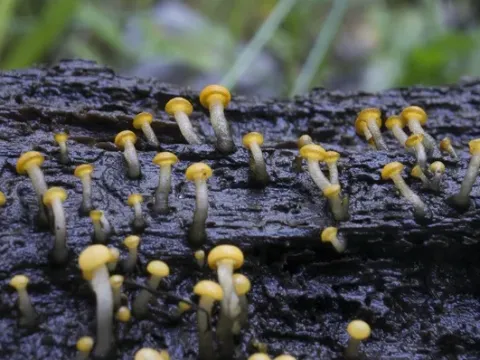
Vibrisseaceae
Vibrisseaceae
The Vibrisseaceae family belongs to the class Ascomycetes. These fungi primarily function as saprotrophs living on decaying plant matter, though some species exhibit opportunistic parasitic characteristics.
What the section contains
Vibrisseaceae
A key diagnostic feature of this group is the formation of apothecia, which are cup-like or disk-shaped fruiting bodies, frequently covered with fine hairs, allowing for microscopic identification.
The mycelium of these fungi invades plant tissues, secreting enzymes such as cellulases that break down structural polymers, leading to the gradual degradation of the substrate.
The life cycle involves the production of ascospores, which are disseminated via wind or water droplets, facilitating the colonisation of new susceptible host tissues.
Biologically, these fungi are essential in the decomposition of organic matter, although their presence in agricultural systems can pose a threat to crop health under favorable conditions.
The most visible sign of infection is the emergence of small, hairy, disk-shaped fruiting bodies (apothecia) on the surface of stems, leaves, or dead woody parts.
Infected areas often exhibit localized discoloration, turning gray or brown, accompanied by tissue softening as the fungus degrades the plant's internal structure.
In woody plants, the fungus can colonize the outer bark, leading to surface lesions and occasionally causing the shedding of small branches if the infection becomes systemic.
Diagnostic symptoms are most apparent during periods of high humidity, when the fruiting bodies fully expand and release spores into the environment.
The progression of the disease may also manifest as premature wilting or stunting, as the fungal growth disrupts the efficient transport of water and nutrients within the host.
High relative humidity is the primary driver for the development and proliferation of the Vibrisseaceae family in agricultural environments.
Optimal growth temperatures for these fungi typically range from 15 to 22 degrees Celsius, aligning with the active spring and summer growing seasons.
Poor air circulation, caused by dense planting or canopy cover, creates stagnant microclimates that promote spore germination and fungal colonization.
Prolonged rainfall provides the necessary moisture on plant surfaces, facilitating the survival and transmission of spores from infected debris to healthy plant tissues.
Stressed or weakened plants, whether due to nutrient deficiency or mechanical injury, are significantly more susceptible to infection by these opportunistic pathogens.
The primary impact of these fungi is the structural decay of plant tissues, which diminishes the overall vigor and productivity of the crop.
Infection results in aesthetic damage, which is particularly detrimental for ornamental horticulture and nursery production where quality is paramount.
By compromising the vascular system and cell wall integrity, the pathogen limits the plant's ability to thrive, often resulting in lower yields and poor fruit development.
Persistent presence of the fungus in the soil or crop residue creates a recurring disease cycle that is difficult to break without active intervention.
Affected crops also exhibit an increased vulnerability to secondary infections, as the tissue integrity is weakened by the initial fungal colonization.
Effective management begins with rigorous field sanitation, including the removal and destruction of crop residues that serve as a host for fungal survival.
Optimizing plant spacing and pruning techniques improves air circulation, significantly reducing the humidity levels that favor fungal growth.
Systemic fungicides are recommended when early symptoms are identified, as they can effectively curb the expansion of the mycelium within the tissue.
Implementing a balanced crop rotation schedule helps reduce the inoculum pressure in the soil, preventing the build-up of the pathogen over successive seasons.
- Selection of resistant plant varieties.
- Regular monitoring of fields for early signs of disease.
- Disinfection of pruning tools and equipment to prevent spread.