
Vibrissea
Vibrissea
The causative agent of the disease are fungi of the genus Vibrissea, which belong to the class Ascomycetes. These are specific cup fungi that mostly lead a saprotrophic or weakly parasitic lifestyle.
What the section contains
Vibrissea
The mycelium of this fungus develops primarily in plant tissues that are in conditions of high humidity. A biological feature of the species is its ability to effectively decompose plant residues.
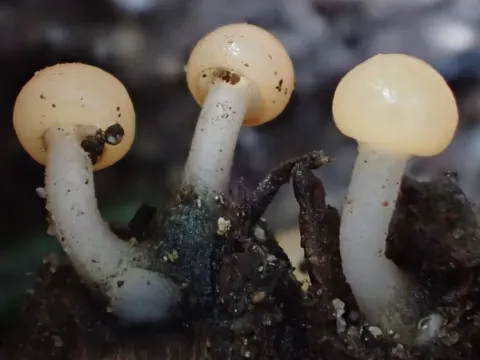
The fruiting bodies (apothecia) usually have a club-shaped or cap-on-stem form. They have a bright color, making them noticeable on the substrate after the spores mature.
Reproduction occurs via ascospores, which are released into the environment when optimal humidity and temperature levels are reached. These spores can be carried by air currents or water droplets.
The taxonomy of the fungus involves adaptation to aquatic or semi-aquatic habitats, which distinguishes it from typical terrestrial phytopathogens affecting field crops.
The main external sign of infection is the appearance of specific fruiting bodies on plant tissue. They look like small, often brightly colored (yellow, orange, or white) "studs" on stalks.
At the points of mycelium penetration, softening of plant tissues is observed. The tissues lose their structural integrity, take on a watery appearance, and undergo accelerated decay.
Leaves or shoots affected by Vibrissea may yellow or darken prematurely. The process of tissue destruction is often accompanied by a change in the natural color of the affected part of the plant.
On decaying wood or plant remains, a whitish or gray mycelial coating is often visible. This indicates an active process of colonization of the available nutritional substrate by the fungus.
In cases of infestation of woody debris in nurseries, the fungus can create a continuous carpet of apothecia, which is a visual indicator of a high degree of area contamination.
The main factor in the development of Vibrissea is high substrate humidity. The fungus prefers places with excessive moisture, even partial immersion of plant residues in water.
The temperature optimum for the development of apothecia is within moderate values; often, the fungus is most active during cool spring or autumn periods.
The presence of a large amount of rotting plant residues, such as fallen branches, needles, or leaves, creates an ideal nutritional base for colonization by the fungus.
Poor soil aeration and stagnant water conditions in fields or forest nurseries significantly accelerate the spread of spores of this phytopathogen.
The absence of sanitary measures to clear the territory of plant debris contributes to the accumulation of an infectious background over several seasons.
The damage manifests in the accelerated decomposition of organic mass, which is critical in forest nurseries and seedbeds. The fungus prevents normal healing of wounds on woody species.
Infestation by the fungus leads to a decrease in the commercial quality of wood and planting material. Weakened plants become more susceptible to secondary infections and pest infestations.
In greenhouse conditions, Vibrissea can attack weak or mechanically damaged parts of plants, causing local necrosis and stunted growth of seedlings.
Indirect damage consists of the depletion of nutrient reserves in the plant substrate intended for healthy crops due to the active life activity of the saprotrophic fungus.
Massive spread of the fungus complicates vegetative propagation processes, as cuttings harvested from affected areas rot quickly during rooting.
The primary measure is adherence to a phytosanitary regime: regular cleaning of the territory from plant debris, branches, and fallen leaves that serve as a substrate.
It is important to ensure good drainage in growing areas to eliminate stagnant water. Regulating soil moisture is a key aspect of preventing disease outbreaks.
To protect planting material, the use of broad-spectrum fungicides is recommended during the period of active sporulation of the fungus if the risk of infection is high.
Maintaining optimal planting density promotes better aeration, which prevents the creation of conditions favorable for the development of fungal structures.
When infection foci are detected, mechanical removal of the affected tissues followed by their destruction outside the production zone must be carried out.