
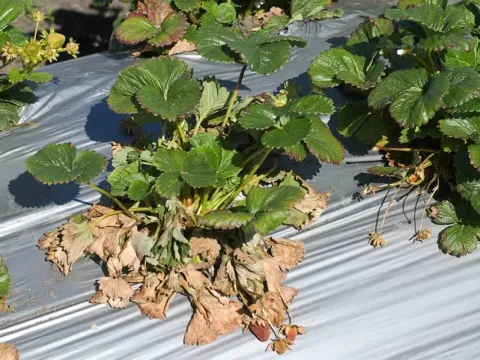
Verticillium wilt
Verticillium nubilum
The causal agent of this disease is the microscopic fungus Verticillium nubilum, which belongs to the class of imperfect fungi. This soil-borne pathogen is known for its extreme persistence, surviving in the form of microsclerotia within plant debris and soil.
What the section contains
Verticillium wilt
The fungus enters the plant through the root system, typically utilizing microscopic wounds or natural openings caused by soil pests. Once inside, the mycelium rapidly colonizes the vascular system, obstructing the flow of water and nutrients.
Microsclerotia are the primary survival structures of Verticillium nubilum. These structures are remarkably resistant to environmental stressors, allowing the pathogen to remain viable in the soil for several years even in the absence of a host crop.
This pathogen has a wide host range, affecting various agricultural crops, including potatoes, tomatoes, strawberries, and sunflowers. It can be disseminated through contaminated soil, infected nursery stock, and farming implements.
Beyond physical vascular obstruction, the fungus produces secondary metabolites and toxins. These substances poison the plant tissues from within, significantly accelerating the physiological wilting process.
The first symptoms typically appear on the lower leaves as interveinal chlorosis. As the disease progresses, the yellowing tissue turns brown, leading to necrosis of the affected leaf areas.
A classic diagnostic feature is the vascular discoloration observed when cutting into the stem or root crown. Dark brown or black streaks within the vascular tissue are a clear indication of a Verticillium infection.
During daylight hours, plants exhibit signs of wilting, particularly when temperatures are high. The plant may appear to recover at night, but as the obstruction in the xylem worsens, the wilting becomes permanent and irreversible.
In advanced stages of the disease, foliage curls, withers, and falls off prematurely. The plant's overall development is severely stunted, and if the infection is widespread, the plant may die entirely.
- Interveinal chlorosis on lower leaves.
- Brownish discoloration of the vascular tissues in stems.
- Loss of turgor during high temperatures.
- Premature leaf drop and stunted growth.
Verticillium nubilum development is favored by moderate temperatures and adequate soil moisture during the early stages of plant growth. The optimal temperature range for fungal activity is between 18°C and 25°C.
Heavy, poorly aerated soils that are prone to waterlogging significantly increase the risk of infection. Reduced oxygen levels in the soil weaken the root systems of crops, making them more susceptible to pathogen colonization.
Frequent cropping of susceptible host species on the same field creates a high inoculum pressure. The lack of proper crop rotation is the primary factor leading to the accumulation of microsclerotia in the soil.
Environmental stress, such as sudden temperature shifts, drought periods, or mechanical damage to roots during cultivation, serves as a catalyst for disease development.
Weed species, particularly those in the Solanaceae and Asteraceae families, act as symptomless reservoirs for the fungus, allowing it to persist in the field even during fallow periods.
The primary challenge in managing Verticillium wilt is that it is virtually incurable once systemic infection occurs. The blockage of vascular bundles renders standard systemic fungicides ineffective in restoring plant health.
The disease causes substantial economic losses by reducing both the yield volume and the quality of the produce. Infected plants often produce smaller, lower-quality fruits that are unsuitable for long-term storage.
For perennial crops, Verticillium wilt can lead to total orchard or field loss. This often requires the complete removal and replacement of plantings, which is a significant financial burden for producers.
Infection weakens the overall vigor of the plant, making it more susceptible to secondary pests and other pathogens, thereby complicating the management of the entire agro-ecosystem.
Because the fungus is a long-term soil resident, fields infected with Verticillium nubilum may become unsuitable for cultivating high-value crops for many years, limiting future land use options.
Strict adherence to crop rotation is the most effective management strategy. Susceptible crops should not be planted in the same field for a period of at least 4 to 6 years, with non-host crops like cereals or grasses preferred in the rotation.
The use of certified, disease-free planting material and resistant cultivars is essential for preventing the introduction and spread of the pathogen in agricultural fields.
Implementing proper field sanitation, including the removal and destruction of infected plant debris, helps reduce the inoculum density in the soil and prevents further propagation of the fungus.
Biological control methods, such as applying beneficial Trichoderma spp., can help suppress the population of the fungus in the soil and protect root surfaces from successful infection by the pathogen.
Good agricultural practices, such as optimizing irrigation to avoid waterlogged conditions and preventing mechanical injury to roots during inter-row cultivation, are vital for maintaining plant health and resilience.