
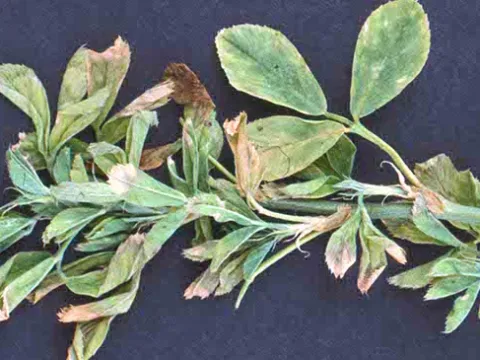
Verticillium wilt of alfalfa
Verticillium alfalfae
The causative agent of this disease is the soil-borne fungus Verticillium alfalfae (formerly known as a strain of Verticillium albo-atrum). It is a vascular pathogen that specifically targets alfalfa crops.
What the section contains
Verticillium wilt of alfalfa
The fungus enters the host plant through the root system, typically via wounds caused by agricultural machinery, frost, or soil insects. Once inside, it colonizes the xylem tissue.
The pathogen produces resting structures called microsclerotia, which allow it to persist in the soil for several years, even in the absence of an alfalfa host.
Dissemination occurs primarily through contaminated soil transported by farm equipment, as well as via infected seed lots and irrigation water runoff.
Because the disease is systemic, the fungus spreads throughout the plant's vascular network, effectively blocking the transport of water and nutrients, which leads to rapid decline.
Early symptoms include a slight yellowing of the leaflet margins, which often progresses into a distinct V-shaped chlorosis on the leaves.
Plants exhibit wilting symptoms during the warmest parts of the day when transpiration demands are high, with temporary recovery occurring at night.
A cross-section of the lower stem will reveal a diagnostic browning or darkening of the vascular ring, indicating the presence and activity of the fungal mycelium.
As the disease advances, the stems become brittle, lose their leaves, and turn gray. In moist conditions, a white fungal growth may appear on the surface of the stems.
Ultimately, the entire plant dies, resulting in thin, unproductive stands and patches of weed growth where the alfalfa has succumbed to the infection.
Disease development is favored by cool to moderate temperatures, typically ranging from 18 to 25 degrees Celsius, which are common during spring and autumn.
High soil moisture promotes the germination of microsclerotia and facilitates the initial infection of root tissues. Frequent irrigation can exacerbate the problem.
Mechanical harvesting acts as a major stressor and transmission vector; the fresh cut surfaces of stems provide easy entry points for fungal spores present in the environment.
Densely planted fields with poor air circulation can maintain microclimates that encourage fungal sporulation and spread across the field.
Plants that are nutrient-deficient or suffering from secondary pest damage are significantly more susceptible to successful colonization by the pathogen.
The primary impact of Verticillium wilt is a substantial reduction in yield. Infected stands may experience losses of 30 to 50 percent of biomass within the first few years.
Forage quality is severely degraded as infected plants lose leaves and protein content, making the hay less palatable and nutritious for livestock consumption.
The disease causes stand thinning, leading to increased weed competition and higher costs associated with early stand renovation or field replacement.
Root systems are progressively weakened, which reduces the plant's ability to store energy for the winter, often leading to increased winterkill and secondary root rot infections.
Economic sustainability is compromised as the lifespan of an alfalfa field is significantly shortened, forcing farmers to re-seed more frequently than planned.
The most effective strategy for managing Verticillium wilt is the deployment of resistant alfalfa varieties, which provide the best protection against the pathogen.
Implementing a rigorous crop rotation program is essential. Avoid planting alfalfa on the same ground for at least 4 to 5 years after an infection is confirmed.
Sanitation is critical; all equipment used in infected fields must be thoroughly cleaned before moving to healthy areas to prevent the spread of microsclerotia.
Harvesting should ideally be performed under dry conditions to minimize the risk of spreading spores and to help wounds heal more quickly on the stubble.
Maintaining optimal soil fertility and managing insect pests are important supporting measures to ensure the plants have the resilience to withstand initial pathogen pressure.