
Verticillium wilt of brassicas
Verticillium longisporum
Description
Symptoms
Initial symptoms of Verticillium wilt usually appear during the later stages of plant development, often during the seed-filling or heading phase.
Leaves typically exhibit yellowing, which often manifests on one side of the plant or in a V-shaped pattern on the leaf margin. This chlorosis is followed by necrosis and leaf drop.
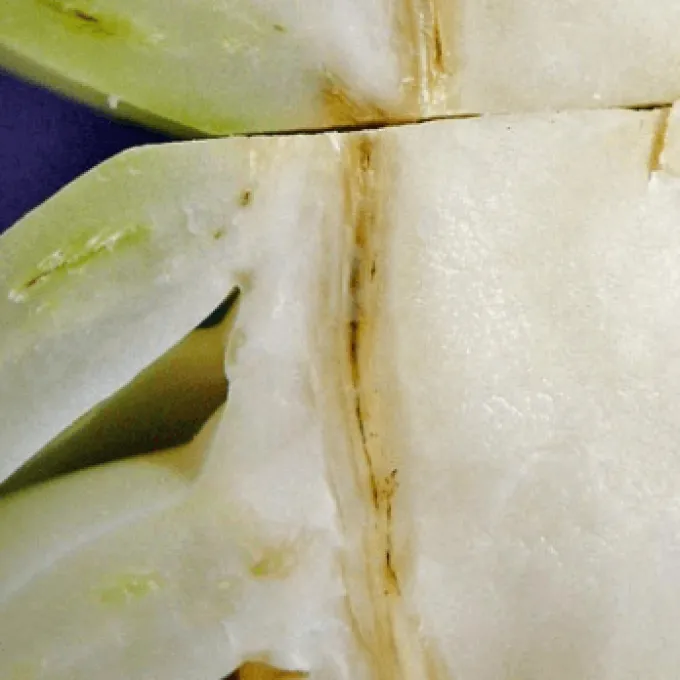
A diagnostic sign is the internal discoloration of the stem and root tissues. Upon cross-sectioning, a distinct darkening of the vascular ring is visible due to the presence of fungal biomass.
In oilseed rape, premature ripening is a common symptom. The stems may appear stunted, and the skin of the stem may peel back, revealing the black microsclerotia of the fungus.
In severe cases, the entire plant may wilt rapidly during hot, dry days, as the blocked vascular system cannot meet the transpiration demands of the plant.
Pathogen
The disease is caused by the soil-borne fungus Verticillium longisporum. This pathogen is highly specialized, primarily affecting crops within the Brassicaceae family, including oilseed rape, cabbage, cauliflower, and broccoli.
The fungus survives in the soil for many years as microsclerotia, which are dormant structures resistant to adverse environmental conditions. This longevity makes it a persistent threat in agricultural soils.
Infection occurs through the root system. The fungus enters the plant tissues, colonizing the xylem vessels, which are responsible for water transport throughout the plant.
As the mycelium spreads within the xylem, it produces toxins and physical blockages that obstruct the flow of water and essential nutrients from the roots to the upper parts of the plant.
The condition is identified as a vascular wilt disease. The physiological stress caused by this colonization eventually leads to the wilting and death of the host plant.
Conditions for development
The development of the disease is favored by moderate soil temperatures, typically between 20°C and 25°C. Warm and dry summers often exacerbate the visibility of symptoms.
Crop rotation practices that feature short intervals between susceptible brassica crops significantly increase the buildup of the pathogen in the soil.
Soil cultivation methods that cause root damage facilitate the entry of the fungus into the plant. Healthy roots are more resistant to initial colonization than damaged ones.
High plant density and proximity to wild brassica weeds, such as shepherd's purse, allow the fungus to persist and multiply even when a primary crop is not present.
While the fungus requires soil moisture for germination, it does not depend on high humidity in the same way as many foliar pathogens, making it a difficult disease to predict.
Why it matters
The economic impact of Verticillium wilt is substantial, with yield losses in infected fields often ranging from 30 to 50 percent depending on the severity of the outbreak.
Crop quality is severely compromised, leading to smaller seeds, reduced oil content in canola, and lower marketability of cabbage heads due to poor storage life.
The disease significantly weakens the plant, making it more susceptible to opportunistic infections from other soil-borne pathogens like Sclerotinia or bacterial soft rots.
Due to the persistence of microsclerotia, infested fields may become unsuitable for high-yielding brassica production for an extended number of seasons.
The hidden nature of the infection means that by the time visible symptoms occur, it is often too late to implement effective chemical interventions for the current crop.
Protection
The most effective strategy for managing this disease is a long-term crop rotation, ensuring that a minimum of 4–6 years pass between growing susceptible brassica crops.
Selection of resistant or tolerant cultivars is a crucial element of integrated pest management, although options remain limited for certain regions.
Strict weed management is essential to remove alternative hosts that may harbor the fungus and allow it to maintain its population in the soil.
Implementing minimal tillage practices can help reduce root damage during the growing season, thereby limiting entry points for the pathogen.
Promoting soil health through balanced fertilization and the addition of organic matter can help plants better withstand the stress induced by the fungal colonization.
Discussion
No discussions yet — be the first.