
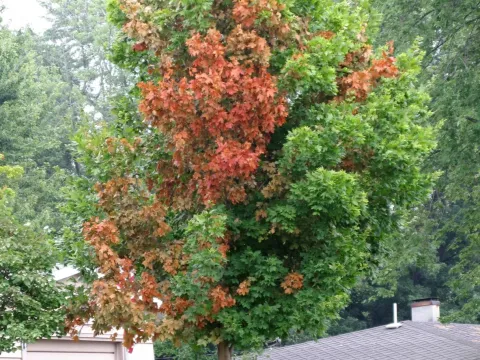
Verticillium wilt
Verticillium nonalfalfae
The causative agent of the disease is the soil-borne fungus Verticillium nonalfalfae, which belongs to the group of imperfect fungi and is known for its high pathogenicity.
What the section contains
Verticillium wilt
The pathogen produces long-lived survival structures called microsclerotia, which allow it to persist in the soil for several years even in the absence of a host.
The fungus infects plants through the root system, entering the vascular tissues and colonizing the xylem vessels, which eventually leads to the obstruction of water flow.
This pathogen is particularly dangerous due to its specialized ability to infect perennial plants, such as hops and alfalfa, causing chronic and devastating infections.
Spread is mainly facilitated by contaminated soil, infected planting stock, and agricultural equipment that transfers infested soil particles between fields.
Early symptoms typically include chlorosis of the leaves, which often appears in the lower canopy before spreading systematically throughout the entire plant.
A classic symptom is unilateral leaf chlorosis or necrosis, where only one side of the leaf turns yellow while the other side remains green.
As the infection progresses, affected shoots exhibit wilting and eventually turn brown or black as the plant loses its ability to transport water.
Cross-sections of the stem often reveal a characteristic browning or discolouration of the vascular bundles, confirming the presence of the pathogen inside the stem tissues.
Infected plants show stunted growth, significant leaf drop, and a progressive loss of turgor that is unresponsive to irrigation measures.
Verticillium nonalfalfae development is most rapid under moderate temperature conditions, ideally ranging from 18 to 25 degrees Celsius.
High soil moisture levels provide the necessary environment for the germination of microsclerotia and the subsequent colonization of the host's root system.
Plant stress, such as mechanical root damage from soil pests or improper fertilization, significantly increases the susceptibility of plants to the fungus.
Continuous monocropping of susceptible species without adequate rotation is a primary factor in the build-up of the pathogen in the soil over time.
Poor soil structure and lack of microbial activity can further assist the fungus in establishing dominance within the rhizosphere.
Verticillium wilt is a highly destructive disease that results in severe crop yield losses, as there is currently no effective chemical cure for infected plants.
The systemic nature of the infection means that once a plant is colonized, the vascular damage is irreversible, typically leading to the death of the entire host.
In industries like hop production, the disease can devastate entire yards, causing immense economic impact and requiring costly replanting efforts.
The persistence of the fungus in the soil renders infested land unsuitable for the cultivation of susceptible crops for many years.
Beyond quantity, the quality of the harvested produce is severely degraded, making it commercially non-viable for processors.
The most reliable control measure is the use of resistant or tolerant cultivars, which are selected specifically for their ability to withstand infection.
Strict crop rotation practices, where susceptible crops are not grown on the same plot for at least 5–8 years, are essential for reducing inoculum levels.
Sanitation is critical; all infected plant residues must be removed and destroyed to prevent the survival of the fungus in the soil.
Practicing rigorous hygiene protocols for machinery and tools prevents the cross-contamination of healthy fields with infected soil or plant debris.
- Applying bio-fungicides containing beneficial fungi like Trichoderma species to suppress the pathogen
- Balancing soil nutrient levels to promote overall plant vigor and stress resistance
- Monitoring fields regularly for the earliest signs of wilting to isolate infected areas immediately