
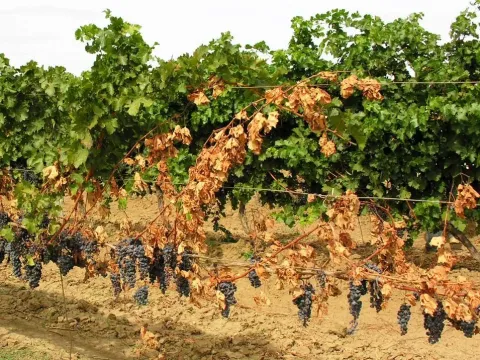
Verticillium wilt
Verticillium dahliae
The causative agent of this disease is the soil-borne fungus Verticillium dahliae. This pathogen is notorious for its resilience, as it produces microsclerotia that can remain viable in the soil for over a decade, waiting for a suitable host.
What the section contains
Verticillium wilt
The fungus enters the plant through the root system, typically via wounds or natural openings. Once inside, it colonizes the vascular tissues, specifically the xylem, where it proliferates and obstructs the upward flow of water and essential nutrients.
This pathogen has a very broad host range, affecting hundreds of plant species, including vegetables like tomatoes and peppers, woody ornamentals, fruit trees, and various field crops.
The biological success of Verticillium dahliae is largely due to its ability to survive in a wide range of soil temperatures and environmental conditions.
As the fungus colonizes the plant, it releases enzymes and toxins that cause the degradation of plant tissues, ultimately leading to the systemic collapse of the plant's vital functions.
The earliest symptoms usually manifest as chlorosis on the lower leaves. This yellowing often appears in a V-shaped pattern or along the margins, while the main leaf veins may remain green for some time.
As the disease progresses, the plant exhibits signs of wilting, particularly during the warmest hours of the day. Unlike other wilts, the plant may show signs of recovery during the night when transpiration rates are lower.
A definitive diagnostic feature is the vascular discoloration observed when cutting into the stems or roots. This usually appears as a dark brown or black ring in the cross-section of the stem.
In many cases, the growth of the plant becomes stunted, and the foliage may drop prematurely, leaving the plant sparse and unproductive before it eventually dies.
On fruit trees, Verticillium wilt often causes localized branch dieback, where one part of the canopy may appear healthy while another limb is completely wilted or dead.
The disease thrives in cool to moderate soil temperatures, with optimal development occurring between 20°C and 25°C. High soil moisture levels generally favor the initial infection and movement of spores.
Pathogen dispersal occurs mainly through the movement of infested soil by machinery, tools, irrigation water, and the use of infected plant materials or nursery stock.
Short crop rotations that do not allow sufficient time for the pathogen to die off in the absence of a host are a primary driver of disease accumulation in commercial fields.
Physical injury to roots during mechanical cultivation or the activity of root-feeding pests, such as nematodes, creates entry points that significantly increase the risk of infection.
Poorly drained soils or excessive irrigation can create the moist conditions necessary for the fungal spores to germinate and infect the root hairs of susceptible crops.
Verticillium wilt is a major economic burden for farmers, as it can drastically reduce yields. In severe cases, the entire crop can be lost, leading to significant financial deficits.
The quality of harvested fruit and vegetables is often compromised, with smaller sizes, poor aesthetic appearance, and reduced nutritional value, making the produce unmarketable.
Persistent presence in the soil means that growers must either abandon their land for many years or invest in expensive soil fumigation treatments to continue production.
In perennial orchards and vineyard settings, the impact is particularly devastating as it can destroy long-term investments and require the removal and replanting of entire tree blocks.
The cumulative effect of reduced production and the ongoing costs of disease management can threaten the long-term viability of agricultural enterprises.
Managing Verticillium wilt requires an integrated strategy, starting with the use of resistant or tolerant cultivars which are the most effective tool in the grower's arsenal.
Long crop rotations, ideally spanning 5–8 years with non-host crops like cereals or grasses, are essential to gradually reduce the population of microsclerotia in the soil.
Sanitation practices are critical: all infected plant debris should be carefully removed and destroyed, rather than incorporated back into the soil as compost.
Biological control agents, such as beneficial fungi or bacteria, can be applied to the soil to suppress the activity of the pathogen and promote a healthy root environment.
- Clean tools and machinery between fields to prevent cross-contamination.
- Avoid over-watering to keep soil conditions less favorable for fungal growth.
- Control nematodes and other root-feeding pests to minimize entry sites.
- Use certified, disease-free nursery stock for all new plantings.