
Verticillium wilt
Verticillium alboatrum
The disease is caused by the soil-borne fungus Verticillium albo-atrum (and Verticillium dahliae). It is a persistent pathogen capable of surviving in the soil as microsclerotia for over a decade.
What the section contains
Verticillium wilt
The fungus invades the plant through the root system, entering the vascular tissues, specifically the xylem vessels, where it begins to colonize the plant internally.
Once inside, the fungus secretes toxins and produces mycelia that physically clog the plant's water-conducting vessels, hindering nutrient and water transport.
It has an extremely wide host range, affecting over 300 plant species, including major agricultural crops like tomatoes, potatoes, strawberries, cotton, and various woody ornamentals.
The pathogen is systemic; it moves upwards from the roots into stems and leaves, eventually spreading throughout the entire structure of the host plant.
The most common initial symptom is the yellowing and wilting of lower leaves, which often progresses upward toward the top of the plant as the infection spreads.
Leaves often exhibit an interveinal chlorosis, where tissues between the veins turn yellow or brown while the veins themselves remain green for a longer period.
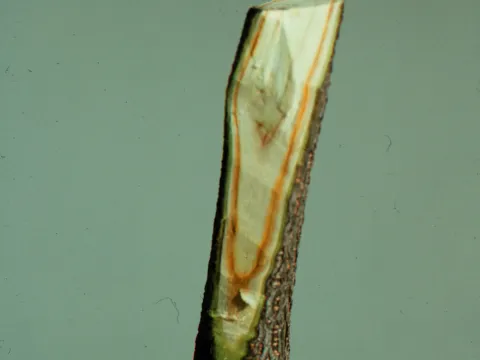
A diagnostic sign is visible upon cutting the stem: the vascular tissue underneath the epidermis will show distinct brown or dark discoloration.
Plants often exhibit stunted growth and reduced vigor. In severe cases, the entire plant may wilt permanently and die prematurely during the growing season.
In humid conditions, a sparse gray mold may appear on dead or dying tissues, consisting of fungal structures ready to spread to neighboring plants.
The disease thrives in moderate temperatures, typically between +18°C and +25°C, making it a frequent concern in both greenhouse environments and open fields.
High soil moisture generally favors the initial infection process as spores germinate and seek out the root surfaces of susceptible hosts.
The pathogen is readily spread through contaminated soil, movement of infected planting materials, and the use of unsterilized gardening equipment.
Stress factors, such as over-fertilization with nitrogen or moisture fluctuations, can weaken the plant's natural defenses and facilitate infection.
Poor crop rotation practices play a major role in disease development, as the fungus accumulates in the soil over consecutive planting cycles.
Verticillium wilt causes significant economic losses by reducing yields, stunting plant development, and leading to complete crop failure in highly susceptible varieties.
For fruit and vegetable crops, the disease results in poor quality, smaller fruits, and overall loss of marketability, impacting farm profitability.
In woody plants and trees, the infection can cause chronic dieback, canopy thinning, and the eventual death of the entire tree over several seasons.
Because the fungus lives inside the vascular system, it is notoriously difficult to eradicate once a plant has become systemically infected.
The persistence of the pathogen in the soil means that affected fields often require years of fallowing or non-host rotation before they can be safely replanted.
Implementing long-term crop rotation is essential; planting non-host crops for at least 5 years can help decrease the level of soil-borne inoculum.
Selection of resistant or tolerant cultivars is the most effective proactive strategy for managing the disease in commercial agriculture.
Sanitation is critical: all infected plant debris should be removed and destroyed (not composted) to prevent the buildup of microsclerotia in the soil.
Ensure that all tools and equipment used in the field are thoroughly cleaned and disinfected, especially after working in areas where infection is suspected.
- Use disease-free seeds and certified planting stock.
- Improve soil drainage to prevent overly saturated conditions.
- Control soil-borne pests that can cause entry wounds.
- Monitor soil temperature to adjust planting times.
- Apply biological control agents to improve soil health.