
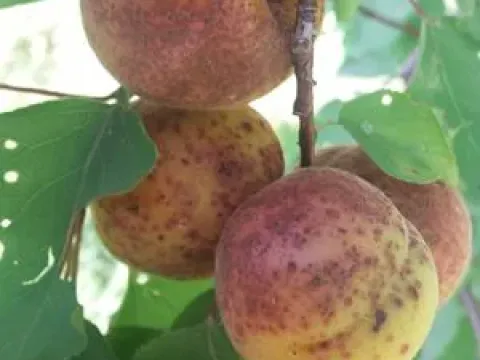
Peach scab
Venturia carpophila
The causative agent of the disease is the fungus Venturia carpophila (anamorph Cladosporium carpophilum). This pathogenic ascomycete fungus specifically targets stone fruit crops, including peaches, apricots, almonds, and plums.
What the section contains
Peach scab
The life cycle of the pathogen involves overwintering of the mycelium in infected twigs and fruit mummies left in the orchard. In spring, conidia are formed and dispersed by wind and rain droplets, initiating primary infection of young plant tissues.
The fungus develops primarily within the epidermal tissues of the plant. It exhibits a high capacity for rapid reproduction throughout the growing season, producing numerous conidia under favorable conditions.
The development of the fungus is facilitated by the presence of moisture on the plant surface. The pathogen enters tissues through stomata or mechanical injuries to the epidermis, gradually colonizing the host's intercellular spaces.
Laboratory identification of the pathogen involves microscopic examination of spores, which have a characteristic two-celled shape, allowing for differentiation from other species within the Venturia genus.
The first signs of infection appear on fruits as small, round, olive-green spots. Over time, these spots darken, develop a velvety texture, and can coalesce into large necrotic zones.
On current-season shoots, the disease manifests as brown or purple spots with diffuse edges. In cases of severe infection, the bark in these areas may crack, which weakens the overall health of the tree.
Leaves are infected less frequently than fruits, but small chlorotic or necrotic spots may occur. Infection on leaves is usually not critical but serves as an additional source for conidia dispersal.
A characteristic sign of progressing disease is fruit deformation. The infected areas cease growing while healthy tissue continues to expand, resulting in deep cracks and lopsided fruit development.
In high humidity, an olive-black fungal growth, consisting of conidiophores and spores, becomes clearly visible on the surface of the spots and is easily dispersed across the tree canopy.
Optimal conditions for scab development include warm and humid weather with frequent rainfall or heavy dews. The fungus spreads actively at temperatures ranging from 15 to 25 degrees Celsius.
Dense plantings and a lack of proper canopy aeration create a microclimate with high humidity, which is an ideal factor for the development of epiphytotics.
High intensity of rainfall in the period after stone fruit flowering significantly increases the risk of primary infection of young ovaries, as water is the main vector for spore dispersal.
Poor agricultural practices, including improper overhead irrigation, can lead to prolonged wetness of the canopy, which is critical for conidial germination.
Damage to the fruit epidermis by hail or pests facilitates pathogen entry into tissues, accelerating the onset and progression of disease symptoms.
The primary economic impact is a significant loss in the market quality of the harvest. Infected fruits lose their aesthetic appeal, the skin becomes rough, and flavor quality decreases.
Fruit cracking makes the crop highly susceptible to secondary infections, such as brown rot (Monilinia), which can lead to total loss of harvested produce during storage.
Prolonged infection of shoots leads to premature dieback, which disrupts the photosynthetic process and weakens the entire tree, reducing its cold hardiness.
Productivity decline is caused not only by direct fruit spoilage but also by the general exhaustion of the plant due to the metabolic cost of fighting the pathogen throughout the season.
On a commercial scale, peach scab can lead to a reduction in marketable yield by 30-50% in years particularly favorable to the pathogen.
Cultural control measures include mandatory sanitary pruning of infected twigs in autumn or early spring and the removal of mummified fruits, where the infection overwinters.
Thinning the canopy is highly recommended to improve aeration and ensure rapid drying of leaf and fruit surfaces after rainfall.
Chemical control is based on preventive fungicide applications during critical plant development stages: before flowering, immediately after flowering, and during active ovary growth.
- Application of copper-based products in early spring.
- Use of systemic fungicides (triazoles, strobilurins) when the first signs appear.
- Adherence to recommended spray intervals during rainy periods.
To prevent the development of fungicide resistance in the fungus, it is essential to rotate products with different active ingredients and modes of action.