
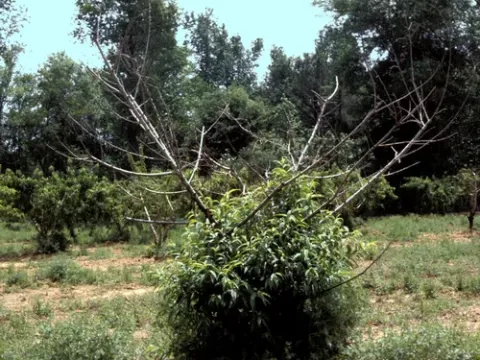
Peach Tree Short Life
Complex of
Peach Tree Short Life (PSL) is a complex syndrome rather than a disease caused by a single pathogen, resulting from a combination of environmental and biological factors.
What the section contains
Peach Tree Short Life
A primary biotic factor is the presence of ring nematodes, specifically Criconemoides xenoplax, which feed on roots and significantly weaken the tree.
The bacterium Pseudomonas syringae pv. syringae is a critical secondary agent that invades weakened trees, leading to bacterial canker and cambium necrosis.
The syndrome is exacerbated by latent fungal pathogens that colonize necrotic tissues and further damage the vascular system of the peach tree.
Collectively, these factors create a physiological collapse, preventing the tree from maintaining its vital functions during the critical spring growth period.
The most dramatic symptoms typically appear in early spring when the tree starts to break dormancy and move nutrients to developing buds.
Affected branches show sudden wilting and drying of flowers and young leaves, which often remain attached to the tree for an extended period.
Copious gummosis, or the leaking of sap from the trunk and major scaffolds, is a hallmark sign of the systemic stress caused by the syndrome.
Internal examination of the trunk reveals dark, necrotic tissues in the cambium layer, often accompanied by a sour or fermented odor.
Trees may experience sudden collapse and death within a single season or show a slow decline characterized by pale foliage and reduced vigor.
The syndrome is most prevalent in orchards planted on sites with previous histories of stone fruit cultivation, which harbor nematode populations.
Fluctuating winter and early spring temperatures cause cold injury and freeze-thaw cycles that create wounds in the bark and wood.
Poor soil drainage and low soil pH levels significantly increase the tree's vulnerability to nematode damage and bacterial invasion.
Improper pruning timing, specifically pruning too early in the dormant season, facilitates the entry of bacterial pathogens into the tree's tissues.
Low-vigor rootstocks that are poorly matched to the specific soil and climate conditions of the orchard are more susceptible to the complex.
The syndrome causes catastrophic loss of productive peach orchards, typically claiming trees that are 3 to 7 years old and entering their prime production.
Financial losses are substantial, as affected trees cannot be cured and must be removed, leading to the premature loss of the entire investment.
The erratic nature of tree death makes orchard management extremely difficult and reduces the overall yield and profitability of the fruit farm.
The presence of PSL limits the choice of planting sites and forces growers to abandon potentially productive land or implement costly soil treatments.
The long-term impact on the industry is a reduction in the sustainability and lifespan of peach orchards in regions where the syndrome is endemic.
Effective management begins with site selection and soil preparation, including pre-plant fumigation if nematode populations are confirmed.
Utilizing high-quality, certified nursery stock grafted onto nematode-resistant rootstocks is the most effective long-term preventative measure.
Cultural practices should focus on reducing tree stress, such as maintaining optimal soil moisture and providing balanced nutrition throughout the year.
Pruning should be delayed until late winter or early spring to minimize the window of opportunity for bacterial infection in fresh cuts.
- Monitoring for early signs of tree decline to facilitate timely removal.
- Applying copper-based bactericides to protect bark and pruning sites.
- Ensuring proper orchard sanitation to remove infected debris.