
Peanut late leaf spot
Nothopassalora personata
Description
Symptoms
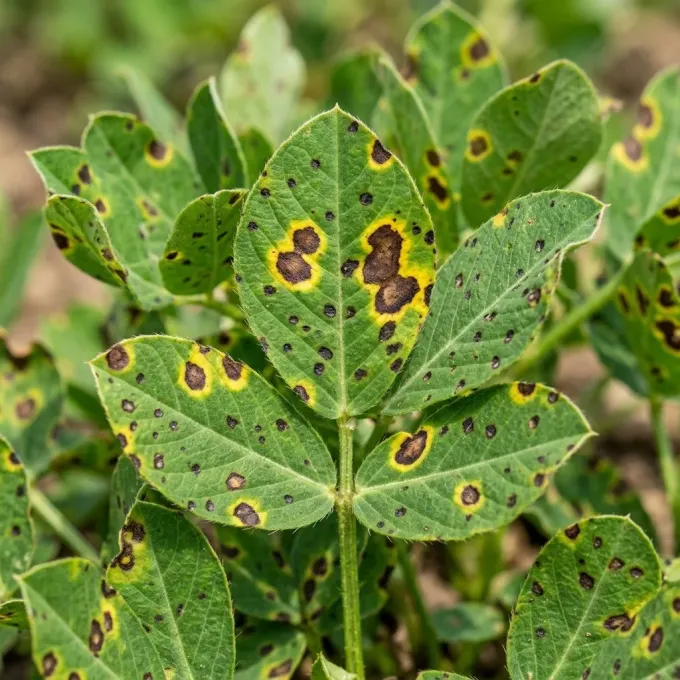
The primary symptoms are small, circular spots that are dark brown or nearly black in color, appearing on the upper surface of the leaflets. These spots are typically more distinct and darker than those of early leaf spot.
On the underside of the leaves, concentric rings of fungal sporulation appear within the spots. These appear as velvety, dark brown tufts, which are easily visible upon close inspection.
As the disease progresses, these spots can coalesce, covering large areas of the leaf blade. This leads to premature chlorosis and subsequent defoliation, starting from the lower canopy.
Lesions are not limited to the leaves; the pathogen can also infect stems and petioles, forming elongated brown spots that may weaken the plant structure.
In high-humidity conditions, infected plants appear stunted and weak, with significant loss of foliage which is essential for proper pod development.
Pathogen
The disease is caused by the fungus Nothopassalora personata (formerly known as Cercospora personata). This pathogen belongs to the class Hyphomycetes and is a specific parasite of cultivated peanuts.
The fungus persists in the soil on infected plant debris and can also be seed-borne, making long-term management challenging. During the growing season, the pathogen produces conidia, which are disseminated by wind, rain splashes, and insects.
The fungal mycelium invades leaf tissues by entering through stomata or mechanical wounds. Affected areas eventually undergo necrosis, which severely impairs the photosynthetic efficiency of the plant.
The life cycle of the fungus is relatively short, allowing for multiple generations during a single growing season under favorable weather conditions, making it highly aggressive.
While the pathogen is highly host-specific, it can devastate commercial peanut fields when environmental conditions trigger rapid disease progression.
Conditions for development
Late leaf spot thrives in warm and wet weather, especially with frequent rainfall. The optimal temperature range for spore germination is between +20°C and +25°C.
High relative humidity (above 80%) is a critical factor for the initiation of an epidemic. Surface moisture on leaves, such as dew or fog, is necessary for conidia to germinate and penetrate the tissue.
Dense crop canopies and poor ventilation within the field create microclimates that retain moisture, significantly increasing the risk of widespread infection.
Plants under nutrient stress or those weakened by other pests are more susceptible to infection by Nothopassalora personata spores.
Crop rotation practices that return peanuts to the same field too frequently lead to the buildup of fungal inoculum in the soil.
Why it matters
The main impact of the disease is premature defoliation, which severely reduces the photosynthetic activity necessary for pod filling and seed maturation.
A significant reduction in leaf area leads to substantial yield losses, which can range from 30% to 50% in severe epidemic cases.
Damage to stems and petioles restricts the translocation of nutrients, resulting in shriveled seeds, lower oil content, and overall poor quality of the harvested produce.
The disease weakens the plants, making them more susceptible to opportunistic secondary infections, which further degrade crop health and value.
The economic loss is exacerbated by the high cost of intensive fungicide applications required to maintain field productivity in high-pressure areas.
Protection
Crop rotation is a fundamental management practice; planting peanuts in the same field should be avoided for at least 3-4 years to reduce soil inoculum.
Utilizing resistant or tolerant peanut cultivars is an effective way to minimize disease severity and reliance on chemical sprays.
Proper tillage after harvest helps bury plant debris, accelerating its decomposition and reducing the pathogen's ability to overwinter.
The application of systemic or contact fungicides (based on copper, triazoles, or strobilurins) is necessary as soon as the first symptoms are detected.
- Regular field scouting starting from the early flowering stage.
- Optimizing planting density to ensure better air circulation.
- Effective weed management to remove potential alternate hosts.
- Using high-quality, certified, and treated seed lots.
Discussion
No discussions yet — be the first.