
Peanut cercospora leaf spot
Cercospora arachidicola
Description
Symptoms
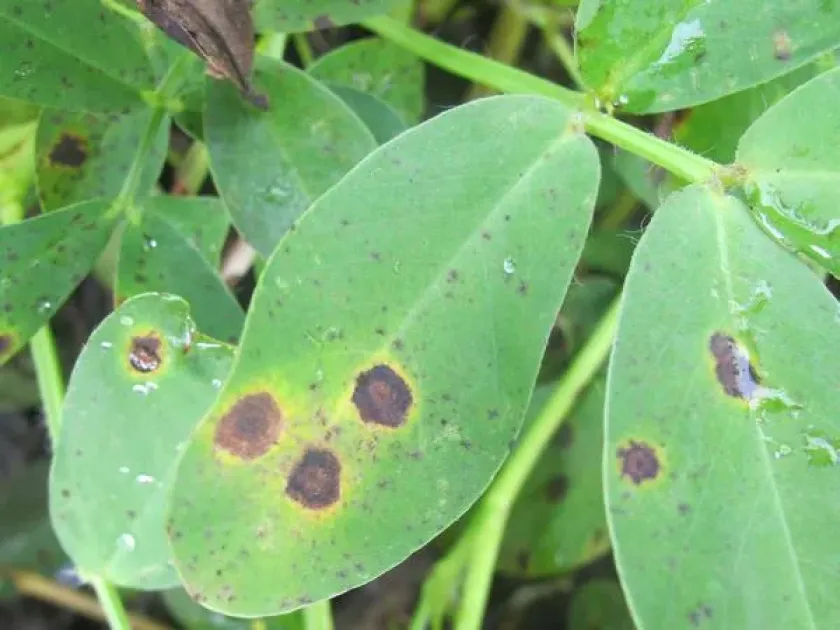
The initial symptoms present as small, chlorotic yellow spots on the leaves. Over time, these spots darken, turning reddish-brown or dark brown as the tissue becomes necrotic.
A classic diagnostic feature of this disease is the presence of a distinct yellow halo surrounding each necrotic spot. As the infection progresses, these lesions enlarge and often merge to cover most of the leaf surface.
Under humid conditions, the centers of the spots become covered with a grayish-brown, velvety mat. This is the conidial mass, which contains thousands of spores capable of infecting neighboring leaves.
The disease typically starts from the lower leaves and moves upwards throughout the canopy. In severe cases, it can also manifest on petioles and stems, resulting in significant tissue damage.
As the spots mature, they cause the leaves to lose their integrity, leading to premature defoliation. This leaf loss is the most visible sign of an advanced infection.
Pathogen
The causal agent of early leaf spot in peanuts is the fungus Cercospora arachidicola (teleomorph Mycosphaerella arachidis). It is a persistent pathogen that survives in soil debris and infected plant residues from previous seasons.
The fungus produces conidia, which act as the primary inoculum for spreading the disease. These spores are disseminated by wind, rain splashes, and farm machinery, allowing the pathogen to travel across fields rapidly.
Cercospora arachidicola specifically targets peanut plants, with the fungus mycelium invading leaf tissues through stomata. This specialized parasitic relationship allows the fungus to thrive during the peanut growing season.
Once inside, the fungus colonizes the intercellular spaces, secreting enzymes that break down plant cells. This nutrient extraction process is what eventually leads to the formation of visible necrotic lesions.
The pathogen is highly adaptable and can persist in various climatic conditions, provided there is enough plant residue to support its survival during the off-season.
Conditions for development
Peanut cercospora leaf spot flourishes in warm, humid weather. The disease is most severe when there is a combination of frequent rainfall and temperatures between 25 and 30 degrees Celsius.
Leaf wetness is critical for the pathogen's development. Rain, dew, or high humidity levels that keep the leaves wet for several hours allow the fungal spores to germinate and penetrate the host tissue.
Canopy density plays a major role in disease severity. Dense plantings prevent air circulation, which keeps the interior of the canopy moist for longer periods and favors fungal growth.
Periods of high humidity, particularly during the flowering and pod-filling stages, create the most favorable conditions for the disease to spread aggressively throughout the field.
Nutrient stress, particularly potassium deficiency, can make plants more susceptible to infection. Maintaining soil fertility helps plants resist initial colonization by the fungus.
Why it matters
This disease is considered one of the most destructive leaf spot pathogens for peanuts worldwide. The primary damage stems from extensive defoliation, which severely limits the plant's ability to photosynthesize.
When the leaf surface area is reduced, the plant cannot produce enough energy to fill the pods effectively. This results in shriveled kernels and significantly lower total yield.
Beyond quantity, the disease can affect the quality of the harvest. Reduced oil content and weakened seed health are common in heavily infected crops, lowering their market value.
Furthermore, early leaf loss exposes the stems and pods to additional stressors. This weakened state increases the susceptibility of the plant to secondary infections and opportunistic pests.
If left unmanaged, the impact on production is substantial. Yield losses of up to 50% have been documented in uncontrolled fields, making prophylactic measures essential.
Protection
Cultural management is the first line of defense. Rotating peanut crops with non-host species for 3 to 4 years helps reduce the inoculum level in the soil significantly.
Deep plowing after harvest is an effective technique to bury crop residues deep in the soil, speeding up the decomposition process and reducing the pathogen's survival.
Fungicide applications are often necessary in high-pressure environments. Effective chemical control involves timing treatments with the appearance of the first symptoms and following strict application protocols.
Breeding and planting resistant or tolerant peanut varieties is the most sustainable approach to long-term disease management. These varieties require fewer chemical inputs over the season.
- Utilize clean, certified seeds for planting.
- Optimize plant spacing to improve canopy aeration.
- Implement balanced fertilization programs based on soil tests.
- Monitor field conditions regularly to time fungicide applications accurately.
Discussion
No discussions yet — be the first.