
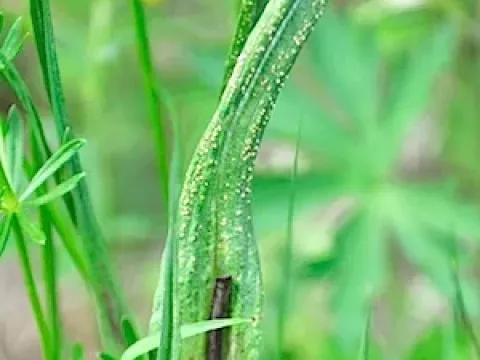
Scorzonera smut
Ustilago scorzonerae
The disease is caused by the specialized fungus Ustilago scorzonerae, a basidiomycete that acts as an obligate parasite of the Scorzonera genus. It is highly host-specific, affecting only these plants.
What the section contains
Scorzonera smut
The pathogen produces teliospores, which are extremely resilient to harsh environmental conditions. These spores can persist in the soil or on plant debris for several seasons, posing a long-term threat to cultivation.
Infection usually occurs at the seedling stage. The fungus penetrates the young tissues, establishing a systemic infection that persists throughout the plant’s entire growth cycle without showing immediate signs.
The mycelium colonizes the plant's vascular system, drawing nutrients and redirecting the plant's energy toward the production of fungal spores instead of normal growth and reproduction.
As the plant enters the reproductive phase, the pathogen concentrates its biomass in the inflorescences, replacing flower structures with a dark, powdery mass of fungal teliospores.
Initial symptoms are often latent until the flowering stage. Affected plants might appear slightly stunted or show subtle changes in leaf color or growth vigor, which are easily overlooked by inexperienced observers.
The most diagnostic sign is the transformation of flower heads. Instead of normal florets, the plant develops black, dusty spore masses often covered by a thin, fragile membrane that ruptures easily.
Once the membrane breaks, the powdery spores are dispersed by wind, splashing rain, or insects to neighboring plants. This creates a rapid spread of the disease within the field.
Visual deformity of the flower stalks is a key indicator. Stems may appear swollen, twisted, or distorted in comparison to healthy plants, signaling the internal presence of the fungal mycelium.
Infected seeds are entirely non-viable. The reproductive capacity of the plant is completely hijacked, meaning that harvesting seeds from an infected field is strictly prohibited due to high contamination risks.
The primary economic impact is the total loss of seed yield. Since the pathogen destroys the inflorescences, farmers cannot collect viable seeds from affected plots, leading to severe financial losses.
The disease negatively affects the development of the taproot. Even if the plant survives, the root tends to be smaller, inferior in quality, and less resistant to environmental stress.
The presence of Ustilago scorzonerae spores creates a persistent reservoir of inoculum in the soil, preventing the cultivation of Scorzonera in that location for several consecutive years.
Infection weakens the overall health of the crop, making it more susceptible to secondary pathogenic infections and environmental stressors that healthy plants would otherwise withstand.
Large-scale outbreaks can lead to significant crop failure, particularly in seed production sectors where maintaining the purity and health of the plant material is the primary objective.
Effective management begins with using certified, disease-free seed. Seed treatment with appropriate systemic fungicides is essential to eliminate spores present on the seed coat before planting.
Strict crop rotation is necessary to break the disease cycle. A rest period of at least 3–4 years between Scorzonera plantings allows the soil-borne spores to lose their viability naturally.
Proactive field sanitation is vital. Growers should conduct regular inspections during the budding phase and manually remove and destroy any plants showing signs of deformation or black spore masses.
Maintaining optimal soil health and balanced fertilization helps the plants grow vigorously. Strong, healthy plants have higher natural resistance and are less likely to succumb to early infection.
Weed management is also important, as other related Asteraceae species might potentially act as alternative hosts, keeping the fungus alive in the field environment.