
Scutellinia scutellata
Scutellinia scutellata
Description
Symptoms
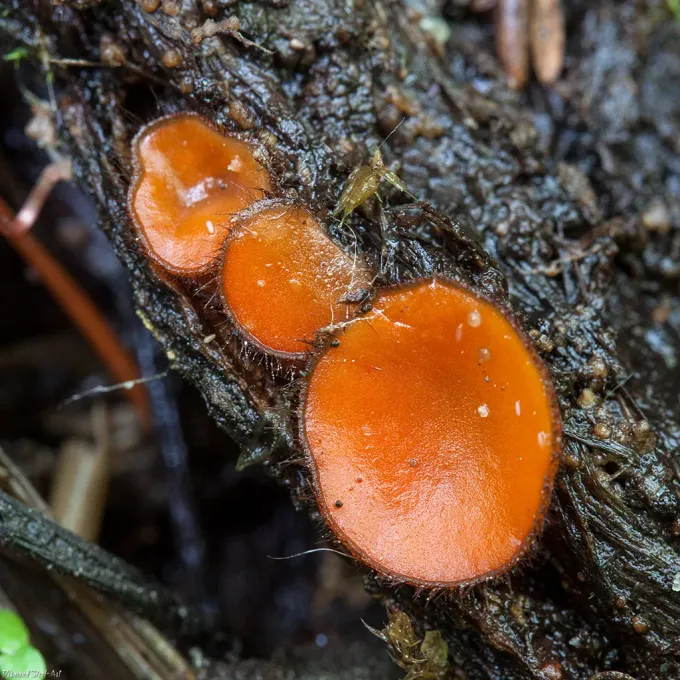
The fruiting bodies are highly distinctive, appearing as small, bright red or orange cup-shaped disks, typically measuring 5–15 mm in diameter.
The margins of these cups are fringed with conspicuous, dark, stiff hairs, often called "eyelashes," which give the fungus its common name.
They frequently grow in dense, crowded clusters on the surface of rotting logs, wet sawdust, or damp earth, creating a vivid visual display.
There is a total absence of traditional disease symptoms on nearby vegetation, such as leaf lesions, wilting, or necrotic stem discoloration.
Upon examination, one will find no mycelial penetration into living roots or vascular systems, confirming the non-pathogenic nature of the species.
Pathogen
Scutellinia scutellata, commonly known as the eyelash fungus, is a member of the Pyronemataceae family. It is vital to state that it is a saprobe, not a plant pathogen.
This organism obtains nutrients by decomposing dead organic matter, such as decaying wood, leaf litter, or moist soil rich in organic compounds.
Unlike parasitic fungi, it does not attack living plants or healthy tissue, thus it does not cause diseases in agricultural or garden crops.
Its biological cycle is focused on the enzymatic breakdown of lignocellulose, which plays a necessary role in natural forest and garden ecosystems.
While often noticed by growers, its presence is a sign of decomposition processes occurring in the environment rather than a pest infestation.
Conditions for development
The primary driver for the development of Scutellinia scutellata is high moisture content within the microenvironment, usually following heavy rainfall.
It thrives in shaded, sheltered locations with poor ventilation where humidity remains consistently high, allowing the mycelium to spread across the substrate.
Rotting logs, damp wood mulch, and soil covered with partially decayed organic debris are the most common environments where this fungus appears.
The species prefers stable, moderate temperatures and requires the absence of direct, drying sunlight to keep its fragile fruiting bodies hydrated.
Agricultural practices that promote water stagnation or involve piling wet organic waste near crops provide the ideal habitat for this saprophytic fungus.
Why it matters
Scutellinia scutellata does not pose a direct threat to crop yield or health, as it lacks the physiological mechanisms to parasitize living plant structures.
The primary concern is that its presence acts as an indicator of excessive moisture, which, if ignored, can indeed favor the growth of true pathogenic fungi.
Gardeners may experience the rapid breakdown of organic mulch layers, requiring more frequent replenishment to maintain soil structure and weed suppression.
Aesthetic issues may arise in ornamental gardens or manicured lawns where the sudden emergence of bright fruiting bodies might be considered unsightly.
While generally harmless, the massive release of spores in enclosed, poorly ventilated spaces could potentially cause minor respiratory irritation in sensitive individuals.
Protection
Since this fungus is not a pathogen, no chemical fungicide applications are recommended, as they would be ineffective and unnecessary for the ecosystem.
Management should focus on cultural practices, specifically improving soil drainage to prevent the excessive moisture that the fungus requires.
Maintaining garden hygiene by removing old, rotting wood piles and clearing away damp, decaying organic debris will naturally limit its appearance.
Increasing air circulation by spacing plants appropriately helps dry out the soil surface, creating a less hospitable environment for the fungus.
Using fully composted organic amendments instead of fresh, raw wood chips can prevent the introduction of opportunistic fungi into the growing area.
Discussion
No discussions yet — be the first.