
Zizania smut
Ustilago esculenta
The causal agent of this disease is the basidiomycete fungus Ustilago esculenta. It is a highly specialized pathogen that primarily infects Zizania latifolia, also known as Manchurian wild rice.
What the section contains
Zizania smut
The disease is characterized as a systemic smut infection. The fungus colonizes the host's vascular tissues and induces significant changes in the plant's metabolic and hormonal systems.
The biological cycle of the pathogen is intrinsically linked to the host's vegetative growth. It spreads via mycelium through infected plant cuttings and via spores that survive in soil and irrigation water.
The fungal mycelium persists within the rhizomes and stalks of the plant. During periods of active growth, the fungus triggers irregular cell division, leading to the development of characteristic galls.
Unlike many other smut fungi, Ustilago esculenta is sometimes cultivated intentionally in some regions to produce edible galls, though in cereal crops, it acts strictly as a destructive pathogen.
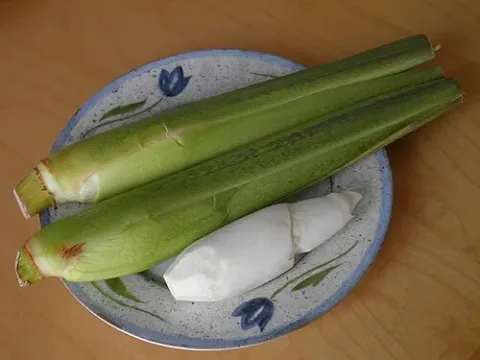
The most prominent symptom of the infection is the abnormal swelling of the lower stem, where soft, whitish galls are formed as the fungal mycelium colonizes the plant tissues.
As the disease progresses and the fungus enters the reproductive stage, the galls turn dark grey or black due to the formation of a dense mass of chlamydospores.
Infected plants often exhibit stunted growth and fail to develop normal flowering panicles, as the plant's resources are diverted to sustain the growth of the fungal galls.
Morphologically, the interior of an infected stem appears loose and spongy, packed with fungal hyphae, which eventually replaces the normal plant tissue structure.
Early detection is possible through careful observation of stem thickness during the initial stages of the growing season before the black spores become visible.
High humidity and consistent soil moisture are essential for the development and spread of Ustilago esculenta, especially in aquatic or marshy agricultural environments.
Optimal temperatures for fungal colonization and gall development typically range between 15°C and 25°C. Lower temperatures may slow the spread but do not eliminate the infection.
Crowded planting schemes facilitate the rapid transmission of spores through stagnant irrigation water, allowing the fungus to infect healthy neighbor plants easily.
Wounds or natural pores at the base of the stems provide entry points for the pathogen. Environmental stress can weaken the host plant, making it more susceptible to penetration.
Long-term continuous cultivation of Zizania on the same site creates a persistent inoculum source in the soil, significantly increasing the probability of severe outbreaks.
The primary economic impact of Zizania smut is the severe reduction in grain yield, as infected plants are generally sterile and incapable of producing viable seeds.
For large-scale farming operations, the presence of the pathogen requires extensive sanitization efforts and may lead to the total loss of marketable product in infested fields.
Secondary infections often exacerbate the damage, as tissues weakened by the smut fungus become prone to attack by other opportunistic bacteria and pathogens.
The pathogen limits the choice of land for future cultivation, as infected sites remain contaminated with spores that can remain dormant and viable for several years.
Overall, the disease forces growers to implement rigorous surveillance and costly phytosanitary measures to prevent the spread of the infection to clean areas.
The cornerstone of disease management is the selection of disease-free propagation material sourced from certified, healthy mother plants to avoid introducing the fungus into clean fields.
Practicing strict crop rotation is essential. Growers should avoid planting Zizania on the same field for at least 3-4 years to allow for the natural decline of spore populations in the soil.
Immediate identification and removal of infected plants is a critical measure to reduce the total amount of inoculum in the water and soil during the growth cycle.
- Regular field scouting for early symptoms.
- Proper drainage management to prevent stagnant water zones.
- Sanitation of farming tools and equipment between sites.
- Use of certified fungicide treatments for seeds or cuttings where applicable.
Preventative strategies are far more effective than chemical control, as the internal nature of the systemic infection makes it difficult to eradicate with post-infection treatments.