
Pilidium
Pilidium
Pilidium is a fungal disease caused by the Pilidium genus. This pathogen is known for its ability to attack various trees and woody shrubs, primarily colonizing their bark and underlying tissues.
What the section contains
Pilidium
The biology of the pathogen involves the production of pycnidia, which are specialized fruiting bodies. These structures develop within the host tissue and serve as the site for the formation of conidia.
The fungus is highly resilient and can persist in plant debris, dead branches, and even infected bark for extended periods. This persistence makes it a challenging pathogen to manage in agricultural settings.
Infection typically begins when fungal spores penetrate the host through wounds, cracks, or natural openings in the bark. Once inside, the mycelium begins to colonize the host tissue, feeding on its resources.
As a necrotrophic pathogen, Pilidium kills the plant cells upon contact and extracts nutrients from the decaying material. This rapid colonization leads to the formation of visible necrotic lesions on the affected plant parts.
The primary symptom of a Pilidium infection is the appearance of localized necrotic lesions on branches and stems. These areas often appear darker than the surrounding healthy bark and may become slightly sunken.
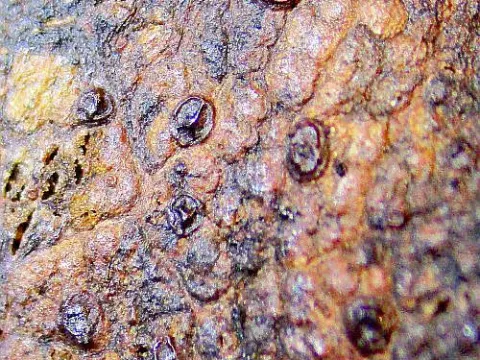
Small, dark, pinpoint-like structures, known as pycnidia, become visible on the surface of the infected bark. These structures emerge by rupturing the epidermis during the pathogen's sporulation phase.
A common sign of severe infection is the sudden wilting and death of branches. If the infection circles the entire branch (girdling), the part of the plant above the lesion will dry up and die.
Leaf yellowing and premature leaf drop often occur on affected branches, signaling a disruption in the plant's vascular system. This reduction in foliage significantly impacts the plant's overall health.
Under humid conditions, a visible mass of spores may appear on the necrotic surface. This spore mass is highly infectious and can be spread to other plants by wind, water, or agricultural machinery.
High humidity and mild to moderate temperatures are the primary environmental conditions that favor the development of Pilidium. Rain and prolonged leaf or stem wetness are crucial for spore germination.
Poor orchard or garden management, such as a lack of thinning and pruning, creates a dense canopy. This prevents air circulation and maintains the high humidity levels necessary for the fungus to thrive.
Physical injuries, such as frost cracks, sunscald, or pruning wounds, act as entry points for the pathogen. Trees that have recently undergone stress are significantly more susceptible to infection.
Poor soil health and nutrient deficiencies can weaken a plant's natural defenses, making it easier for the fungus to establish itself and spread throughout the vascular system.
The accumulation of dead wood and plant debris in the orchard serves as a reservoir for the disease. If these materials are not removed, they continue to release spores throughout the growing season.
Pilidium causes significant harm by leading to the premature death of productive branches, which directly reduces the yield and overall productivity of the crop.
Continuous infection weakens the tree, making it prone to opportunistic pests and other secondary diseases. If left untreated, the cumulative damage can lead to the death of the entire tree.
Infection results in reduced fruit quality and size because the tree is unable to efficiently transport nutrients and water. This directly lowers the marketability and value of the harvest.
The presence of the disease increases maintenance costs, as it necessitates intensive sanitation measures, such as frequent pruning and disposal of infected plant material.
If not contained, the disease can rapidly spread throughout a plantation or nursery. This risks total loss of young, sensitive plantings that have not yet established a strong defense system.
Sanitation is the most effective control method. This involves the regular removal and burning of all infected branches to eliminate the primary source of the inoculum.
Sterilizing pruning tools between every single cut is vital to prevent the mechanical transmission of the fungus from infected to healthy branches.
Applying copper-based fungicides as a preventative measure in the early spring can significantly reduce the potential for spore germination and infection establishment.
Improving plant health through balanced fertilization and correct watering practices enhances the tree's natural resilience against fungal attacks.
- Regular inspection for early signs of bark necrosis.
- Applying protective paint or sealant to large pruning wounds.
- Maintaining proper spacing to ensure adequate light and air movement.