
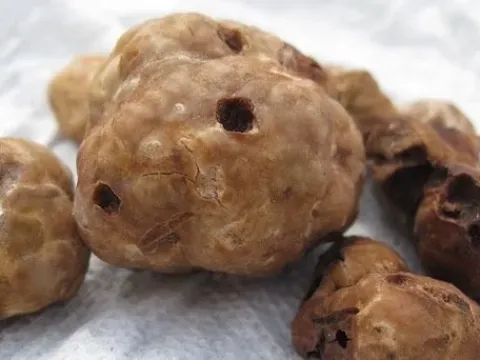
Oregon white truffle
Tuber gibbosum
The Oregon white truffle, scientifically known as Tuber gibbosum, is an ascomycete fungus and is not a plant disease. It acts as an obligate mycorrhizal symbiont rather than a pathogen that harms plants.
What the section contains
Oregon white truffle
The organism forms an ectomycorrhizal association with the roots of specific tree species, primarily the Douglas fir. This biological relationship is characterized by a mutually beneficial exchange of resources between the fungal mycelium and the tree roots.
Unlike pathogenic fungi that degrade plant tissues, Tuber gibbosum focuses on absorbing soil nutrients and water, delivering them to the host tree in return for carbon-rich sugars produced through photosynthesis.
It belongs to the Tuberaceae family and represents a healthy component of the soil ecosystem. In agricultural and forestry contexts, it is essential to distinguish between such symbiotic organisms and true fungal pathogens.
Biologically, the fungus is highly specialized, requiring a living host to complete its lifecycle. Without the tree host, the fungal colony cannot survive, confirming its dependence on plant vitality rather than its destructive capacity.
There are no visible signs of damage, such as leaf wilting, bark necrosis, or growth stuntedness, associated with this fungus. The host plant typically displays robust health and normal growth patterns.
Laboratory examination of the root system may reveal the presence of a mycorrhizal mantle, which is a structural feature of the symbiotic connection. This is not a symptom of disease but a functional sign of healthy interaction.
During the fruiting season, subterranean fruit bodies may be found beneath the soil surface. These are the reproductive structures of the fungus and are the only significant visible sign of its presence.
The absence of typical necrotic lesions or pathogenic decay indicators serves as evidence that the plant is not undergoing an infectious process. This fungus does not compromise the structural integrity of the root system.
In monitoring programs, the presence of these truffles is often used as a biological indicator of soil quality and ecosystem health, rather than a sign of a pathological condition.
The growth of the Oregon white truffle is strictly limited to ecosystems where suitable host trees, such as Douglas fir, are present and thriving. The host tree's physiological status is crucial for the fungus.
Optimal environmental conditions include well-drained, slightly acidic soils with sufficient organic matter. High levels of moisture in the forest floor are essential for the maturation of the fruit bodies.
The fungus is sensitive to environmental disturbances. Changes in soil temperature or excessive chemical applications can disrupt the fragile network of mycelium that sustains the symbiotic relationship.
Biological dispersal is facilitated by small animals that feed on the truffles and distribute spores through their waste, allowing the fungus to colonize new areas within the forest landscape.
Stable climatic conditions, typical of the Pacific Northwest region, provide the necessary environment for the fungus to develop its subterranean fruiting structures effectively.
The Oregon white truffle poses no harm to agricultural or forestry crops. It is entirely beneficial as it enhances the host tree's ability to absorb water and essential minerals from the soil.
There is no record of Tuber gibbosum acting as a plant pathogen or causing any decline in tree productivity. On the contrary, it helps trees withstand periods of environmental stress.
The concern that this fungus could be a disease agent is based on a misunderstanding of its ecological role. It does not produce toxins or enzymes that degrade woody structures or living plant tissue.
The fungus does not compete with the host for critical resources. Its metabolic activity is geared towards maintaining the host's vitality, which ensures a steady supply of carbon for the fungus itself.
Therefore, managing this object as a pest or a disease is counterproductive and environmentally unnecessary, as it provides valuable ecosystem services.
No protection or control measures are necessary for the Oregon white truffle. As a symbiotic organism, it is a protected asset of the forest ecosystem that should be nurtured rather than eliminated.
Forestry practices should prioritize the conservation of the forest floor and the maintenance of mature host trees to ensure the persistence of the fungal population.
The use of broad-spectrum fungicides in areas where this fungus is present should be avoided, as it can inadvertently destroy the beneficial mycorrhizal networks that support tree growth.
Educational programs for forest managers and agronomists should emphasize the role of mycorrhizal fungi, encouraging the correct identification of these beneficial species in the field.
In conclusion, the focus should remain on monitoring ecosystem health rather than seeking to control a fungus that performs a vital symbiotic role in the natural forest environment.