
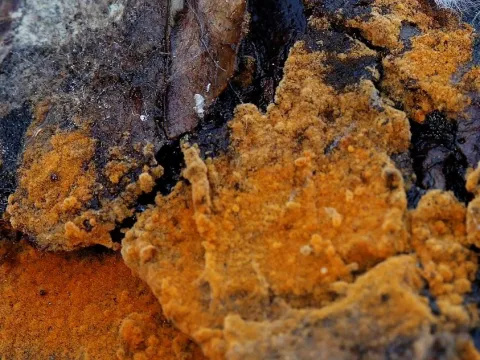
Tomentella bryophila
Tomentella bryophila
Tomentella bryophila is a basidiomycetous fungus belonging to the order Thelephorales. In an agronomic context, this microorganism is classified as a soil-borne saprotroph capable of exhibiting pathogenic properties under specific conditions.
What the section contains
Tomentella bryophila
The pathogen belongs to a group of fungi that form a thin film on the surface of the soil or plant debris, resembling felt or a fuzzy coating. The fungal mycelium actively colonizes organic substrates, utilizing enzymatic systems to degrade plant tissues.
The biology of this species is closely linked to moist environments. The fungus is often associated with mosses, which is reflected in its name, but it can also affect the root collars and root zones of various agricultural crops.
The type of disease caused by this fungus is most often characterized as root rot or seedling blight. The pathogen penetrates plant tissues through micro-cracks or areas of mechanical damage, especially when the plant's natural immunity is weakened.
Unlike highly specialized parasites, Tomentella bryophila acts as a facultative parasite. This means that the fungus primarily develops in the soil, and its transition to a pathogenic state is a secondary process influenced by environmental factors.
The primary external sign of the pathogen's presence is the appearance of a characteristic brownish or grayish coating in the root zone of the plant. This coating visually resembles a thin layer of felt tightly adhering to the stem.
In infected areas, stem tissues begin to darken and soften. In early stages, signs may be inconspicuous, but as the infection progresses, noticeable wilting occurs even if the plant receives adequate irrigation.
The root system of infected plants often appears stunted, with significant dieback of fine absorbing roots. In cases of severe infection, the stem at the soil contact zone may become thin, eventually leading to lodging.
Microscopic examination of affected areas reveals the presence of dark-brown hyphae that intertwine tightly to form mycelial cords. Humid weather conditions stimulate intense sporulation and expansion of the fungal colony.
A crucial diagnostic feature is the absence of distinct leaf spots, as the infection is primarily localized in the root collar and base. Gradual yellowing of the lower leaves indicates a disruption in nutrient uptake caused by root damage.
High soil moisture and humidity in the surface air layer are the key conditions for the active development of Tomentella bryophila. The fungus prefers waterlogged areas, so fields with poor drainage are at a significantly higher risk of infection.
While temperature plays a secondary role, the fungus shows maximum activity in moderately warm conditions typical of spring and autumn. Sudden temperature fluctuations can stress plants, making them more susceptible to colonization.
The accumulation of large amounts of undecomposed plant residues in the soil creates an ideal substrate for fungal propagation. The pathogen successfully overwinters in the soil as mycelium or dormant structures.
Poor agricultural practices, particularly excessive crop density, facilitate the creation of a microclimate with high humidity, which is a direct favorable factor for the spread of the infection.
Soil pH also influences population dynamics. Research indicates that the pathogen thrives in neutral to slightly acidic soils that are rich in organic matter.
The harmfulness of Tomentella bryophila lies in the significant reduction of productivity in affected crops. By destroying the root system, the plant loses its ability to effectively absorb water and essential nutrients.
The greatest economic impact is observed in the early growth phases, where the infection can lead to seedling damping-off. This forces agronomists to replant affected fields, incurring additional costs.
Mature plants infected by the fungus exhibit stunted growth and reduced resistance to other stressors, such as drought or secondary pathogens, leading to an overall decline in yield.
The presence of this fungus can complicate the certification of seed material if the infection affects the root zones of fruits or seeds. Furthermore, the quality of commercial produce often degrades due to reduced fruit weight and size.
The fungus is capable of surviving in the soil for long periods, making control in fields with intensive crop rotation a difficult task. The gradual buildup of the infectious background requires constant monitoring.
Prevention is the foundation of management for this fungus. First and foremost, ensuring efficient soil drainage is essential to eliminate stagnant rainwater or irrigation water, thereby depriving the pathogen of favorable conditions.
Following proper crop rotation schemes helps reduce the population density of the pathogen. It is recommended to avoid monocultures and ensure timely deep tillage to facilitate the rapid decomposition of post-harvest residues.
Applying balanced mineral fertilizers, especially potassium and phosphorus, boosts plant immunity, enabling them to better resist infection. Avoid excessive nitrogen application, which promotes the growth of soft, vulnerable plant tissues.
Using fungicides for seed treatment before sowing allows for the protection of young seedlings during the most critical developmental stage, preventing the initial penetration of the fungus into plant tissues.
In cases of widespread infection in crops, the use of biological control agents that suppress fungal growth in the soil is effective. Additionally, regular monitoring of field conditions during periods of high humidity is mandatory.