
Togniniales
Togniniales
The order Togniniales consists of a group of ascomycetous fungi recognized as significant pathogens of woody plants. A well-known representative of this group is Togninia minima, which is associated with its anamorph, Phaeoacremonium aleophilum.
What the section contains
Togniniales
These pathogens predominantly infect the xylem of the host plant. They inhabit the vascular system, where they can survive for extended periods, slowly colonizing the woody tissues.
The disease mechanism involves the formation of perithecia (fruiting bodies) within the wood, which produce spores that spread the infection throughout the plantation.
The pathogen thrives by interfering with the plant's nutrient and water transport mechanisms, leading to a gradual decline in the health of the host organism.
Its biological cycle is adapted to persist in dead wood, making it an extremely persistent threat in agricultural environments if not properly managed.
Symptoms often manifest as a progressive decline in plant vigor. On grapevines, one of the most indicative signs is the presence of dark, necrotic spots visible on the cross-sections of the trunk or cordons.
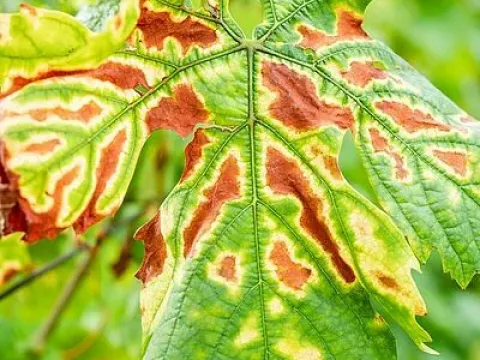
Foliar symptoms may include chlorosis, where the leaves turn yellow between the veins, and eventual necrosis along the margins, which can be easily mistaken for nutrient deficiencies.
Stunted growth is a hallmark of this disease; affected plants often fail to produce new shoots of normal length, resulting in a sparse and unhealthy canopy.
During the peak of the growing season, infected plants may show sudden wilting due to the failure of the vascular system to supply adequate water to the foliage.
- dark internal wood discoloration;
- stunted shoot growth;
- interveinal leaf chlorosis;
- progressive dieback of branches;
- unfavorable berry ripening.
Environmental conditions play a crucial role in the dissemination of Togniniales. Warm temperatures, generally ranging from 20 to 25 degrees Celsius, are optimal for spore production and mycelial growth.
High humidity and rainfall facilitate the release of ascospores, which are then disseminated by wind or splashing water onto open pruning wounds.
Agricultural practices are the primary driver of infection. Pruning tools that are not sterilized between plants act as a direct transmission route, moving the pathogen from sick to healthy plants.
Plant stress, caused by drought, poor soil management, or mechanical injuries, increases the susceptibility of crops to colonisation by these fungi.
Poor ventilation within the orchard or vineyard creates a microclimate that promotes the survival and further spread of the pathogen spores during the dormant season.
The economic impact of Togniniales is significant, particularly in viticulture. The disease causes a steady decline in yield, making plants economically unviable over time.
The damage to the vascular system is irreversible. Once the pathogen colonizes the main trunk, the plant cannot be cured, eventually leading to death.
Fruit quality is severely compromised; berries from infected vines often fail to accumulate sufficient sugars and exhibit poor coloring, rendering them unfit for high-quality production.
The mortality rate of affected plants increases during harsh winters as their natural cold-hardiness is reduced by the underlying fungal infection.
Replacing infected plantations is a costly and time-consuming process that results in several years of lost productivity for the agricultural producer.
Rigorous sanitation is the cornerstone of control. Pruning shears and saws must be disinfected with 70% ethanol or specific antifungal solutions between every single vine or tree.
Applying protective wound sealants immediately after pruning is a vital technique to prevent airborne spores from entering fresh tissues.
Promptly removing and destroying (usually by burning) any infected or dead wood is essential to reducing the local inoculum pressure in the vineyard or orchard.
Utilizing high-quality, certified disease-free nursery stock is the best defense against introducing Togniniales into a new planting site.
Maintaining high general agronomic standards, including proper fertilization and irrigation, helps plants remain vigorous and improves their natural resistance to pathogen entry.