
Tolypocladium ophioglossoides
Tolypocladium ophioglossoides
Description
Symptoms
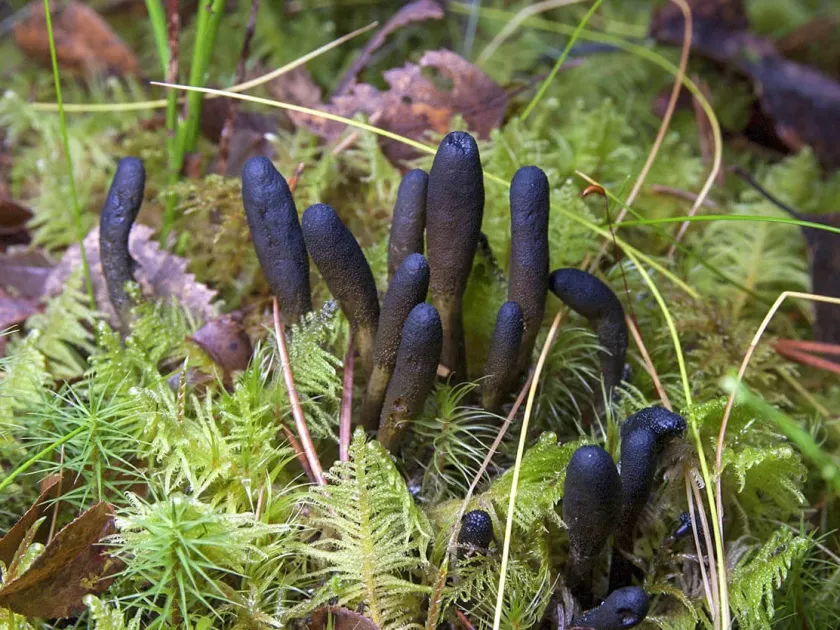
The primary symptom of infestation is the emergence of yellowish-brown or olive-colored, club-shaped stalks protruding from the forest floor.
These structures typically appear directly above the location of the host fungus colony, marking the site of internal fungal infection.
Upon excavation, the infected host fungus appears decayed, with a softened texture and a altered color resulting from the action of the parasite's enzymes.
A dense mycelial network of the parasite eventually replaces the tissues of the host, which is a definitive sign of successful colonization.
These signs are most visible during the autumn season, as the moist forest environment favors the development and emergence of these reproductive structures.
Pathogen
Tolypocladium ophioglossoides is a specialized parasitic fungus belonging to the Hypocreales order. It is primarily known for its role as a parasite of subterranean fungi.
Biologically, it maintains a close evolutionary link with species of the genus Elaphomyces, often called deer truffles. This relationship is obligate for the parasite.
The fungus develops its mycelium inside the fruiting bodies of its host, systematically consuming the host's biomass to fuel its own reproductive cycle.
Its morphology is characterized by long, club-shaped structures known as stromata, which emerge from the soil to release spores into the environment.
The genus Tolypocladium is also scientifically recognized for producing various secondary metabolites, which are of interest in biochemical and pharmaceutical research.
Conditions for development
Development is highly dependent on high soil moisture and the presence of a thick layer of forest litter, providing the necessary microclimate.
Mild temperatures are optimal for the fungus to complete its life cycle. Extreme heat or drought significantly hinders the growth of the stromata.
The presence of a suitable host, specifically Elaphomyces species, is a strict requirement for the fungus to survive and reproduce in a specific area.
The fungus thrives in acidic soils typically found in temperate coniferous and mixed forests, where organic matter accumulation is high.
Light levels are not a primary factor, as the majority of the fungal life cycle occurs beneath the soil surface in protected environments.
Why it matters
Tolypocladium ophioglossoides causes no harm to agricultural crops, as it does not possess the capability to infect higher plants.
In forest ecosystems, its role is restricted to a natural regulator of underground fungal populations, which is an ecologically neutral process.
There is no economic damage associated with this organism, making it irrelevant to plant pathology in the context of commercial farming.
Its impact on mycorrhizal networks of trees is considered minimal and part of the natural ecological succession within forest soils.
It poses no threat to food security or landscape stability, as it is a natural component of wild soil fungal communities.
Protection
No control measures are required because the fungus is not a pest or a pathogen to crops or economically valuable plants.
Forest management does not include efforts to eradicate this fungus, as it is considered a part of the natural biodiversity of the woodland.
The use of chemical fungicides is never recommended, as it would disrupt the complex balance of soil microorganisms and beneficial fungal life.
Preventative strategies are nonexistent because there is no goal to limit or prevent the presence of this specific organism.
Education and observation are the only practical approaches, as this fungus serves as a bioindicator of healthy, organic-rich forest soils.
Discussion
No discussions yet — be the first.