
Tolyposporium smut
Tolyposporium
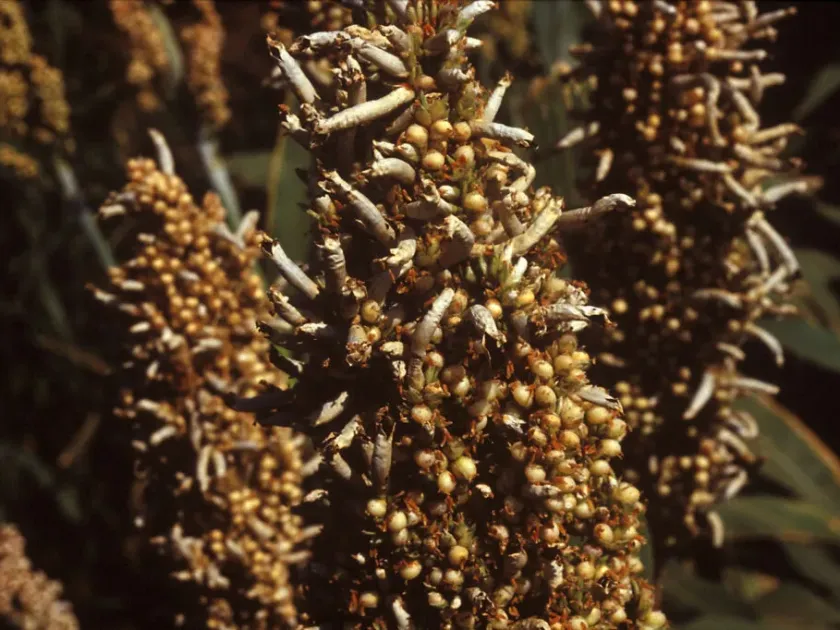
Description
Symptoms
The most distinctive symptom is the transformation of panicle segments into abnormal, enlarged structures called galls, which contain powdery spore masses.
Infected panicles appear deformed and stunted. Instead of healthy grains, the galls are filled with a black or dark brown mass of fungal spores.
Early symptoms are often subtle and hard to detect in the field, becoming fully visible only as the grain enters the dough stage.
Eventually, the gall membrane ruptures, releasing a cloud of spores that are easily dispersed by wind and rain onto healthy plants nearby.
Heavily infected plants show reduced vigor, increased brittleness, and a significant overall decline in harvestable yield.
Pathogen
The causative agent of Tolyposporium smut is a fungus from the Tolyposporium genus, classified within the smut fungi group. Tolyposporium ehrenbergii is the primary species affecting sorghum crops.
The pathogen produces characteristic spore masses known as teliospores. These are organized into dense clusters protected by a membrane, which facilitates their survival in soil for several seasons.
The fungus has a life cycle closely tied to the host plant’s phenology. Infection typically occurs during the flowering stage, targeting young, developing ovaries.
The pathogen is highly persistent, capable of remaining viable in the soil or on crop debris for multiple years, which poses a significant challenge for field sanitation.
As an obligate parasite, it extracts nutrients directly from host tissues, effectively sabotaging the plant's ability to produce viable seeds during the reproductive phase.
Conditions for development
Tolyposporium smut development is heavily favored by warm temperatures combined with high humidity, especially during the crop's flowering period.
The optimal temperature range for the pathogen's rapid spread and infection process is between 20°C and 25°C.
The existence of a high inoculum level in the soil is the primary driver for epidemic outbreaks in infected fields.
Poor field management, including high planting density and lack of proper aeration, creates a microclimate that promotes fungal colonization.
Frequent rainfall during the flowering phase facilitates the movement of spores across the field, leading to secondary infection cycles.
Why it matters
The primary damage caused by this disease is the direct reduction of grain yield, as infected panicles are often rendered completely unproductive.
Beyond yield loss, the quality of the remaining grain is compromised by spore contamination and metabolic byproducts of the fungus.
Affected fields become reservoirs for the pathogen, requiring long-term land management changes to suppress the infection in future cycles.
Plants weakened by the infection become more susceptible to secondary stressors and various environmental pressures.
In severe cases, farmers may experience yield losses ranging from 30% to over 50% in heavily infested areas.
Protection
Effective crop rotation is the most critical management tool; it is recommended to wait 3-4 years before planting susceptible crops on the same site.
The use of high-quality, fungicide-treated seeds is essential to prevent the initial introduction of the pathogen into the field.
Deep plowing after harvest helps bury crop residues, effectively isolating the spores and preventing them from reaching the soil surface.
Rigorous weed management is necessary, as certain grasses may harbor the fungus and act as alternative hosts throughout the season.
- Planting resistant cultivars and hybrids.
- Optimizing planting times to miss peak infection windows.
- Sanitation and removal of heavily infected crop residues.
Discussion
No discussions yet — be the first.