
Thelotrema
Thelotrema
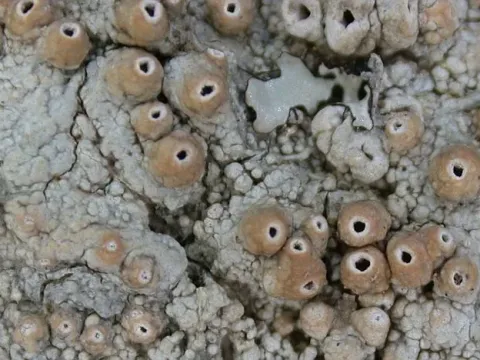
Thelotrema is a genus of crustose lichens belonging to the Thelotremataceae family, commonly found living on the bark of mature trees.
What the section contains
Thelotrema
While often confused with fungal diseases, Thelotrema is a symbiotic organism, not a parasite, meaning it derives no nutrition from the host plant's tissues.
Its fungal component forms a symbiotic relationship with algae to survive, using the tree bark strictly as a physical substrate for its growth.
The organism is widely recognized by its distinctive apothecia (fruiting bodies), which are embedded within the thallus and resemble small, open pores.
From an agronomic perspective, Thelotrema serves as a bioindicator of bark stability and environmental humidity, thriving in undisturbed and moist conditions.
The primary symptom of Thelotrema colonization is the appearance of a thin, crusty, or grainy layer on the bark surface, usually grayish or pale white.
The most distinctive diagnostic feature is the presence of small, pore-like structures that give the thallus a roughened, speckled, or pitted appearance.
These patches can slowly expand over years, forming large, irregular colonies that blend seamlessly into the texture of the tree's bark.
Unlike mosses, the lichen is firmly attached to the bark, and attempting to scrape it off often removes the outermost layer of the periderm.
In advanced cases, the bark may appear aged or discolored, particularly if the lichen colony is thick and covers significant portions of the trunk.
Thelotrema thrives in environments with persistently high atmospheric humidity and moderate temperatures, often found in sheltered orchards.
Reduced solar radiation, caused by dense canopy coverage and a lack of pruning, provides an ideal environment for the lichen to establish itself.
Trees with rough or fissured bark provide more surface area and water retention capability, making them preferred hosts for colonization.
Poor aeration within the garden area prevents the bark from drying out quickly after rain, which favors the survival of the lichen's spores.
Long-term neglect of trees, resulting in an accumulation of dead bark, facilitates the rapid development of extensive lichen colonies.
The direct harm caused by Thelotrema is minimal, but the physical presence of the thallus can impede gas exchange through the lenticels of the bark.
Dense lichen patches can create a perpetually damp microenvironment, which increases the risk of opportunistic fungal or bacterial infections.
The structure of the lichen provides excellent shelter for various pests, including scale insects and mites, allowing them to evade predators and treatments.
In commercial orchards, heavy colonization is seen as a sign of poor management, which can impact the overall vigor of the tree if left unchecked.
Although it does not drain sap, its association with neglected trees often correlates with stunted growth and reduced responsiveness to standard fertilization.
Mechanical removal via scrubbing with specialized brushes during the dormant season is the most effective way to eliminate existing colonies.
Applying traditional whitewashing (lime wash) to the trunks effectively alters the surface pH, making the environment hostile to lichen development.
- Prevention: Implement regular pruning to increase air circulation and sunlight penetration.
- Ensure proper tree nutrition to promote bark health and resilience.
- Clear dead branches and debris to reduce humidity levels around the main trunk.
Copper-based fungicide applications are highly effective at suppressing lichen growth and managing the underlying conditions that favor them.
Overall orchard hygiene, including consistent sanitation practices, is the best long-term strategy for preventing the encroachment of Thelotrema on fruit trees.