
Thelotrema petractoides
Thelotrema petractoides
Description
Symptoms
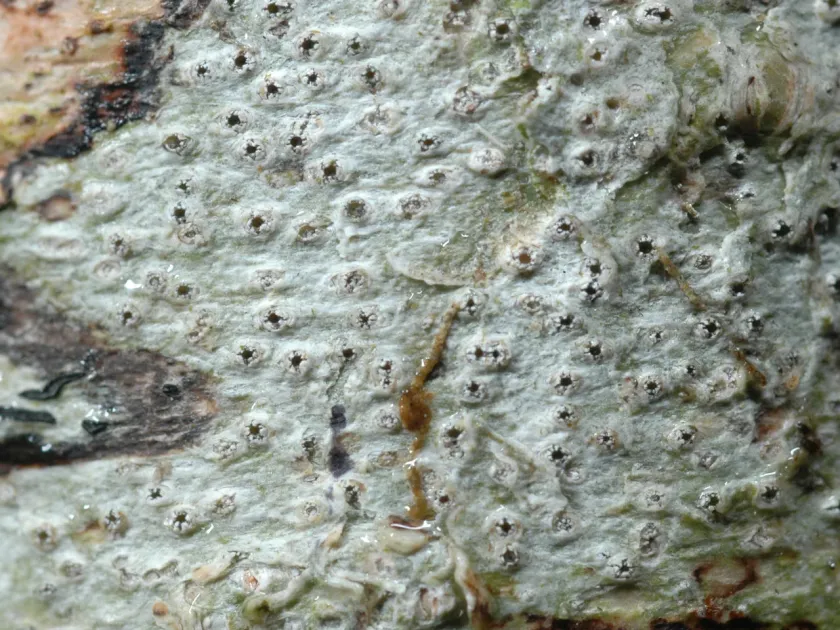
The visual signs of Thelotrema petractoides include the formation of light-colored, grayish, or whitish patches on the bark of trunks and mature branches.
The most distinctive diagnostic feature is the presence of minute, dark, pore-like apothecia that are scattered across the surface of the thallus.
Unlike parasitic fungi, the colonization of this lichen does not induce lesions, cracks, cankers, or rotting symptoms in the wood or the inner bark layers.
The thallus blends into the texture of the bark, often appearing as an integral part of the tree surface rather than an external infestation.
- Light-toned crusty thallus patches.
- Small, dark, embedded fruiting structures.
- Clean, healthy bark underneath the lichen colony.
Pathogen
Thelotrema petractoides is not a plant disease but a species of crustose lichen belonging to the family Graphidaceae. It exists as a symbiosis between a fungus and a photosynthetic partner.
As an epiphytic organism, it uses the bark of trees primarily as a physical substrate, exhibiting no pathogenic or parasitic behavior toward the host plant.
The lichen's growth form is strictly crustose, meaning it forms a thin, tightly adhered layer on the bark surface that does not penetrate into the living vascular tissues.
Its biological cycle is focused on gathering moisture and minerals directly from the atmosphere and light for the photosynthetic component of the thallus.
The taxonomic identification of this species is usually based on the unique structure of its apothecia, which are small, disk-like fruiting bodies embedded in the bark.
Conditions for development
Thelotrema petractoides thrives in environments with high relative humidity and consistent moisture availability throughout the growing season.
The species is highly sensitive to air quality; it typically thrives in pristine, pollution-free environments, making it a bioindicator of healthy ecosystems.
Mature, rough-barked trees are preferred by this lichen as they offer more surface area for spore attachment and better moisture retention capabilities.
A stable microclimate with limited temperature extremes is critical for the long-term survival and propagation of this lichen population.
Forest stands that provide filtered sunlight and protection from excessive wind are generally the most hospitable sites for this species.
Why it matters
Thelotrema petractoides is considered harmless to trees, as it maintains an epibiontic relationship and does not derive nutrients from the host.
It does not interfere with the physiological processes of the tree, such as sap flow, transpiration, or nutrient translocation, ensuring no economic damage.
While some growers perceive lichens as signs of poor tree health, their presence is purely ecological and does not necessitate any intervention or chemical control.
No agricultural fungicides are recommended for the removal of this lichen, as it does not pose a threat to fruit production or timber quality.
The only potential consideration is that dense lichen cover may occasionally mask surface symptoms of actual pests, but the lichen itself remains benign.
Discussion
No discussions yet — be the first.