
Termitomyces eurhizus
Termitomyces eurhizus
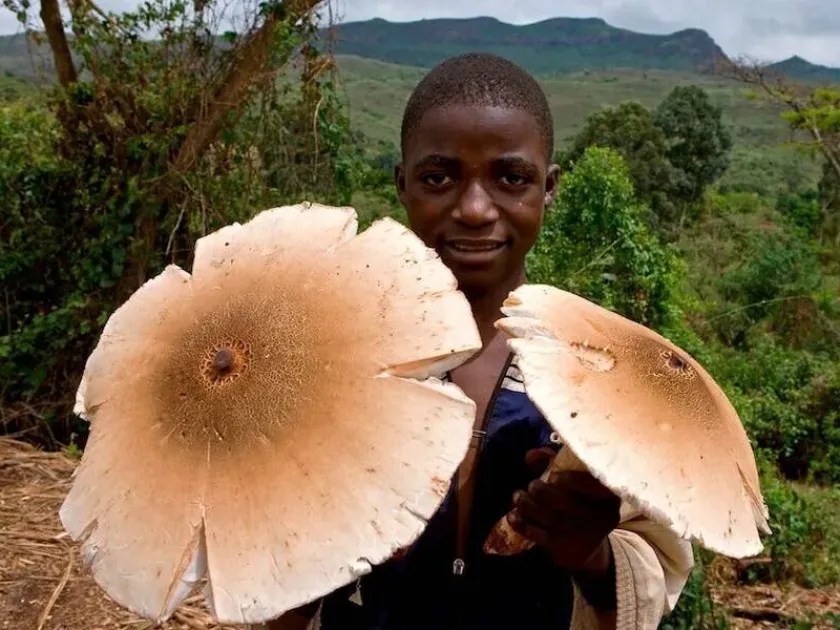
Description
Symptoms
Early symptoms of infection include a decline in plant vigor, which often manifests as chlorosis or yellowing of the foliage. These signs frequently start in the lower canopy and progress upwards as the root system loses its functionality.
A physical examination of the roots reveals characteristic white, thick fungal cords, known as rhizomorphs, tightly wrapping around the roots. Infected root tissues become necrotic, turning brown or black, and eventually losing their structural integrity.
During humid seasons, mushroom-like fruiting bodies may appear on the soil surface near the base of the infected plant. These are unmistakable signs of a well-established mycelial network deep within the soil, indicating a high risk to the surrounding vegetation.
Woody plants infected with this fungus often display symptoms of crown dieback. Since the roots are unable to support the canopy, the plant undergoes gradual wilting, leading to stunted growth and, in severe cases, the death of the entire plant.
Root system destabilization is a common outcome, causing the plant to lean or tip over. This happens because the fungus effectively destroys the anchoring roots, rendering the plant vulnerable to physical damage and environmental stressors.
Pathogen
Termitomyces eurhizus is a Basidiomycete fungus belonging to the Lyophyllaceae family, renowned for its complex symbiotic relationship with termites. In an agricultural context, it is recognized as a potential pathogen that can cause damage to the root systems of various woody and herbaceous plants.
The fungus is essentially a wood-decaying organism equipped with a robust enzymatic system capable of degrading lignin and cellulose. While its primary ecological role is linked to termite mound nutrition, it can opportunistically infect weakened plant roots in the surrounding soil.
Morphologically, the fungus produces extensive white rhizomorphs that stretch through the soil. These structures allow the pathogen to colonize organic matter and eventually infiltrate the root zone of susceptible hosts, making it a persistent inhabitant of the soil profile.
The disease caused by this fungus is typically categorized as a type of root rot. By secreting powerful enzymes, the fungus breaks down root tissues, leading to the disintegration of the root cortex and disrupting the plant's ability to transport water and nutrients.
Biology of the pathogen is highly influenced by the presence of termite activity, which often serves as a focal point for infection. Understanding its lifecycle is crucial for agronomists operating in subtropical and tropical regions where this fungus is most prevalent.
Conditions for development
High soil moisture is the primary driver for the development of Termitomyces eurhizus. The pathogen thrives in environments where water availability allows for the rapid spread of mycelium through the soil matrix.
Organic debris, such as buried wood or decaying plant matter, provides the necessary substrate for the fungus to establish itself. Agricultural fields with poor sanitation practices are particularly prone to outbreaks of this disease.
Warm temperatures ranging between 25°C and 30°C are ideal for the metabolic processes of the fungus. In these conditions, the pathogen can quickly colonize new areas, especially in regions with consistent tropical or subtropical climates.
Poorly aerated, compacted soils that favor waterlogging create an anaerobic environment that often stresses host roots, making them easier targets for fungal infection. Improving soil structure is therefore essential for mitigating the impact of the pathogen.
Symbiosis with termite colonies facilitates the spread of spores and mycelial fragments across agricultural landscapes. Termites act as vectors, and the physical mound structure serves as a hub for the pathogen's proliferation.
Why it matters
The main economic harm is caused by yield reduction due to the degradation of the root system. Reduced water and nutrient uptake leads to smaller fruit sizes, poor quality of harvest, and overall reduced photosynthetic potential.
Significant losses occur in plant nurseries, where young saplings are highly vulnerable. The death of young plants requires costly replanting and management efforts, which significantly impacts the profitability of agricultural operations.
The pathogen contributes to "soil fatigue," where the presence of the fungus renders the land unsuitable for sensitive crops for several seasons. This necessitates the implementation of complex recovery programs to restore soil health.
Weakened plants are highly susceptible to secondary infections from other pathogens, such as bacteria or opportunistic molds. The initial damage caused by Termitomyces eurhizus effectively lowers the host plant's immunity.
In the long run, the dominance of this fungus alters the soil microbiome, leading to a decline in beneficial microbial diversity. This shifts the ecosystem balance, potentially requiring extensive soil amendments to regain productive conditions.
Protection
The first line of defense is proper soil management, specifically focusing on drainage. Ensuring that water does not pool around the roots is vital to preventing the conditions necessary for fungal development.
Sanitation practices such as removing stumps, branches, and dead roots from the field are effective in reducing the pathogen's food source. By eliminating organic substrates, agronomists can curb the population of the fungus.
Biological control agents, particularly Trichoderma species, have shown promise in suppressing the growth of Termitomyces in the soil. These beneficial fungi compete for space and nutrients, effectively protecting the plant's root zone.
Systemic fungicides may be used when disease pressure is high, provided they are applied with precision. Over-reliance on chemicals should be avoided to protect the beneficial components of the soil ecology that naturally suppress pathogens.
Regular monitoring of plant health and soil quality is essential for the early detection of infections. If the pathogen is identified, quarantine and isolation of the affected area can prevent the spread of spores to healthy parts of the field.
Discussion
No discussions yet — be the first.