
Tetragonidiales fungi
Tetragonidiales
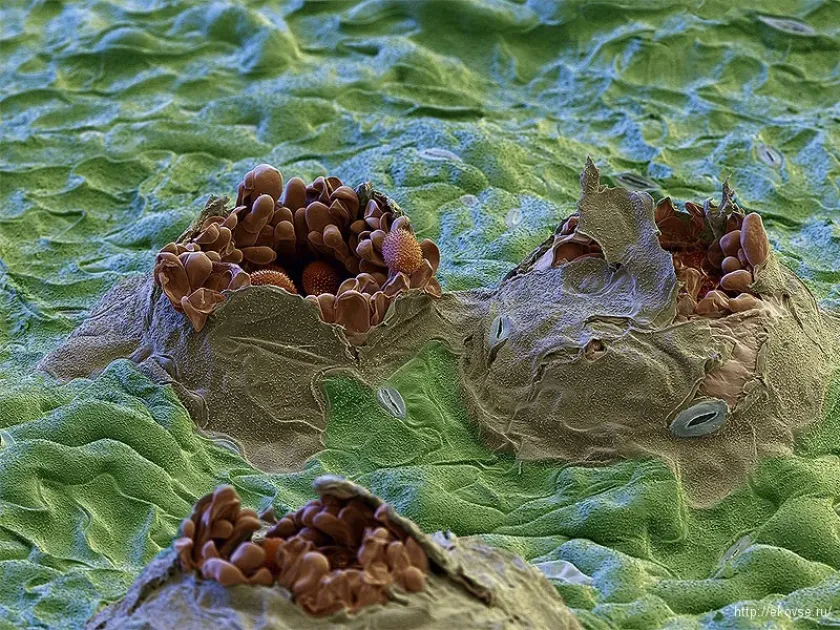
Description
Symptoms
Initial signs of Tetragonidiales infection typically appear as chlorotic spots on foliage. These spots often progress into necrotized lesions, which may be surrounded by a yellow halo, indicating the plant's attempt to isolate the infection.
As the disease advances, tiny dark fruiting bodies or pustules develop within the necrotic areas. These are visible to the naked eye and represent the reproductive structures of the fungus releasing new spores into the environment.
Stems infected by these pathogens often display signs of blight or distortion. The vascular system can be compromised, leading to wilting, stunted growth, or even total plant collapse in cases of severe localized infection.
In fruit-bearing crops, the appearance of sunken, darkened spots is a common symptom. These lesions can quickly expand, especially in humid conditions, potentially leading to total fruit rot if not addressed early.
General systemic decline, including premature leaf fall and reduced overall vigor, is a common indicator of a widespread infection. The combination of leaf loss and necrotic tissue severely hinders the plant's metabolic efficiency.
Pathogen
Tetragonidiales are a specific group of fungal organisms belonging to the class Dothideomycetes. These pathogens are recognized in agricultural science for their capacity to infect various host plants by utilizing specialized structural adaptations for parasitic growth.
The life cycle of these fungi involves the production of conidia that are disseminated by wind or rain splash. Once they land on a susceptible surface, the spores germinate and form hyphae, which penetrate the plant tissues to begin nutrient extraction.
A biological hallmark of Tetragonidiales is their durability. These fungi have evolved structures that allow them to persist in soil, crop residues, or seeds, waiting for the right environmental conditions to resume their development and cause new infections.
The fungi secrete specific enzymes to degrade the plant cell wall, effectively breaking down physical barriers. This process facilitates colonization and disrupts the host's physiological functions, leading to reduced photosynthetic capacity.
Understanding the molecular biology of these fungi is crucial for the development of modern phytosanitary measures. Researchers continue to study their genetic makeup to identify weaknesses that can be targeted by advanced bio-fungicides.
Conditions for development
The proliferation of Tetragonidiales fungi is heavily dependent on specific environmental variables. High relative humidity and prolonged leaf wetness are the primary drivers that facilitate spore germination and fungal colonization.
Temperatures ranging from 18°C to 25°C provide an ideal physiological window for the growth of these pathogens. Warm and humid weather patterns significantly increase the infection rate across agricultural fields.
Poor soil management and the accumulation of crop residues significantly increase the risk of an outbreak. In fields where previous harvests were infected, the fungal spores remain viable in the debris, creating a source of inoculum for the next crop.
Poor air circulation, often caused by excessively dense planting, leads to a microclimate that remains moist for longer periods. This moisture persistence prevents the natural drying of leaves, favoring the establishment of the fungus.
Nutritional stress in plants can make them more susceptible to attack. When crops lack essential micronutrients, their innate immunity is compromised, making them unable to resist fungal penetration and colonization effectively.
Why it matters
The economic impact of Tetragonidiales is primarily reflected in direct yield losses. By destroying photosynthetic surface area, the disease directly reduces the quantity of the harvested crop and affects its final market value.
Beyond yield volume, the quality of the produce is often severely degraded. Lesions on fruits and vegetables make them visually unappealing, while internal decay can make them unsuitable for food or feed consumption.
Management of the disease requires continuous investment in fungicides and specialized labor. These operational costs increase the total production price for farmers and can lead to financial strain in high-pressure years.
The presence of these fungi creates a risk of long-term contamination of fields. Once established, the pathogen can persist for several years, requiring strict management practices to be eradicated or controlled at acceptable levels.
Furthermore, plants weakened by this fungal infection become prone to secondary pathogen infestations. This synergistic effect can lead to catastrophic losses that are harder to diagnose and treat than a single-source infection.
Protection
Implementing a diverse crop rotation is the foundation of preventing the buildup of Tetragonidiales. Alternating host plants with non-host crops interrupts the lifecycle of the pathogen by depriving it of its primary food source.
Deep plowing and the thorough incorporation of crop residues into the soil are critical sanitation practices. This removes the surface habitat of the fungus, promoting natural decay and reducing the initial infection potential for the next season.
When the infection pressure is high, the application of systemic or contact fungicides is necessary. Professionals must ensure that applications are timed correctly according to the infection cycle for maximum effectiveness.
- Use certified, pathogen-free planting material.
- Implement optimized plant spacing to improve air flow.
- Use resistant cultivars developed through breeding programs.
- Apply biological control agents, such as beneficial microbes.
Regular monitoring of field health allows for the early detection of symptoms. Swift removal of the first infected plants can significantly limit the spread of the disease across the entire field.
Discussion
No discussions yet — be the first.