
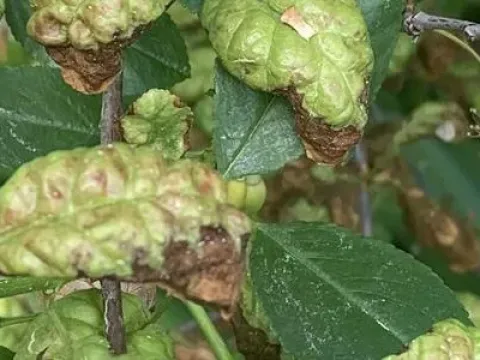
Peach leaf curl of cherry
Taphrina wiesneri
The causal agent of this disease is the ascomycete fungus Taphrina wiesneri. It specifically targets cherry and sour cherry species, acting as an obligate parasite on the plant's green tissues.
What the section contains
Peach leaf curl of cherry
The fungus overwinters as ascospores in the crevices of the bark and around the bud scales. In spring, when environmental conditions allow, these spores germinate and infect the newly developing buds.
Once inside the leaf tissue, the fungal mycelium stimulates abnormal cell division. This physiological disruption leads to the characteristic deformities seen in infected plant parts during the growing season.
The fungus produces a layer of spores on the surface of the curled leaves, which serves as inoculum for secondary infections. Wind and rain splash facilitate the dispersal of these spores to other healthy leaves.
The life cycle is tightly regulated by seasonal changes, with the pathogen effectively "waiting" for the host tree to resume growth. Its biological strategy ensures survival across diverse climatic conditions.
The most prominent symptom is the development of leaf thickenings and deformations shortly after budding. These areas typically appear as reddish or purplish blisters on the foliage.
As the infection progresses, the leaves become brittle, lose their structural integrity, and eventually fall off prematurely. This significant leaf drop is a hallmark of severe infection.
Young shoots may also become deformed and stunted, reflecting the systemic nature of the fungal development within the host plant tissues. The overall appearance of the canopy becomes ragged and uneven.
A whitish or greyish powdery layer, visible on the underside of infected leaves, indicates active spore production. This layer is a clear sign that the fungus is currently multiplying and spreading.
Initial infection might be localized to specific branches, but without management, it tends to spread throughout the canopy in subsequent years. The disease is easily identifiable by the bizarre, wrinkled appearance of the foliage.
The development of Taphrina wiesneri is heavily dependent on cool, damp weather during the early spring. Temperatures ranging from 10 to 15 degrees Celsius are optimal for spore germination.
High relative humidity and frequent rainfall are critical environmental triggers for the disease. These conditions keep the bud scales moist, facilitating the penetration of the fungus into the tender tissues.
Poor orchard hygiene, such as leaving infected plant debris on the ground, creates a high reservoir of spores for the next season. This ensures that the pathogen remains present in the immediate vicinity.
Densely planted or poorly pruned trees suffer from limited air circulation, which maintains local humidity levels. This microclimate is perfectly suited for fungal proliferation and sustained infection.
Trees that are already under stress due to poor nutrition or pest damage are more susceptible to infection. Maintaining overall tree health is a key factor in limiting the impact of the disease.
The primary harm caused by the disease is the severe reduction in photosynthetic efficiency. Losing a large portion of the canopy prematurely restricts the tree's ability to produce energy and store nutrients for the winter.
This physiological strain results in reduced cold hardiness, making the trees more vulnerable to frost damage. Furthermore, the tree’s potential for fruit production in the current and following years is significantly compromised.
Fruit quality and yield suffer as the tree diverts resources away from fruit development to cope with the pathogen. Affected fruits may remain small, exhibit skin imperfections, or drop prematurely.
- Significant loss of foliage and photosynthetic capacity
- Deformation and stunting of new annual growth
- Increased vulnerability to harsh winter conditions
- Long-term decline in overall orchard productivity
Without proper intervention, persistent infection can lead to the death of individual branches or eventually the entire tree. The accumulative impact of the disease over several seasons can devastate an entire orchard.
The cornerstone of management is the application of preventative fungicides during the dormant period. Specifically, spraying before bud break is crucial to target spores before they infect the emerging leaves.
Sanitation is equally important: all infected leaves and symptomatic twigs must be pruned and disposed of properly. Burning or removing this material reduces the local spore population effectively.
Copper-based fungicides are traditional and effective tools for creating a protective barrier against fungal spores. Regular application according to the growth stage is essential for success.
Good horticultural practices, including proper tree pruning and adequate fertilization, keep the tree robust and resilient. A healthy tree can withstand moderate pathogen pressure far better than a neglected one.
Monitoring the orchard for early symptoms is vital for timely intervention. If the disease appears despite initial efforts, targeted systemic fungicides may be used, strictly following labels to avoid resistance.