
Poplar leaf curl
Taphrina johansonii
The disease is caused by the ascomycete fungus Taphrina johansonii. This is a highly specialized parasite that exclusively affects the catkins of various poplar species, such as trembling aspen.
What the section contains
Poplar leaf curl
The pathogen overwinters as spores in the cracks of the tree bark or beneath the bud scales. When spring conditions arrive, it becomes active and targets the developing female catkins.
The mycelium grows within the tissues of the catkin, triggering abnormal cellular division and enlargement. Unlike systemic fungi, this pathogen is localized to the reproductive organs.
The fungus produces a layer of asci on the surface of the infected organs. These structures are responsible for the yellow or orange appearance and the subsequent release of spores for the next season.
As an obligate parasite, Taphrina johansonii relies entirely on the successful colonization of a host tree during the short window of bud development.
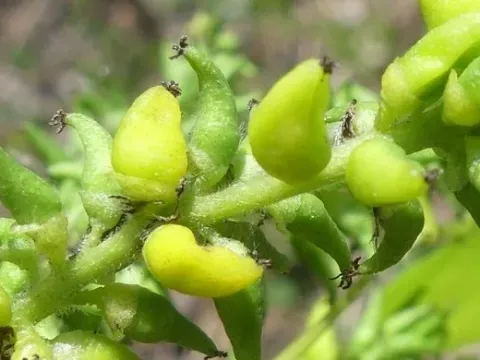
The most visible symptom is the extreme hypertrophy and deformation of the female catkins. Instead of small, slender structures, they become large, fleshy, and distorted galls.
The affected catkins display a vibrant yellow, orange, or reddish hue. This coloration is a direct result of the dense fungal spore-forming layer covering the plant surface.
Infected tissues often develop a waxy, leathery texture and lose their ability to produce viable seeds, effectively causing local sterility of the tree branches.
As the season progresses, these galls eventually turn dark brown or black as the tissue necroticizes and dries out before finally dropping from the branches.
A heavily infected tree may appear covered in these strange, leaf-like growths, which significantly alter its appearance during the flowering season.
Cool and wet spring weather provides the perfect environment for the fungus to thrive. High humidity is essential for the germination of spores and successful infection.
A prolonged spring, where temperatures remain low, slows down the tree's growth rate. This extends the period during which catkins are susceptible to invasion by the fungus.
Wind is the primary vector for spore dispersal, carrying them from infected trees to healthy ones. Rainwater can also splash spores onto nearby susceptible tissues.
Dense plantation patterns limit air circulation, creating a microclimate with stagnant, humid air that promotes rapid pathogen development within the canopy.
The absence of early spring heatwaves prevents the trees from rapidly passing through their susceptible phenological stages, giving the fungus a competitive advantage.
The primary economic and biological impact is the total loss of seed production for affected trees. This can be detrimental for forest nurseries or conservation projects.
The disease causes significant aesthetic damage in urban forestry, parks, and residential areas, where deformed catkins are seen as a sign of poor tree health.
Although the fungus does not typically kill the host tree, it diverts significant nutritional resources to the growth of galls, weakening the tree's overall vigor.
Accumulation of necrotic debris and fallen catkins beneath the trees can lead to localized sanitation issues and require extra maintenance efforts.
Increased susceptibility to secondary pathogens can occur as a result of the physiological stress placed on the host tree during the infection period.
The most effective long-term management strategy is to plant resistant poplar clones or species that are known to be less susceptible to Taphrina johansonii.
Sanitation is key; pruning and destroying affected catkins before the spores are released can significantly reduce the inoculum load for the following year.
Fungicidal treatments using copper-based compounds can be effective, but only if applied during the early bud-swell phase, prior to the fungus penetrating the tissue.
Improving air circulation through proper spacing and canopy thinning can help create a less favorable environment for fungal spore germination.
- Choose resistant poplar cultivars during initial planting.
- Physically remove and destroy infected catkins early in the season.
- Apply preventative fungicide sprays before bud burst.
- Monitor plantation density to ensure good airflow.