
Poplar rust
Melampsora populnea
Description
Symptoms
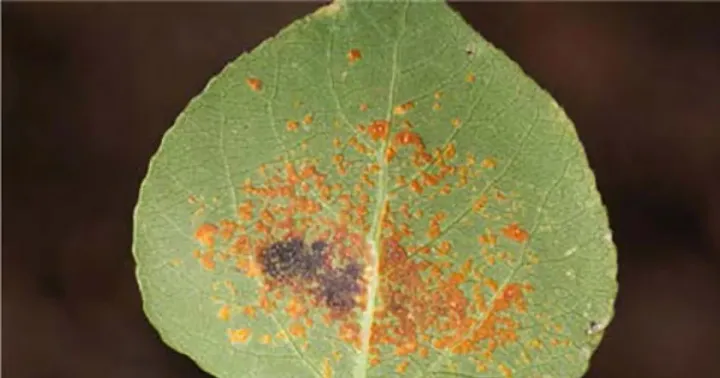
Symptoms on poplar appear in mid-summer as small yellow or orange spots on the upper leaf surface. Soon, bright orange pustules (uredinia) develop on the undersides of the leaves.
As the infection progresses, the entire leaf surface may become covered in these rusty-colored spore clusters, which eventually turn dark brown or black in late season.
Severely infected leaves lose their chlorophyll, turn yellow, and drop prematurely. In extreme cases, trees can be completely defoliated by late summer, weeks before autumn.
Although less common, some strains can cause deformation of young shoots, leading to stunted growth or bark cracking at the point of infection.
On the pine host, symptoms include characteristic S-shaped twisting of the leading shoot, swelling of the bark, and the death of the terminal bud, significantly stunting vertical growth.
Pathogen
The causal agent of this disease is the heteroecious obligate fungus Melampsora populnea. Its life cycle involves alternating between two distinct host plants: poplars and pines.
On poplar leaves, the fungus develops uredinia and telia. The pathogen overwinters as teliospores on the fallen infected leaves, which serve as the primary source of inoculum in the following spring.
In spring, basidiospores are released from the overwintered teliospores and are carried by the wind to infect young pine shoots, causing a disease known as pine twist rust.
On the pine host, the fungus produces aecia. Aeciospores are then released in early summer and carried back to poplar leaves, thus completing the infection cycle.
Because the fungus requires both hosts to complete its complex biological cycle, managing the proximity of these two tree species is vital for effective disease control.
Conditions for development
The spread of the disease is highly dependent on environmental factors. High humidity, frequent rainfall, and moderate temperatures are ideal for spore germination.
Wind is the primary vector for long-distance dispersal of fungal spores. Once spores land on a host leaf, moisture is required for them to penetrate the tissue and establish infection.
Dense, poorly ventilated plantings create a microclimate that traps moisture on the leaf surfaces, which is highly conducive to rapid disease development and transmission.
Areas with frequent fog or morning dew are at higher risk for severe rust outbreaks because these conditions allow spores to remain viable for longer periods.
Trees stressed by poor soil quality, drought, or urban pollution are generally more susceptible to infection and exhibit more severe symptoms compared to healthy, vigorous trees.
Why it matters
The primary damage is caused by the premature loss of foliage, which disrupts photosynthesis. This prevents the tree from accumulating energy reserves, leading to stunted annual growth.
Repeated annual infections weaken the trees significantly, making them highly susceptible to secondary pests, such as wood-boring insects and other fungal pathogens.
In nursery environments, rust can cause high mortality in young saplings because they are unable to properly prepare for dormancy during the winter months.
Poplar rust severely degrades the aesthetic value of parks and street trees, rendering them unattractive due to early leaf drop and discolored foliage throughout the growing season.
For forestry, the impact on young pine plantations is severe, as the pine twist rust caused by the same pathogen results in permanent structural defects and loss of timber value.
Protection
The most effective strategy is spatial isolation. New poplar plantations should not be established within at least 1–2 kilometers of pine forests to break the disease cycle.
Sanitation is critical; all fallen leaves should be collected and disposed of by burning or deep burial to eliminate the overwintering teliospores that initiate spring infection.
Selecting and planting resistant poplar clones is the most sustainable long-term solution for managing this disease, especially in regions with a history of rust outbreaks.
In cases of severe infection in nurseries or high-value landscapes, fungicide applications (such as copper-based or triazole-based chemicals) can limit the spread if applied early.
- Maintain spatial isolation from pine forests.
- Sanitize the site by removing and destroying leaf litter.
- Plant resistant or tolerant poplar cultivars.
- Prune and destroy severely infected branches.
- Apply fertilizers to improve overall tree vigor and immunity.
Discussion
No discussions yet — be the first.