
Poplar leaf spot
Passalora bolleana
Description
Symptoms
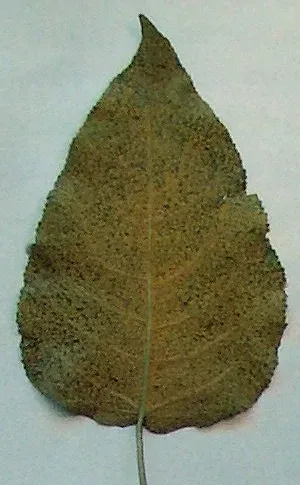
Symptoms typically appear in mid-summer as small, irregularly shaped spots on the upper surface of the poplar leaves.
These spots often start as brownish discolorations, sometimes surrounded by a chlorotic halo that eventually fades as the tissue necrosis progresses.
On the underside of the leaves, a dense, olive-brown to grayish mold develops, which consists of the pathogen's sporulating structures.
As the disease progresses, these spots coalesce, covering large portions of the leaf blade and leading to premature wilting and curling.
- Brown necrotic spots on the leaf surface.
- Olive-colored fuzzy growth on the underside.
- Yellowing of leaves in mid-summer.
- Early leaf drop, often by late August.
- General decline in tree vitality.
Pathogen
The disease is caused by the fungus Passalora bolleana (syn. Cercospora populina), which belongs to the class of Hyphomycetes.
This pathogen specifically attacks the foliage of poplar trees, invading the leaf tissues and deriving nutrients for its reproduction.
The fungus overwinters primarily in fallen leaves as mycelium or conidia, which remain viable until the warmer spring temperatures arrive.
During the growing season, the fungus produces large numbers of conidia, which are efficiently dispersed by wind and rain splashes to infect new leaves.
The infection cycle can repeat multiple times throughout the summer, allowing the disease to spread rapidly across the entire canopy of susceptible trees.
Conditions for development
The development of Poplar leaf spot is strongly favored by periods of high humidity and moderate to warm temperatures during the summer.
Frequent rainfall or persistent morning dew creates a film of water on the leaf surface, which is essential for conidial germination.
Dense tree plantings where airflow is restricted allow moisture to linger, significantly increasing the risk and severity of the infection.
Poor light penetration into the inner canopy creates a conducive microclimate for the fungus to establish and spread effectively.
Trees that are already stressed by drought, poor soil quality, or urban environmental factors are significantly more susceptible to outbreaks.
Why it matters
The primary impact of the disease is the loss of photosynthetic area due to premature leaf drop, which reduces the tree's energy production.
Weakened trees fail to accumulate necessary carbohydrate reserves, making them much more vulnerable to winter cold and frost damage.
In nursery settings, heavy infestations can lead to stunted growth or mortality of young seedlings, resulting in significant commercial losses.
The aesthetic value of trees in public landscapes is severely diminished, making them appear unkempt and sickly during the growing season.
Cumulative annual infection leads to long-term decline, dieback of branch tips, and increased susceptibility to secondary pests and pathogens.
Protection
The most critical management practice is the thorough removal and destruction of fallen leaves, which harbor the primary inoculum for the next season.
Application of fungicides, particularly those containing copper, can be effective if applied during the early stages of disease development.
Proper silvicultural practices, including crown thinning and sanitation pruning, should be implemented to improve airflow and reduce humidity.
Maintaining optimal tree vigor through balanced fertilization and appropriate irrigation helps the tree resist fungal colonization.
Selecting disease-resistant poplar clones or species for new plantings is the most sustainable long-term strategy for disease management.
Discussion
No discussions yet — be the first.