
Poplar rust
Melampsora pulcherrima
Description
Symptoms
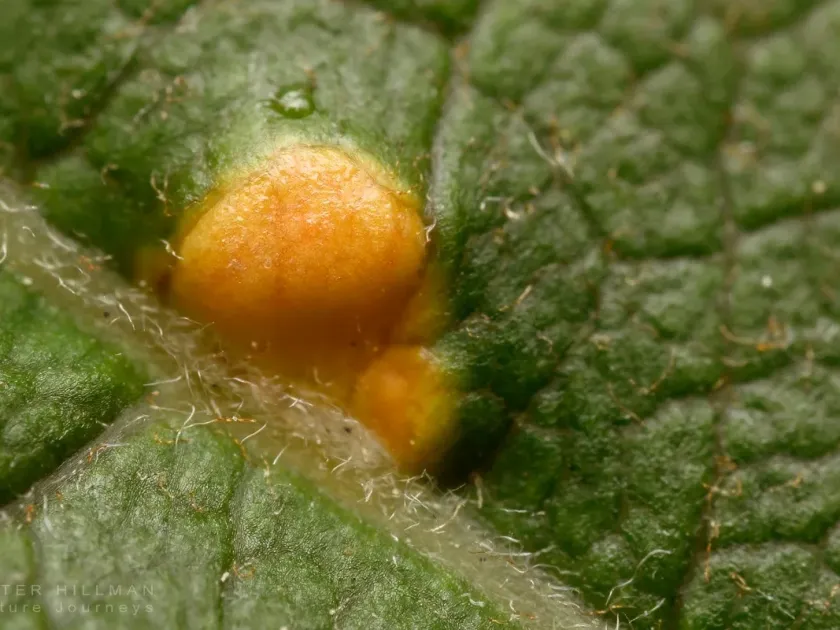
The primary symptom of poplar rust is the appearance of small, bright yellow or orange pustules on the underside of the leaves, representing dense spore clusters.
As the disease progresses, these spots turn into dark brown or black crusts, which indicate the development of teliospores, the resting stage of the fungus.
Affected leaves often show yellowing and distortion, leading to premature leaf drop which can occur well before the natural autumn senescence.
Young shoots may also exhibit minor necrotic lesions or deformations, which can affect the overall structural integrity of the growing stems.
A simple field test involves rubbing the underside of a suspect leaf; if the finger comes away covered in a fine yellow-orange dust, it confirms the presence of active spores.
Pathogen
The causal agent is the fungal pathogen Melampsora pulcherrima, a specialized rust fungus that exclusively infects members of the Populus genus.
It is an obligate parasite, meaning it requires living host tissue to complete its life cycle and derive nutrients for growth and reproduction.
The life cycle is complex, involving multiple spore stages which allow the fungus to survive harsh conditions and spread effectively during favorable weather.
The pathogen overwinters primarily in fallen debris, where teliospores remain viable until they germinate in the spring to initiate new primary infections.
Variations in the genetic makeup of Melampsora species can lead to differing levels of virulence, making it a persistent challenge for foresters.
Conditions for development
The development of poplar rust is highly dependent on environmental conditions, specifically high humidity and the presence of leaf moisture.
Prolonged periods of rain, heavy dew, or fog are essential for spore germination and successful colonization of the host's leaf tissue.
Dense plantations with poor air circulation create microclimates that significantly increase the risk of disease outbreak and spread between trees.
Trees that are already under stress, such as those suffering from water deficit or air pollution, are significantly more susceptible to infection.
Moderate temperatures, typically between 18°C and 25°C, are optimal for the rapid colonization of the leaf tissue by the fungal mycelium.
Why it matters
The primary damage caused by poplar rust is the interference with photosynthesis, which limits the tree's ability to produce energy and store food.
Premature leaf drop prevents the tree from storing sufficient reserves for the winter, often leading to increased susceptibility to frost damage.
Repeated yearly infections weaken the tree's immune system, resulting in stunted growth, dieback, and increased vulnerability to secondary pests and pathogens.
In nursery settings, the disease is particularly devastating as it renders seedlings unsellable and can lead to total crop loss if not managed properly.
Urban landscapes suffer from the aesthetic degradation caused by the disease, requiring expensive cleanup and tree removal services.
Protection
Effective management begins with strict sanitation, specifically the removal and destruction of all fallen leaf litter to eliminate the primary infection source.
Application of fungicides during the early stages of infection can mitigate the impact, although it is often limited to high-value nursery or ornamental trees.
Proper site selection and spacing between trees are vital to ensure adequate air circulation and reduce the humidity levels within the canopy.
The most sustainable strategy is the planting of disease-resistant or tolerant clones, which are selected through ongoing breeding programs.
- Monitoring local weather patterns to predict risk levels for outbreaks.
- Regular pruning to maintain crown health and reduce infection sites.
- Avoiding excessive nitrogen fertilization that promotes lush, susceptible growth.
Discussion
No discussions yet — be the first.