
Poplar rust
Melampsora medusae
Poplar rust is caused by the pathogenic fungus Melampsora medusae, which is classified within the order Uredinales.
What the section contains
Poplar rust
This fungus is an obligate parasite that requires living host tissue to complete its complex biological life cycle.
Melampsora medusae is a heteroecious rust fungus, meaning it alternates between different host species to undergo all stages of its life cycle.
Poplar species act as the primary host for the production of urediniospores, which are responsible for the rapid spread of the disease during the growing season.
The fungus overwinters in the form of teliospores on fallen leaves, ensuring the initiation of the infection cycle when favorable conditions return in the spring.
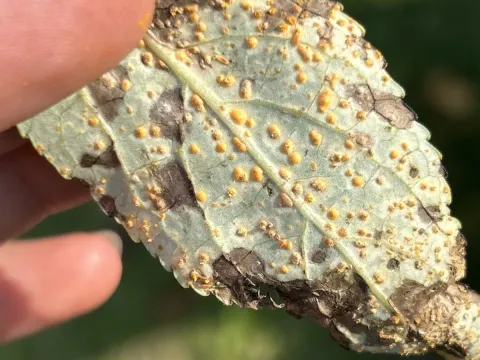
Initial symptoms are characterized by the appearance of small, bright yellow to orange pustules on the underside of the poplar leaves.
As the infection progresses, these pustules multiply and cover larger sections of the leaf blade, often causing the leaves to appear yellow or chlorotic.
Severe infestations lead to the formation of necrotic spots, as the fungal growth destroys the leaf tissue and interrupts nutrient transport.
Premature leaf drop is a classic sign of a heavy rust infection, where trees may lose their foliage significantly earlier than the typical autumn season.
In highly susceptible hosts, the infection can also appear on young petioles and shoots, causing physical deformation and cracks in the woody surface.
The development of poplar rust is highly dependent on environmental moisture, as the spores require free water for germination and penetration.
Warm and humid weather conditions, with temperatures ranging from 18°C to 24°C, provide the optimal environment for rapid fungal reproduction.
Heavy rainfall, morning dew, and persistent foggy conditions significantly increase the likelihood of massive spore release and infection spread.
Poor site selection, such as planting in areas with stagnant air or high humidity, creates a microclimate that favors the growth of the fungus.
High-density plantations often exacerbate the problem because they prevent rapid drying of foliage after rain, thereby allowing the fungus to thrive.
The primary damage caused by poplar rust is the severe reduction of the tree's photosynthetic capacity due to premature defoliation.
Weakened trees are unable to store sufficient carbohydrate reserves, which makes them highly susceptible to winter frost damage and other environmental stressors.
Growth rates in both height and diameter are substantially reduced, leading to significant economic losses in poplar wood production.
Chronic infections year after year cause branch dieback and an overall decrease in the structural integrity and health of the entire tree.
Additionally, trees weakened by rust are more prone to secondary attacks by pests and opportunistic pathogens that infect stems and branches.
Sanitation is a critical control measure, involving the removal and destruction of fallen leaves to eliminate the primary inoculum source for the next year.
Selecting and planting genetically resistant poplar clones is the most effective and sustainable long-term method for managing rust outbreaks.
In nursery settings, systemic fungicide applications can be used to protect young saplings during periods of high humidity and risk of infection.
Improving cultural practices, such as proper spacing and thinning, promotes better air circulation, which helps foliage dry quickly and discourages fungal growth.
Regular inspections throughout the growing season are essential to detect early symptoms, allowing for immediate intervention before the rust spreads across the stand.