
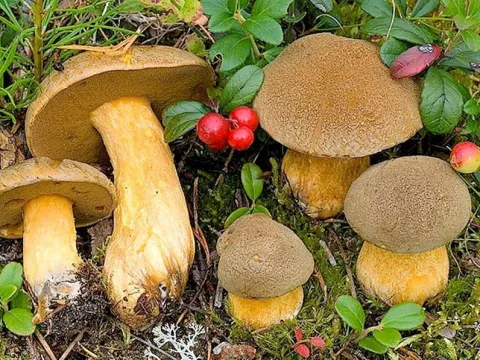
Sand bolete
Suillus variegatus
The sand bolete (lat. Suillus variegatus) is an edible mushroom belonging to the Suillaceae family. It is vital to clarify that, from an agronomic and pathological perspective, this object is not a plant disease.
What the section contains
Sand bolete
Biologically, this fungus acts as a mycorrhiza former. Its mycelium establishes a symbiotic relationship with the roots of trees, particularly Scots pine, providing the host with nutrients and water.
The fungus does not attack the living tissues of the plant as a parasite. It operates through mutualism, which is beneficial to both the tree and the fungus, rather than through any destructive process.
It is not categorized as a pathogen because it does not produce toxins or enzymes that degrade healthy plant cells or cause vascular decay in host plants.
In forestry, the sand bolete is regarded as an essential component of a healthy forest ecosystem, contributing significantly to the survival and vigor of pine plantations.
The primary sign of the fungus's presence is the emergence of fruit bodies near tree trunks during late summer and autumn seasons.
The cap of the mushroom is ochre-yellow to brown, often covered with fine scales. A key diagnostic feature is that the flesh turns blue when sliced or damaged due to oxidation.
Mycorrhizal structures are located beneath the soil surface. Specialized hyphae envelope the tree roots, which can be observed under microscopic examination in soil samples.
There are no visual signs of plant stress associated with this fungus. Conversely, trees involved in this symbiotic relationship often demonstrate better growth rates and health.
- Ochre-yellow or brownish scaly cap.
- Yellowish pore surface that blues upon bruising.
- Dense flesh with a slight blue discoloration when cut.
- Commonly found in sandy soils within pine forests.
The development of the sand bolete is strictly dependent on the presence of pine trees. It thrives in well-drained, sandy, or loamy soil conditions.
Optimal environmental conditions include moderate temperatures and consistent rainfall during the late summer months, which promotes mycelial activity.
The fungus favors acidic soil environments and is frequently observed in forest areas with moss cover, which helps maintain the microclimate necessary for its fruiting.
Chemical pollutants and the excessive use of broad-spectrum fungicides can inhibit the development of the mycelium and disrupt the natural symbiotic balance.
Dispersal is achieved through airborne spores, which colonize new areas by landing near suitable host trees where conditions allow for the formation of new mycorrhizal networks.
The sand bolete causes no harm to plants. It is entirely devoid of pathogenic properties and does not cause decay or disease in forest or agricultural crops.
There is no economic damage associated with this species; it does not reduce yields, spoil wood, or interfere with the normal physiological functions of any plant host.
In fact, its role is quite the opposite: it aids in the absorption of soil nutrients, which indirectly enhances the productivity of forest stands.
Categorizing this fungus as a plant disease is factually incorrect and could lead to unnecessary and harmful applications of pesticides in forest management.
Therefore, the net impact of the sand bolete on plant life is positive, making it a valuable biological resource rather than a hazard.
Since the sand bolete is not a plant disease, there are no control measures or prevention strategies required for this species.
Forestry management should focus on maintaining natural soil health and avoiding the over-application of synthetic chemicals that might harm beneficial soil microflora.
Preventive strategies should be limited to preserving the ecological integrity of the forest floor, ensuring that mycorrhizal partners can continue their beneficial work.
Agricultural and forestry experts should ensure that this species is not mistakenly identified as a pathogen in plant health reports.
Monitoring should remain focused on identifying genuine pests and pathogens while respecting and protecting beneficial organisms like the sand bolete.