
Saprolegnia
Saprolegnia ferax
Description
Symptoms
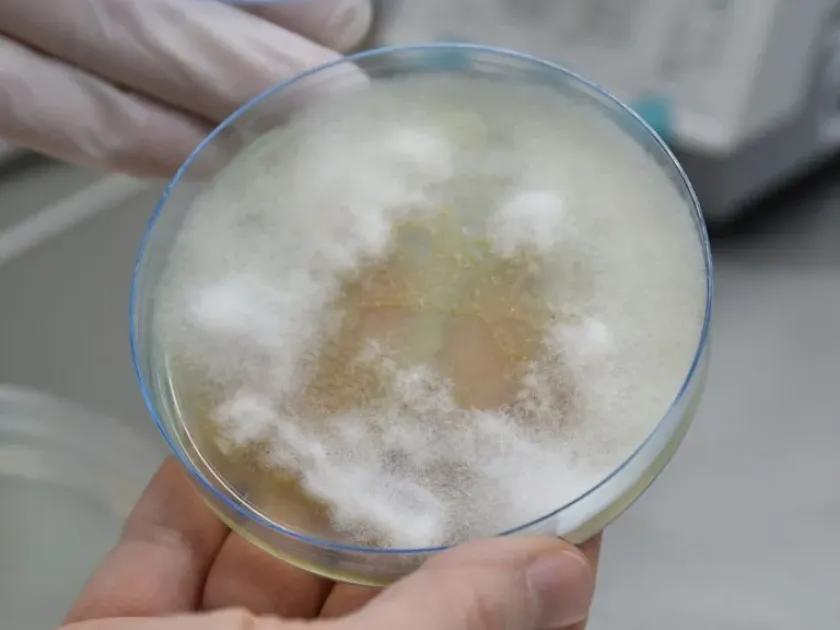
The primary symptom of a Saprolegnia infection is the formation of white or grayish-white, cotton-like mycelial mats on the affected surfaces.
These mats consist of dense masses of hyphae that penetrate the host tissue, leading to a visible 'fuzzy' appearance that is unmistakable under humid conditions.
As the infection progresses, the colonized tissue undergoes degradation, often becoming soft, mushy, and eventually necrotic due to the enzymatic activity of the pathogen.
Infection often starts at sites where the plant has suffered mechanical injury, insect damage, or physiological stress, providing an easy entry point for the zoospores.
If seeds are affected, they often fail to germinate and instead become enveloped in the thick white growth, quickly decaying into a non-viable mass.
Pathogen
Saprolegnia ferax is classified as an oomycete, a group of fungus-like organisms. Despite its visual similarity to fungi, it belongs to a distinct biological lineage with different metabolic requirements.
It acts as a facultative parasite, meaning it can thrive on dead organic matter as a saprophyte or attack living plant tissues that are already under stress.
The pathogen spreads primarily through motile zoospores, which use flagella to swim effectively in aqueous environments, facilitating rapid colonization of new surfaces.
This organism is highly persistent; it survives in sediment, contaminated water sources, and decaying plant debris, remaining dormant until favorable conditions arise.
The mycelium of Saprolegnia is characterized by non-septate, extensively branched hyphae that can quickly invade and digest the host tissue.
Conditions for development
Saprolegnia development is strictly tied to moisture levels; the presence of free water or water-saturated substrates is essential for the pathogen to flourish.
The organism is most active and aggressive at moderate temperatures, typically ranging from 5 to 25 degrees Celsius, which are common in many cultivation environments.
Poor aeration in soil or stagnant water in hydroponic systems creates an ideal environment for zoospore germination and the rapid expansion of the mycelial network.
Accumulation of dead organic material in a growing area provides a ready nutrient source, significantly increasing the inoculum density and the likelihood of a major outbreak.
High planting density, which restricts airflow and prevents the evaporation of surface moisture, creates the high-humidity microclimate that Saprolegnia prefers.
Why it matters
The damage caused by Saprolegnia involves the systemic weakening of plants, resulting in stunted growth, nutrient deficiency, and often the death of the colonized tissues.
In propagation settings, the pathogen can cause total failure of seed germination, leading to significant economic losses due to the destruction of the planting material.
In hydroponic and greenhouse operations, the ability of zoospores to move through irrigation systems makes it a highly contagious disease that can devastate an entire crop.
Root system colonization by Saprolegnia impairs water and nutrient uptake, leading to visible wilting, chlorosis, and eventual death of the plant.
The presence of this pathogen often complicates the diagnosis of other crop diseases, as it frequently acts as a secondary invader following other infections.
Protection
Effective management begins with maintaining appropriate moisture levels and ensuring that growing media and hydroponic solutions are well-drained and aerated.
Strict sanitation practices, including the regular removal of dead plants and organic debris, are crucial to reducing the pathogen's reservoir in the growing environment.
When necessary, the application of fungicides labeled for oomycete control can mitigate the spread of the disease, provided application guidelines are strictly followed.
- Ensure proper irrigation management to avoid water stagnation.
- Use certified, high-quality, and disinfected seeds or planting stock.
- Implement regular disinfection of tools, pots, and greenhouse surfaces.
Crop rotation and enhancing plant vitality through balanced nutrition are fundamental strategies for reducing the susceptibility of crops to this opportunistic pathogen.
Discussion
No discussions yet — be the first.