
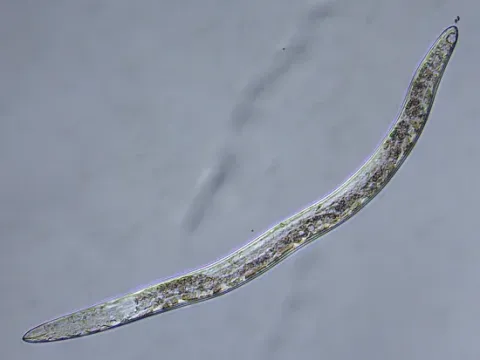
Paratrichodorus
Paratrichodorus
Paratrichodorus is a genus of free-living ectoparasitic nematodes commonly known as stubby root nematodes. They inhabit the soil and feed on the root tips of a wide variety of plant hosts without entering the root tissues.
What the section contains
Paratrichodorus
These nematodes possess a specialized feeding apparatus called an onchiostyle, which they use to pierce cell walls and extract plant nutrients, causing immediate damage to root development.
Beyond direct feeding, Paratrichodorus species are significant vectors of several plant-pathogenic viruses, most notably the Tobacco Rattle Virus (TRV).
They are highly mobile within the soil profile, moving through water films between soil particles to track root growth of developing crops.
Because they are soil-borne and microscopic, their presence is often overlooked until significant damage to the crop architecture is already visible.
The hallmark symptom of a Paratrichodorus infestation is the "stubby root" syndrome, where root tips become thickened, stunted, and truncated, resulting in a bushy appearance.
Above-ground, plants exhibit classic signs of nutrient deficiency, such as chlorosis, stunted growth, and a tendency to wilt rapidly during dry spells.
In crops like onions and garlic, viral symptoms transferred by these nematodes may include yellowing, leaf necrosis, and severe bulb deformities.
Wheat and sorghum fields affected by these nematodes typically show irregular, patchy patterns of growth, where plants in infected areas are noticeably smaller than those in healthy soil.
Definitive diagnosis requires soil sampling and laboratory extraction, as visual symptoms are often confused with soil compaction or mineral deficiencies.
Paratrichodorus nematodes thrive in light-textured soils, particularly sandy and sandy-loam soils, which allow for easier movement and oxygen exchange.
Soil moisture plays a critical role in their life cycle; population spikes typically coincide with periods of high rainfall or frequent irrigation.
They are most active in moderate soil temperatures ranging from 15°C to 25°C, making them a significant threat during the primary growing season for vegetables.
Continuous monocropping of susceptible species, such as sweet potatoes or beets, creates a stable environment for population buildup over several seasons.
Weed species act as critical reservoirs for these nematodes, allowing them to persist in the soil even when the main crop is absent.
The primary economic impact is caused by severe root injury, which reduces the plant's capacity to uptake water and essential minerals, leading to significant yield losses.
The feeding wounds act as entry points for secondary pathogens, including bacteria and fungi, which can exacerbate root rot and seedling death.
Viral transmission by Paratrichodorus significantly degrades the quality and marketability of crops, particularly for bulb and root vegetables.
In field crops like winter wheat, the infestation leads to stand thinning and decreased grain weight, directly impacting the overall profitability of the farming operation.
Persistent infestations can make a field unsuitable for high-value vegetable cultivation without intensive soil treatment programs.
Effective management begins with strict crop rotation using non-host or resistant crops to break the nematode life cycle and reduce population density.
Implementing a fallow period combined with thorough weed control is one of the most effective cultural practices for starving nematode populations.
Chemical nematicides can be utilized in high-pressure situations, though they must be used carefully due to environmental impact and high cost.
Enhancing soil organic matter through compost application helps promote a diverse soil biology, which can naturally suppress pathogenic nematode levels.
- Regular soil testing for nematode quantification.
- Avoidance of equipment movement from infested to clean fields.
- Selection of resistant cultivars where available.
- Application of solarization in greenhouse settings.