
Parmeliopsis
Parmeliopsis
Description
Symptoms
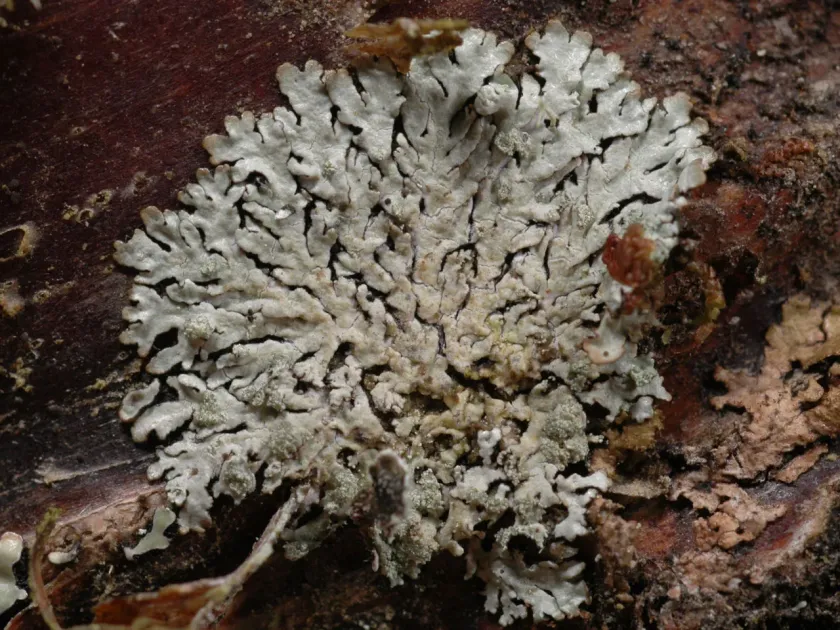
Parmeliopsis is a genus of foliose lichens that settle on the bark of trees and shrubs. Visually, they appear as small, tightly attached rosettes in shades of gray, greenish-gray, or brown.
The primary symptom of infestation is the appearance of scaly or leaf-like thalli that gradually spread over the surface of trunks and branches. The edges of their lobes are often raised, giving the colony a distinct wrinkled or curly appearance.
These lichens can form dense, continuous layers that hide the natural texture of the bark. When they overgrow, they give the tree a neglected and messy aesthetic, often signaling poor orchard maintenance.
It is crucial to distinguish Parmeliopsis from fungal diseases: lichens do not penetrate plant tissues but use the bark strictly as a substrate. However, their presence often indicates reduced tree vitality or poor crown aeration.
In early stages, colonies look like tiny spots that eventually merge into larger areas. During humid weather, the color of the thallus becomes more saturated, making them highly visible against the bark.
Pathogen
Parmeliopsis is not a pathogen in the biological sense, as it is a symbiotic organism (lichen) composed of a fungus and an alga. It does not cause infectious plant diseases but is classified as an epiphyte.
The biology of this organism is based on the ability to obtain nutrients from atmospheric precipitation and dust, rather than from the host plant's sap. However, it serves as an indicator of the environment's overall condition.
In agricultural practice, Parmeliopsis is considered an unwanted guest, as it creates a favorable microenvironment for other pests. Under the scales of the lichen, insects, mite eggs, and spores of pathogenic fungi often find shelter.
The species diversity of this genus includes forms like Parmeliopsis ambigua, which are common in temperate climates. They are highly sensitive to air pollution, thriving only in areas with clean air.
Propagation occurs through vegetative fragmentation of the thallus, easily transported by wind or rain to adjacent branches. Sexual reproduction via spores occurs less frequently but facilitates the colonization of new areas.
Conditions for development
The primary condition for the development of Parmeliopsis is high humidity. Consequently, it is most common in orchards with dense, unpruned crowns where ventilation is poor and sunlight cannot reach the trunks.
Trees with weakened immune systems or damaged bark are most susceptible to lichen colonization. Old, neglected orchards with poor water management serve as ideal habitats for their active growth.
The lack of proper maintenance, such as trunk whitewashing or sanitary pruning, creates a stable environment for colonization. Constant moisture on the bark allows the lichen to spread over large surfaces quickly.
Climatic factors, including prolonged rainy periods and the lack of strong winds, promote growth. In dry, well-ventilated environments, the development of lichens slows down significantly.
The overall ecological state of the area is also a factor, as these organisms flourish in clean air environments devoid of toxic industrial emissions that would otherwise suppress them.
Why it matters
The main harm caused by Parmeliopsis is the creation of refuges for harmful pests. The microclimate under the tightly adhering colonies is ideal for the reproduction of aphids, scale insects, mites, and fruit rot pathogens.
Excessive overgrowth can interfere with the tree bark's natural gas exchange. This leads to a slowdown of vital physiological processes and premature aging of specific branches or the tree as a whole.
Visual damage manifests as a decline in the orchard's condition, which often indicates that agrotechnical measures for rejuvenation and care are required.
Although the lichen does not extract sap, its mass presence signals a critical weakening of the tree, which may be caused by nutrient deficiency or flawed agricultural practices.
Prolonged moisture retention on the bark under a lichen layer can provoke secondary fungal infections, which lead to bark cracking and subsequent decay of the underlying tissue.
Protection
The most effective control method is mechanical cleaning of trunks and main branches using scrapers or stiff brushes. This work should be performed during the dormant season to avoid damaging living bark.
After cleaning, it is recommended to whitewash the trunks with lime milk mixed with copper sulfate. This disinfects the surface and prevents re-colonization by lichens.
Prevention includes annual sanitary and shaping pruning. Removing excess branches improves crown aeration and light penetration, creating conditions unfavorable for lichen development.
Normalizing irrigation and applying balanced fertilizers helps strengthen the tree’s defenses. A healthy plant is capable of active bark growth, which makes it harder for lichen spores to take hold.
- Cleaning the bark in rainy weather makes it easier to remove the lichen.
- Using a 3–5% iron sulfate solution is highly effective in destroying lichen colonies on fruit trees.
- Regular orchard inspections allow for the early detection and spot removal of small lichen colonies.
Discussion
No discussions yet — be the first.