
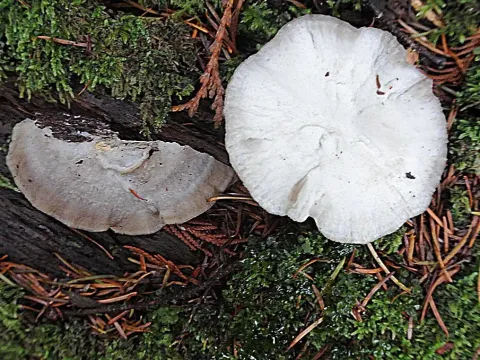
Skeletocutis
Skeletocutis
Skeletocutis is a genus of polypore fungi that acts as a significant pathogen responsible for wood decomposition.
What the section contains
Skeletocutis
These fungi are identified by their ability to cause white rot, effectively breaking down complex wood polymers like lignin.
The organism colonizes the host tree internally, where its mycelium spreads through the xylem and phloem tissues.
Some species within this genus are specialized parasites that can thrive on living trees, eventually leading to their death.
Reproductive structures appear as small, often resupinate or pileate fruiting bodies that release spores into the environment.
The most reliable sign of infection is the development of fungal fruiting bodies on the trunk or exposed roots.
Internal decay manifests as bleached, spongy, or fibrous wood tissue, which is typical for white rot degradation.
Affected trees may show crown dieback, sparse foliage, or premature leaf discoloration as systemic health declines.
Mechanical cracks or depressions on the bark often indicate areas where the fungus has breached the protective layers.
The structural integrity of the wood is compromised, making it brittle and susceptible to fracture under physical pressure.
Skeletocutis thrives in humid environments, which are essential for spore germination and mycelial expansion.
Infection points are usually created by wounds, such as pruning cuts, animal damage, or natural bark fissures.
Poorly managed forest stands with high density and lack of airflow are highly susceptible to colonization.
Stressed trees, particularly those suffering from water deficit or soil nutrient deficiency, are less capable of defending against infection.
Spore dissemination occurs via air currents, enabling the rapid spread of the fungus across diverse woodland landscapes.
The primary concern is the physical instability of the tree, which poses a severe risk of windthrow and falling limbs.
Timber value is drastically reduced as the wood loses its density and structural strength, rendering it useless for production.
The fungus acts as a long-term decomposer that eventually destroys the entire tree, leaving it as a source of inoculum.
In urban landscapes, infected trees become significant safety hazards, requiring expensive removal and disposal.
The cumulative impact on forest biodiversity can be negative as infected trees are lost to premature decay processes.
Effective management begins with rigorous sanitary practices and the timely removal of infected tree material.
Protecting wounds with appropriate fungicidal or protective dressings is crucial after any pruning or mechanical damage.
Maintaining adequate space between trees helps improve airflow and reduces the risk of moisture-related infections.
Routine inspections are necessary to identify the early onset of decay before extensive internal damage occurs.
- Removal of infected stumps to prevent mycelial contact.
- Sanitary thinning of forest stands to improve vitality.
- Strict sterilization of pruning tools between individual trees.