
Skeletonema costatum
Skeletonema costatum
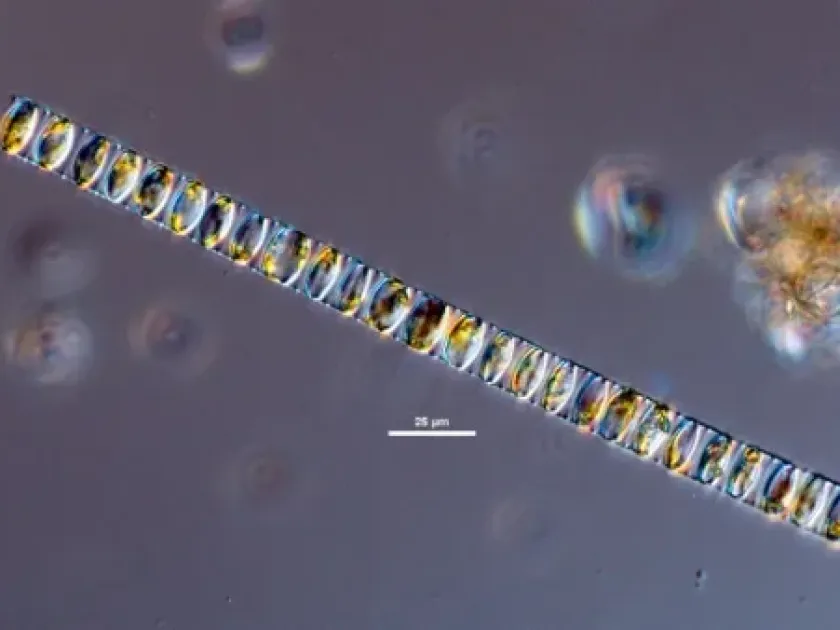
Description
Pathogen
Skeletonema costatum is a centric diatom species that is globally ubiquitous in marine and estuarine environments.
The organism forms long chains of cells held together by delicate silica structures, which is a signature feature of its morphology.
While not a traditional plant pathogen, it is treated as a major biological concern in aquaculture when its population density spikes.
These microscopic organisms are primary producers, but their proliferation can drastically alter the aquatic ecological balance.
Understanding the biology of this species is essential for managing water quality in both natural and artificial aquatic systems.
Conditions for development
The bloom of this diatom is largely driven by the availability of nutrients such as nitrogen and phosphorus in the water column.
It thrives in temperature conditions ranging from 10 to 25 degrees Celsius, making it common in diverse geographical locations.
High sunlight intensity significantly promotes the growth rate and division of the cells, leading to rapid bloom development.
Environmental stability, characterized by low turbulence and sufficient silicate concentrations, supports the integrity of the chains.
Anthropogenic eutrophication is a primary cause of outbreaks, as it provides an abundance of essential growth minerals.
Why it matters
Massive concentrations of these diatoms can cause severe nocturnal oxygen depletion, which is fatal to fish and crustaceans.
The presence of dense chains can clog the gills of aquatic animals, leading to respiratory stress and secondary infections.
Some strains are associated with the release of secondary metabolites that may be inhibitory or toxic to larvae of cultured species.
Reduced water clarity caused by high cell density limits light penetration, negatively affecting other beneficial flora.
Economic losses in the aquaculture industry result from high mortality rates and the increased costs of maintaining water quality standards.
Protection
The most effective strategy is the mitigation of nutrient runoff through better management of fertilization in adjacent land areas.
Implementing rigorous monitoring protocols allows operators to detect early signs of algal growth and take preventative action.
Advanced water treatment technologies, such as UV disinfection and ozonation, are effective for controlling bloom populations in closed systems.
Sufficient mechanical aeration is critical to buffering the negative impacts of oxygen loss caused by nocturnal respiration.
Biological control methods and specific filtration systems can be employed to manage densities without the use of harsh chemicals.
Discussion
No discussions yet — be the first.