
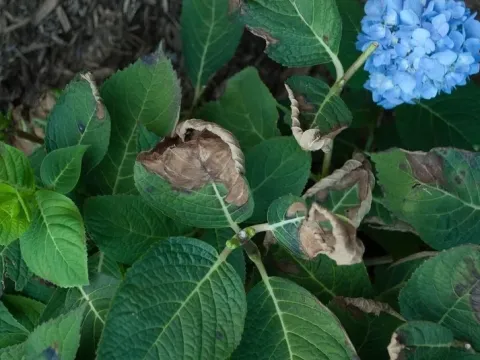
Hydrangea septoria leaf spot
Septoria hydrangeae
The disease is caused by the fungus Septoria hydrangeae, a common pathogen affecting various species of the genus Hydrangea.
What the section contains
Hydrangea septoria leaf spot
This fungus thrives as a parasite within the plant's tissues, specifically attacking the leaf blades and sometimes the petioles of the host plant.
The pathogen reproduces by forming pycnidia, small, dark fruiting bodies that develop on the surface of the infected areas.
These pycnidia release mass quantities of spores when weather conditions are wet, facilitating the secondary spread of the infection.
The fungus survives the winter season in fallen plant debris, remaining dormant until the return of favorable spring temperatures.
Infection begins as small, irregular or circular spots on the foliage, often appearing first on the lower leaves of the hydrangea bush.
As the spots expand, they typically turn brown or gray at the center, surrounded by a distinct dark-colored border or halo.
Tiny black dots, which are the fungal fruiting bodies, become visible to the naked eye within the centers of these necrotic lesions.
Heavy infection causes the spots to merge, covering large parts of the leaf and leading to widespread chlorosis and necrosis.
Affected leaves eventually curl, wither, and drop prematurely, resulting in significant defoliation of the shrub during the peak season.
Septoria leaf spot flourishes in environments characterized by high humidity and prolonged periods of leaf wetness.
Mild to warm temperatures, generally ranging from 20 to 25 degrees Celsius, are optimal for the rapid germination and growth of the fungal spores.
Poor air circulation within the shrub canopy creates a stagnant environment that is highly conducive to fungal outbreaks.
Overhead irrigation methods that spray water directly onto the leaves provide the necessary moisture for the spread of the pathogen.
Plants weakened by stress, poor soil nutrition, or lack of proper light are significantly more susceptible to successful fungal colonization.
The disease severely impacts the aesthetic quality of the hydrangea, making it look unsightly and reducing its value in the landscape.
Extensive defoliation reduces the plant's photosynthetic capacity, which weakens the hydrangea's overall vigor and resilience.
Reduced vigor means the plant stores fewer nutrients, making it more prone to winter damage and cold stress during freezing weather.
In addition to damaging leaves, severe cases can affect the stems, leading to weakened growth and a stunted appearance of the whole bush.
Persistent yearly infections can cause a steady decline in the plant's health, eventually leading to stunted development or plant death.
Sanitation is the most critical step: promptly collect and destroy all fallen, infected leaves to remove the source of overwintering inoculum.
Prune the hydrangea bushes to improve air circulation, ensuring the center of the plant remains dry and open to sunlight.
Apply preventive fungicidal treatments, such as copper-based sprays or systemic fungicides, particularly during wet, humid weather cycles.
Use drip irrigation or water carefully at the base of the plant to avoid splashing water onto the foliage and spreading fungal spores.
Maintain balanced plant health through proper fertilization and avoid overcrowding to keep the hydrangeas robust and resistant to disease.