
Hygrocybe acutopunicea
Hygrocybe acutopunicea
Description
Symptoms
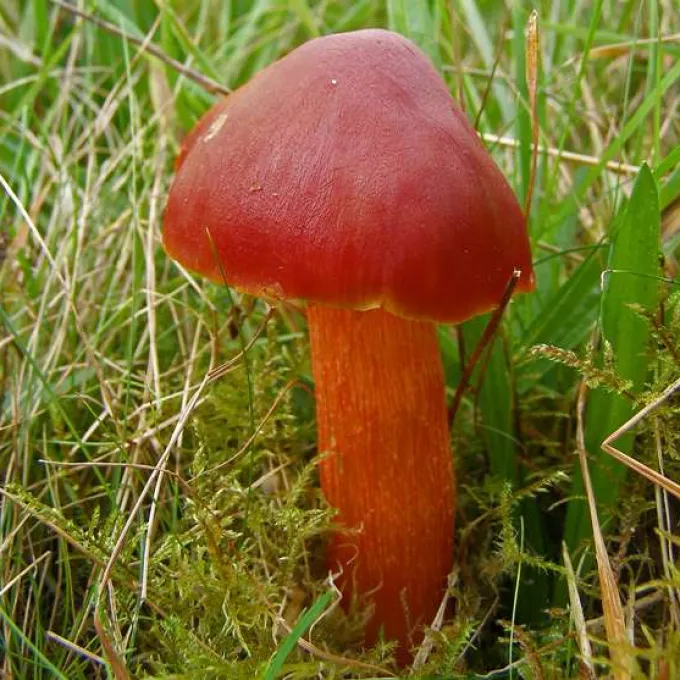
Hygrocybe acutopunicea is characterized by its distinctive conical cap, which features a pointed apex. The coloration ranges from bright red to orange-brown tones, making it visually striking.
The gills are adnate to the stipe and spaced relatively far apart. These features, along with the specific cap shape, are key characteristics used by mycologists for species identification.
The stem is typically smooth, cylindrical, and matches the color of the cap. The fungus grows in small clusters or singly, hidden among the grasses of undisturbed meadows.
The cap surface may appear slightly viscid in humid conditions but dries out quickly. The spore print is typically white, which helps differentiate it from similar species.
It is crucial to emphasize that this fungus does not produce symptoms of plant pathology, such as wilting, chlorosis, or necrotic spots, as it is not a parasite.
Pathogen
From a botanical and agronomic standpoint, Hygrocybe acutopunicea is not a pathogen. It does not cause diseases in agricultural crops or wild plants as it is a saprotrophic organism.
The species derives energy from decaying organic matter found in the soil. It lacks the parasitic mechanisms required to infect living plant tissue or roots.
Its mycelium contributes to the natural decomposition process, breaking down complex organic compounds into nutrients available for plants in the soil ecosystem.
There are no known reports of this fungus affecting crop yield or health. It does not interact with the plant vascular system or interfere with crop development.
Classifying this fungus as a crop disease is incorrect. It is a biological agent that supports soil health rather than acting as a plant pathogen.
Conditions for development
Hygrocybe acutopunicea thrives in grassland habitats that have not been subjected to intensive agricultural activities like heavy tilling or high-rate mineral fertilization.
Humidity is essential for the development of its fruiting bodies. It is most commonly found during periods of moderate temperatures and consistent moisture in autumn months.
The species is highly sensitive to changes in soil chemistry. It prefers undisturbed, acidic or neutral soils rich in organic matter rather than heavily manipulated farmlands.
Soil structure is vital for the survival of this fungus. Compaction caused by heavy machinery can damage the mycelial network, preventing the fungus from fruiting.
Changes in the local hydrology or the application of synthetic fungicides on adjacent areas often result in a significant decline of this species in its habitat.
Discussion
No discussions yet — be the first.