
Hygrocybe
Hygrocybe
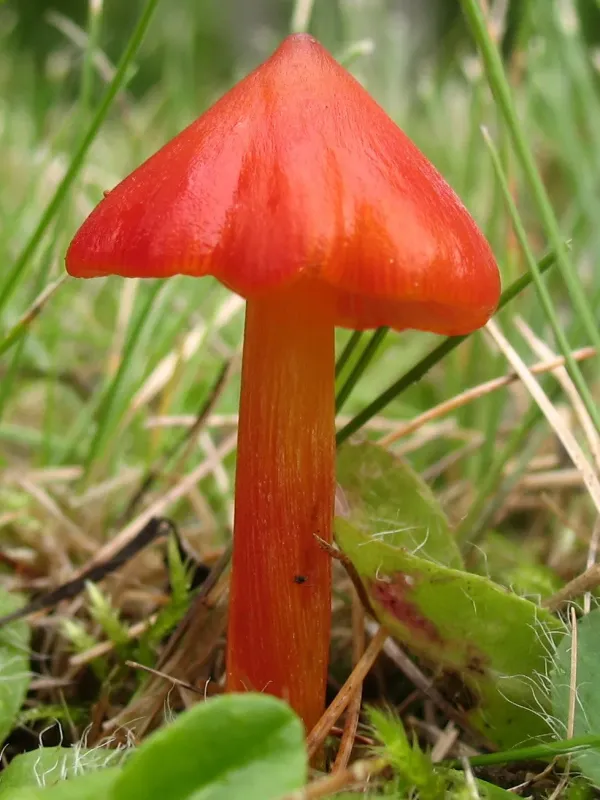
Description
Symptoms
The primary sign of their presence is the emergence of colorful fruit bodies, usually found on undisturbed, low-nutrient grasslands or pastures.
The fruit bodies exhibit a characteristic waxy texture and vibrant colors, ranging from deep red and orange to yellow and green.
They usually appear during autumn months when moisture levels are sufficient for the development of fungal structures.
There are no symptoms like leaf spots, wilting, or root decay on neighboring plants, as there is no pathological interaction between the fungus and the crop.
The mycelial network is generally confined to the upper organic layers of the soil and does not penetrate living plant systems.
Pathogen
It is important to clarify that Hygrocybe is not a plant disease. It is a genus of basidiomycete fungi within the family Hygrophoraceae, widely known as waxcaps.
These fungi are strictly saprotrophic, meaning they derive nutrients from decaying organic matter, not by attacking living plant tissues.
Scientific studies confirm that they do not parasitize crops, and therefore they cannot be classified as agents of any plant pathology.
Their mycelium remains in the soil, actively participating in the decomposition of plant residues, which benefits soil structure.
In agronomy, these fungi are often misunderstood due to their visibility, but they represent no risk to agricultural productivity.
Conditions for development
Hygrocybe species prefer stable environments with minimal human interference, such as semi-natural grasslands with low fertilizer inputs.
The development of these fungi depends on high soil moisture and specific temperature conditions typical of cooler, damp periods.
They are extremely sensitive to high nitrogen levels and the application of chemical fertilizers, which often leads to their rapid disappearance.
Soil compaction and intensive tillage practices are detrimental to the mycelium, making these fungi rare in commercial agricultural fields.
They thrive in soil ecosystems that have remained untouched by chemicals for long periods, acting as a biological indicator of soil quality.
Why it matters
These fungi cause zero damage to agricultural crops and have no negative impact on yield quality or quantity.
As they are not involved in plant infection processes, there is no need to worry about any potential threat to the health of fields or gardens.
Instead, they contribute to the nutrient cycle by breaking down organic matter, which enhances the overall fertility of the soil profile.
Treating them as pests is an agronomic misconception that fails to recognize their positive role as decomposers in the environment.
Presence of these fungi is a positive indicator of ecological balance and biodiversity within the surrounding ecosystem.
Protection
No protection or control measures are required, as Hygrocybe species are not plant pathogens.
Applying fungicides to eliminate these fungi is highly discouraged, as it harms the beneficial fungal community and disrupts the soil microbiome.
If you encounter these fungi, it is best to leave them as part of the natural environment, as they provide valuable ecological services.
Maintain standard agronomic practices for crop management, which typically prevent the colonization of such saprotrophs in production areas.
Monitor your land for true pathogens while protecting biodiversity by allowing beneficial and harmless fungi to exist in non-productive zones.
Discussion
No discussions yet — be the first.