
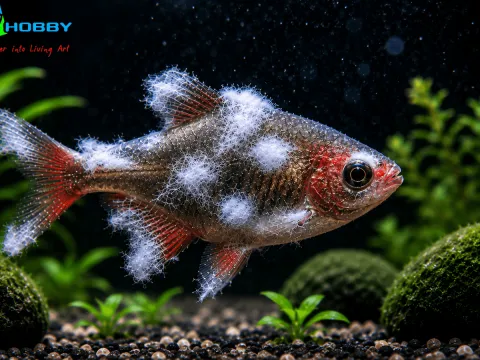
Saprolegniasis
Saprolegniaceae
Saprolegniasis is caused by oomycetes of the family Saprolegniaceae, which are commonly referred to as water molds in agricultural and biological contexts.
What the section contains
Saprolegniasis
These organisms are not true fungi but are genetically distinct, characterized by a complex life cycle involving motile zoospores that swim through water films.
As facultative parasites, they easily switch from living on decaying organic matter to infecting living, stressed plant tissues when conditions permit.
Their reproduction is highly efficient, utilizing both asexual zoospores for rapid colonization and resistant oospores for long-term survival in the soil.
The ability of these pathogens to thrive in aquatic environments makes them particularly problematic in greenhouses and hydroponic systems.
The most recognizable symptom is the appearance of a distinct, fluffy, cotton-like mycelial mat on seeds, roots, or the basal stems of young plants.
Affected plant parts quickly become soft and macerated as the pathogen secretes enzymes that break down the plant cell walls for nutrient absorption.
Seedlings often exhibit a phenomenon known as "damping-off," where they collapse and wither shortly after emergence due to the destruction of the hypocotyl.
In mature plants, symptoms may manifest as dark or water-soaked lesions on the root system, ultimately leading to wilting and general yellowing of the foliage.
Under humid conditions, the white growth becomes dense and visible to the naked eye, often spreading rapidly to adjacent healthy tissue.
The primary driver for the development of saprolegniasis is excessive soil moisture or standing water, which facilitates the movement of swimming zoospores.
Low temperatures combined with poor light and lack of ventilation create a stress window during which plant defense mechanisms are significantly compromised.
Compacted, poorly drained soil prevents proper aeration, creating an anaerobic environment that favors oomycete growth over healthy root development.
Introduction of the pathogen often occurs through contaminated water sources, dirty containers, or untreated soil media used during propagation.
Continuous cropping without proper rotation increases the inoculum density in the soil, making subsequent plantings highly susceptible to outbreak.
The disease causes catastrophic losses during the seedling stage, leading to poor stands and the need for costly replanting efforts in agricultural setups.
Saprolegniasis not only destroys individual plants but also degrades the overall vigor of the crop, significantly reducing yield potential and quality.
Once established in a production site, the pathogen is difficult to eradicate because it can survive in dormant forms for extended periods of time.
Secondary infections often follow, as the weakened tissue provides an entry point for various bacteria and other pathogenic fungi, complicating the situation.
The rapid rate of disease spread in high-humidity environments poses a constant threat to intensive nursery and greenhouse operations.
Effective control relies heavily on moisture management, including ensuring excellent drainage and avoiding over-irrigation in all growing media.
Rigorous sanitation practices, such as sterilizing tools, pots, and growing benches, are essential to prevent the spread of dormant spores between batches.
Chemical intervention with fungicides specifically targeting oomycetes, such as metalaxyl-based treatments, can be effective if applied early.
Using high-quality, treated seeds and maintaining optimal environmental conditions for plant growth are fundamental prophylactic measures.
- Use of pathogen-free soil substrates.
- Improvement of greenhouse ventilation.
- Implementation of strict crop rotation.
- Application of biological control agents like Trichoderma.