
Rhodotus
Rhodotus
Rhodotus is a genus of fungi in the family Physalacriaceae, most notably represented by the species Rhodotus palmatus.
What the section contains
Rhodotus
This organism functions primarily as a wood-decay fungus, operating as a saprotroph in forest and park ecosystems.
It colonizes the wood of deciduous trees by secreting enzymes that effectively break down lignin and cellulose components.
Biologically, the fungus is characterized by its distinct, gelatinous fruiting bodies that emerge from rotting wood substrates.
It lives deep within the wood tissues, establishing a mycelial network that facilitates the gradual decomposition of the host plant material.
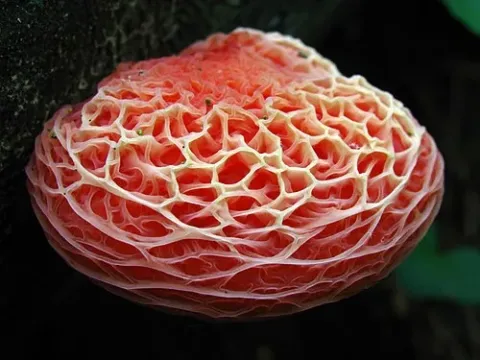
The most prominent sign of Rhodotus is the presence of its unique, pinkish to salmon-colored, rubbery fruiting bodies.
The caps of the fungi exhibit a striking reticulated or wrinkled surface pattern, often compared to the appearance of veins.
Wood colonized by the fungus often becomes soft, brittle, and loses its structural integrity due to the degradation of woody fibers.
In advanced stages of colonization, the inner heartwood may show significant discoloration and localized softening areas.
During wet autumn seasons, fruiting bodies become visible on the trunks or large branches of affected broadleaf trees.
The fungus thrives in environments with high humidity and moderate temperatures, often appearing after extended rainy spells.
It prefers hardwood substrates, particularly elm, maple, and sometimes oak trees that have been damaged or are in a state of decay.
Effective colonization requires an entry point, such as cracks in the bark, frost injuries, or existing pruning wounds on the tree.
Spore dispersal occurs via wind currents, enabling the fungus to spread across suitable forested areas effectively.
Shaded environments with decaying organic matter provide the most conducive microclimate for the development of the fungal mycelium.
The primary concern regarding this fungus is the loss of structural stability in the trunks or branches of affected trees.
Trees severely impacted by the decay process are at an increased risk of branch breakage or total windthrow during storms.
In timber production, the decay caused by the fungus significantly reduces the quality and economic value of the woody raw material.
In landscaping, colonized trees may become safety hazards in public areas due to the unpredictable risk of structural failure.
By breaking down wood, it accelerates the mortality rate of already stressed or aged deciduous trees in the landscape.
Sanitation is the most effective approach to managing the presence of wood-decaying fungi within a managed tree population.
Prompt removal of standing deadwood, fallen logs, and severely damaged branches reduces the local inoculum potential.
Practicing proper wound care during pruning, such as applying protective seals, helps prevent the entry of fungal spores into the wood.
Improving general tree health through irrigation and appropriate fertilization programs makes trees more resistant to secondary infections.
Regular inspections of trees, particularly near pedestrian pathways, are essential to identify and mitigate risks posed by weakened limbs.