
Rhopalodia
Rhopalodia
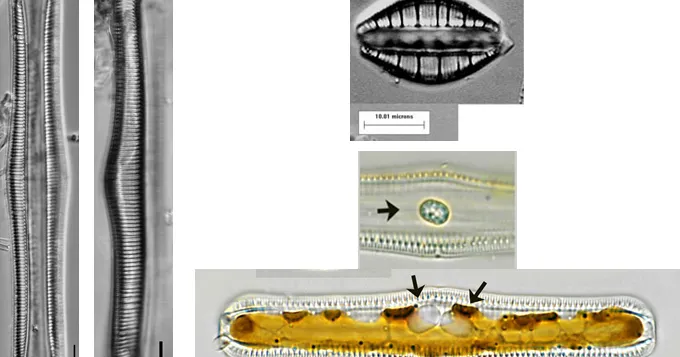
Description
Symptoms
The primary symptom of a Rhopalodia infestation is a brownish, slimy film developing on leaves and stems. Unlike soft algae, this layer feels rough and is difficult to remove without damaging the plant's cuticle.
The visual appeal of the plant decreases significantly, as the natural green color is masked by the brown deposits of the diatoms. In cases of severe colonization, the plant may appear wilted or stunted.
Microscopic analysis reveals a high concentration of the characteristic arched cells of the genus. These cells often form patches or crusts that cover the leaf surface, effectively blocking parts of the plant's epidermis.
Growth suppression is a major sign that the algae is impacting the host. Because the algae covers the surface, the host plant may exhibit symptoms of energy deficiency, which can be mistaken for nutrient deficiencies or low-light stress.
In enclosed hydroponic systems, the algae may also manifest on the walls of containers and tubing, suggesting that the problem is not limited to the host plant itself but is pervasive throughout the environment.
Pathogen
Rhopalodia is a genus of diatomaceous algae that can colonize the surface of aquatic plants. While not a pathogenic disease in the traditional sense, in the context of hydroponics and aquatic horticulture, it is treated as a problematic epiphyte that interferes with plant development.
The organism is characterized by its distinct crescent or club-like silica shells. These diatoms do not penetrate the internal tissues of the plant but anchor themselves firmly to the outer layers, forming a dense biofilm.
Rhopalodia is biologically significant due to its ability to form endosymbiotic relationships with cyanobacteria, which fix nitrogen. This unique biological trait allows the algae to thrive in various aquatic environments, often outcompeting other species.
In managed systems, the presence of these algae is often an indicator of nutrient imbalance rather than an infectious disease. However, its rapid propagation can cause significant management challenges for professional growers.
The taxonomic classification of Rhopalodia places it within the Bacillariophyceae class. Its interaction with plants is purely mechanical and ecological, focusing on surface area competition and resource sequestration.
Conditions for development
The development of Rhopalodia is heavily dependent on the availability of silica, which is essential for the construction of its frustules. High silica levels in the water or nutrient solution act as a primary catalyst for rapid population growth.
Light intensity is another critical factor. These algae thrive under prolonged exposure to light, especially in the spectral ranges utilized by aquatic plants for photosynthesis. Over-lighting in indoor systems is a major contributor to outbreaks.
Water stagnation, or low flow rates, provides an ideal environment for the algae to anchor and multiply. Rapidly moving water makes it more difficult for these organisms to establish large colonies on plant surfaces.
Optimal pH levels and water temperature are important for their survival. While they can tolerate a range of conditions, stable environmental parameters facilitate consistent growth and reproduction within a hydroponic setup.
Nutrient excess, particularly of phosphorus and other trace elements, provides the energy boost necessary for the diatoms to outcompete other aquatic organisms in the system.
Why it matters
The main harm caused by Rhopalodia is mechanical shading. By covering the leaf surface, the algae prevents the plant from absorbing the light necessary for photosynthesis, leading to reduced vitality and energy reserves.
The biofilm acts as an obstacle to proper gas exchange. When the stomata or cuticle surfaces are obstructed, the plant's transpiration and respiration rates are negatively impacted, leading to physiological distress.
Commercially, the harm is primarily cosmetic and economic. For growers of ornamental aquatic plants, any degree of algal fouling renders the product unsellable, as it fails to meet the aesthetic requirements for high-quality specimens.
Prolonged covering of the leaf surface can weaken the plant's overall immune response. This makes the host more susceptible to secondary infections by true bacterial or fungal pathogens that exploit the weakened state of the tissue.
In large-scale systems, the decay of excess algae can lead to a spike in organic matter within the water, potentially altering the chemical balance and causing stress to the plant's root system.
Protection
Management of Rhopalodia begins with adjusting the light cycle. Reducing light intensity or the total duration of daily light exposure can effectively limit the growth rate of these diatoms.
Monitoring and controlling the nutrient composition of the water is essential. Utilizing water filtration systems, such as reverse osmosis, can significantly reduce the concentration of silica and other minerals required for algal growth.
Mechanical removal is the most direct way to clean the plants. Gently scrubbing the leaves or rinsing them in a clean solution helps restore the plant’s ability to photosynthesize effectively.
Biological control, such as the introduction of competitive microflora or grazers (in aquatic setups), can help keep the population in check and maintain a healthy, balanced ecosystem.
- Implement regular water quality testing.
- Ensure efficient water circulation.
- Disinfect system components between cycles.
- Isolate infected plants to prevent spread.
Discussion
No discussions yet — be the first.