
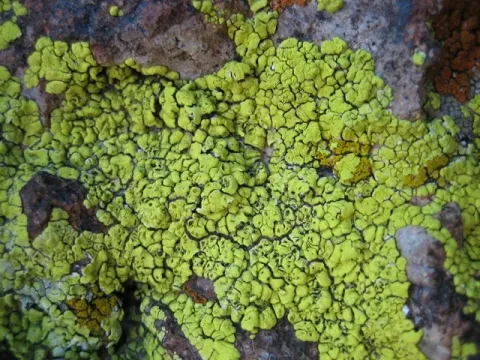
Rhizocarpon
Rhizocarpaceae
Rhizocarpaceae are a family of crustose lichens frequently observed on the bark of mature fruit and ornamental trees. They form hard, map-like thalli that adhere tightly to the bark substrate.
What the section contains
Rhizocarpon
The most distinctive feature is the presence of numerous dark or black apothecia, which appear as small discs scattered across the surface of the lichen.
The color of the thallus ranges from pale grey to yellowish-green, depending on the specific environmental conditions and sun exposure levels.
On tree trunks, these colonies often resemble intricate patterns or maps, making them easily identifiable even at an early stage of colonization.
While not causing immediate necrosis, their presence is a clear indicator of high humidity and poor air circulation within the tree's canopy.
These organisms are complex symbioses consisting of a fungal mycobiont and an algal photobiont working in a mutually beneficial relationship.
They are strictly epiphytic, meaning they utilize the tree trunk only as a surface for anchorage rather than as a source of nutrients or moisture.
The fungal component provides structural integrity and secure attachment to the bark, while the algae contribute energy through photosynthesis.
Reproduction occurs through spores released from the apothecia or via vegetative propagation by small pieces of the thallus carried by wind.
The biology of Rhizocarpaceae is defined by extremely slow growth rates and high tolerance to nutrient-poor environments.
The development of Rhizocarpaceae is primarily driven by consistently high air humidity, which is common in neglected or dense garden areas.
Overgrown canopies that restrict airflow and limit sunlight penetration create a perfect microclimate for these lichens to flourish.
Weakened trees with rough, decaying bark are particularly susceptible to colonization, as the surface provides better spots for spores to settle.
Proximity to water sources or low-lying landscape positions where cold, damp air persists encourages the rapid expansion of these lichen colonies.
Lack of regular maintenance, such as trunk cleaning and timely thinning of branches, significantly promotes the establishment of lichen covers.
Though they are not direct plant parasites, they indirectly harm plants by creating a shelter for overwintering pests like scales, mites, and fungal spores.
Thick lichen layers can impede gaseous exchange through the bark's lenticels, potentially leading to physiological stress in the host tree.
The presence of dense lichen cover is often a sign of reduced tree vitality, which can correlate with lower yields in fruit production.
Bark covered by lichens becomes more susceptible to temperature fluctuations, which may increase the severity of frost damage in winter.
In ornamental landscaping, the presence of widespread lichen colonies is often viewed as a sign of a neglected or unkempt garden environment.
The primary control method involves mechanical cleaning of the trunk and primary branches using wire brushes to remove the lichen without damaging the bark.
Post-cleaning treatment with a disinfectant solution, such as lime wash combined with copper sulfate, is highly recommended to prevent recolonization.
Implementing regular pruning cycles is crucial to improve canopy aeration and increase the amount of sunlight reaching the trunk surface.
Maintaining strong tree health through proper fertilization and watering reduces the likelihood of these organisms establishing a foothold on the bark.
- Regular inspection of bark surfaces
- Removal of dead or diseased branches
- Spring application of protective copper-based sprays
- Improving garden ventilation