
Rhizoctonia
Botryobasidium vagum
Description
Symptoms
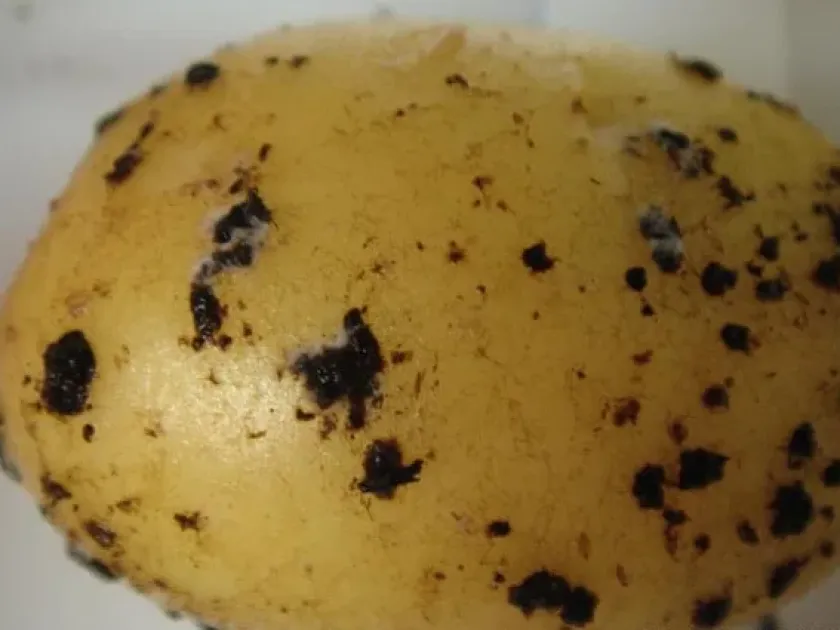
On potato tubers, the disease appears as dark, crust-like sclerotia, often called "black scurf," which do not wash off, resembling soil particles.
Young seedlings often show severe brown lesions on roots and stems, which may lead to damping-off before the plants even emerge from the soil.
Adult plants may exhibit stem cankers, and under high humidity, a white, felt-like fungal growth may appear at the base of the stems.
Leaf symptoms often include upward rolling of upper leaves, chlorosis, and the abnormal formation of aerial tubers in leaf axils.
Root systems become stunted and necrotic, leading to poor nutrient uptake and overall wilting of the plant, especially during periods of water stress.
Pathogen
The disease is caused by the fungus Botryobasidium vagum, known in its asexual (anamorphic) stage as Rhizoctonia solani. This pathogen is a soil-borne fungus that affects a vast number of plant species.
The fungus exists in the soil primarily as mycelium or hardened black structures called sclerotia, which are capable of surviving for long periods under unfavorable conditions.
The fungus is characterized by hyphae that branch at right angles, a diagnostic feature used in professional laboratory identification of the pathogen.
It acts as a versatile pathogen, capable of infecting roots, stems, and tubers, and can also live as a saprophyte on decaying organic matter in the soil.
Transmission occurs through infested soil, contaminated seeds, or by the physical spread of mycelium between adjacent plant tissues in the field.
Conditions for development
Rhizoctonia development is strongly favored by cool and damp weather, especially during the planting season, which delays seed germination.
The optimal soil temperature for infection typically ranges from 12°C to 18°C, with high soil moisture significantly enhancing the pathogen's activity.
Heavy, poorly aerated soils create persistent moisture pockets that allow the fungus to thrive and attack the vulnerable tissues of developing seedlings.
Shallow planting in cold soil prolongs the time that sprouts remain in contact with infested soil, increasing the probability of successful infection.
High levels of undecomposed organic matter in the topsoil provide a food source for the fungus, leading to higher populations of the pathogen in the field.
Why it matters
The primary economic impact is the thinning of crop stands, which directly results in lower plant density and lower total yields per hectare.
Market quality is heavily compromised, particularly in potatoes, where tubers become deformed, undersized, and aesthetically unappealing due to sclerotia.
In crops like sugar beets or vegetables, the pathogen causes seedling death (damping-off), which often necessitates costly replanting operations.
Plants that survive initial infection are weakened, making them significantly more susceptible to environmental stress, secondary bacterial soft rots, and other diseases.
Losses continue post-harvest, as infected produce may rot in storage if conditions are not strictly controlled, resulting in direct financial losses to producers.
Protection
The most important control measure is the use of high-quality, disease-free seed stock to prevent introducing the fungus into clean fields.
Implementing a proper crop rotation, avoiding susceptible host plants in the same field for several years, helps reduce the soil inoculum load.
Fungicidal seed treatments are highly recommended to provide a protective barrier around the emerging plant, preventing early-season infection.
Good agricultural practices include deep plowing to bury organic debris and ensuring adequate field drainage to reduce the humidity levels that the fungus requires.
- Selecting resistant varieties where available.
- Optimizing planting times to ensure rapid and uniform seedling growth.
- Balanced fertilization to boost the plant's natural vigor.
- Sanitation of storage facilities and handling equipment.
Discussion
No discussions yet — be the first.